English
 Arabic
 French
 Spanish
 Portuguese
 Deutsch
 Turkish
 Dutch
Dutch
 Italiano
 Russian
 Romaian
 Portuguese (Brazil)
 Greek
Greek
Stringent Environmental Regulations Fuel Growth in the Regenerative Thermal Oxidizer (RTO) Market
Seo |
2026-05-25 16:26:56
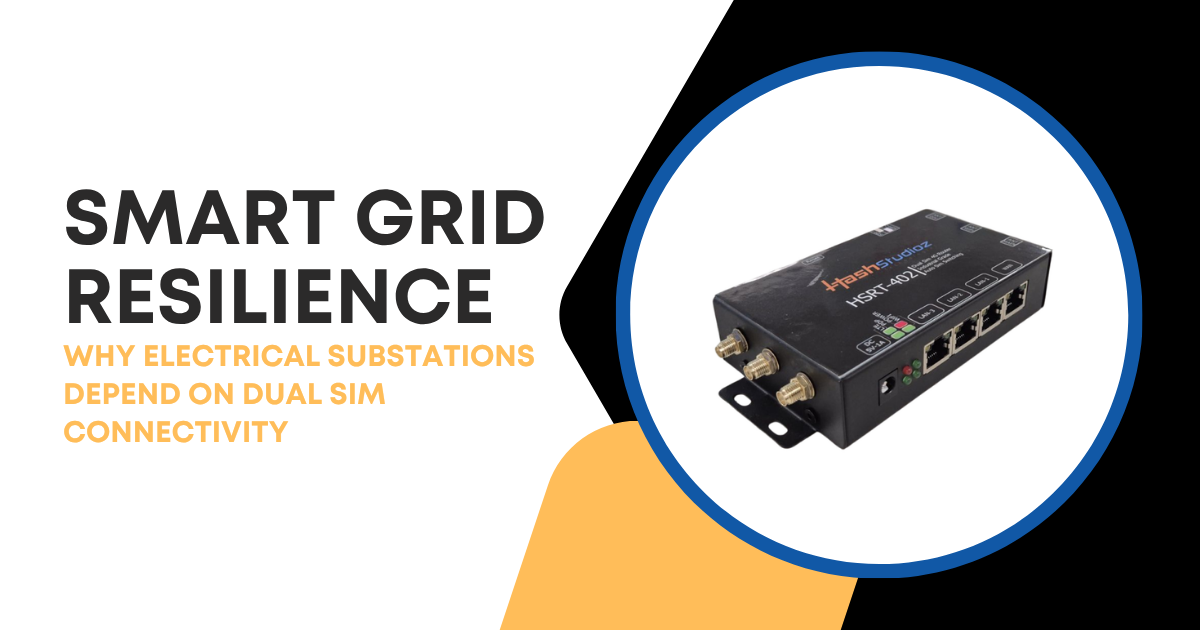
Modern electrical grids face severe pressures from shifting energy demands and extreme weather. Smart grid systems protect electricity transmission by monitoring infrastructure in real time. Electrical substations act as critical hubs within this network. They change voltage levels to distribute power safely to homes and factories.
Substations must maintain continuous communication with central management offices. A communication failure can cause cascading power outages. It can also cause physical equipment damage and long blackouts.
Deploying a high-performance Industrial Router fixes these network reliability issues. This article examines why power systems depend on dual cellular connections to stay reliable.
Electrical infrastructure cannot tolerate communication delays or dropouts. System operators use Supervisory Control and Data Acquisition (SCADA) systems to balance power loads. They also use these networks to isolate electrical faults instantly. Industry reports show that power outages cost the United States economy $150 billion every year. Furthermore, utility researchers found that 40% of grid failures stem from communication dropouts between substations and control centers.
When a fiber-optic cable snaps or a cell tower goes down, the substation becomes blind. A blind substation cannot report voltage spikes or transformer overheating. This lag delays emergency responses.
Many utility companies use cellular networks for backup communication. However, relying on a single cellular carrier introduces single points of failure.
During natural disasters like hurricanes or floods, public cellular networks experience massive traffic spikes. Millions of citizens try to make phone calls and send messages simultaneously. This traffic overloads the local cell tower. Standard single-carrier systems drop industrial telemetry data packets to handle emergency voice calls.
Extreme weather can damage cellular antennas or cut power to local base stations. If an Industrial Router connects to only one carrier, a tower blackout breaks the data link completely. The router will try to reconnect to the dead tower indefinitely. This loop isolates the substation when the grid needs monitoring most.
To prevent communication drops, utility engineers deploy a specialized Dual SIM Industrial Router. This device holds two separate SIM cards from competing cellular providers.
The hardware inside these routers differs significantly from consumer-grade equipment. They feature distinct components built for harsh environments.
Engineers must choose between single-module and dual-module hardware designs. A single-module router houses one cellular modem but two SIM slots. It can switch between cards, but it can only connect to one network at a time.
A true dual-module system features two independent cellular modems operating simultaneously. This design allows the router to maintain active connections to both cellular networks at all times. This feature drops network switching times to zero milliseconds.
Substations experience extreme temperatures, strong electromagnetic interference, and heavy dust. An industrial networking device uses IP30 or IP67 rated metal enclosures.
These devices operate reliably in temperatures ranging from minus 40 degrees to plus 75 degrees Celsius. They also feature galvanic isolation on serial and Ethernet ports to block high-voltage electrical surges.
A Dual SIM Industrial Router uses specific software algorithms to monitor link health. It does not just wait for a total signal loss to switch carriers.
The router continuously tracks four key cellular metrics:
RSRP (Reference Signal Received Power): Measures the absolute strength of the cellular signal.
RSRQ (Reference Signal Received Quality): Evaluates the purity of the received signal.
Latency: Measures the round-trip time for data packets traveling to the SCADA server.
Packet Drop Rate: Tracks the percentage of data packets that fail to reach their destination.
If the primary network latency spikes above 150 milliseconds, the internal software triggers an alert. If packet drops exceed a 2% threshold, the router redirects critical SCADA traffic to the secondary SIM card.
This automated transfer happens without human intervention. The central management center continues to receive grid data without seeing a network disconnection.
Maintaining stable data links requires specific networking protocols. These protocols run directly on the communication hardware.
|
Protocol |
Primary Purpose |
Benefit for Substations |
|
IPsec VPN |
Encrypts data traffic |
Secures grid commands from hackers |
|
VRRP |
Provides router redundancy |
Prevents hardware single points of failure |
|
OSPF / BGP |
Dynamically routes data |
Selects the fastest path across carriers |
|
IEC 61850 |
Standardizes substation data |
Ensures interoperability between sensors |
Using Virtual Router Redundancy Protocol (VRRP) allows two physical routers to share one virtual IP address. If one router suffers a hardware failure, the backup device takes over the IP address instantly.
Deploying modern routing hardware at the grid edge offers significant operational benefits.
Utility companies must follow strict Service Level Agreements (SLAs) regarding grid uptime. Regulatory bodies penalize companies for extended power outages.
Using dual cellular links boosts communication uptime metrics to 99.99%. This reliability protects utilities from heavy government fines.
A professional Dual SIM Industrial Router includes advanced firewall features. It supports hardware-accelerated encryption algorithms like AES-256.
The router builds parallel Virtual Private Network (VPN) tunnels over both cellular networks. If one carrier suffers a cyberattack or routing breach, the grid data routes safely through the alternative encrypted tunnel.
Laying physical fiber-optic cables to remote rural substations costs roughly $30,000 per mile. This high cost makes fiber updates impractical for isolated grid zones.
Cellular routing hardware offers a affordable alternative. It delivers high-speed data transmission without the cost of digging trenches for cables.
Switching to cellular communication introduces unique engineering problems. System designers use specific methods to resolve these issues.
High-voltage transformers create massive electromagnetic fields that distort wireless signals. If you place a router near a transformer bank, communication errors will skyrocket.
To solve this, engineers install high-gain antennas on tall outdoor masts away from the main electrical machinery. They link the external antennas to the indoor router using double-shielded coaxial cables to eliminate signal distortion.
Substations located near international borders often experience signal overlap from foreign cell towers. A standard SIM card might try to connect to a foreign network, increasing data fees and latency. Engineers address this by configuring strict carrier locks inside the router software. They program the device to accept only specific network codes. This step prevents the router from roaming onto unauthorized cellular networks.
A renewable energy provider in Texas faced frequent connection drops at its remote wind farms. Heavy lightning storms regularly knocked out local fiber junctions. The company installed dual-carrier routing hardware at every tower substation. During the next major storm, the primary network connection went down. The routers switched to the backup cellular provider within 3 seconds. This speed allowed the central controllers to adjust wind turbine angles safely during high winds.
A large European city updated 110 downtown substations to prevent blackouts during peak summer heatwaves. They deployed dual-modem routers to link smart meters to their central offices. The dual-link design handled network congestion smoothly during city-wide festivals. Uptime metrics reached 99.995%, and zero communication dropouts occurred over a twelve-month observation period.
Correct physical and electrical deployment prevents premature equipment failure and signal loss.
Dual Antenna Placement: Always mount primary and secondary cellular antennas at least 1 meter apart. This physical spacing prevents the two antennas from causing mutual signal interference.
Power Source Redundancy: Connect the router to two separate power supplies. Use the substation station battery bank as the primary source and an AC-to-DC converter as the backup.
Automated Reboot Schedules: Configure the router to perform an automated software reboot every 30 days. This simple task clears internal memory caches and resets cellular modems to prevent software freezes.
Field tests highlight the stark differences between single-carrier setups and dual-carrier systems under heavy network strain.
|
Performance Metric |
Single Carrier Router |
Dual SIM Network Router |
|
Average Network Uptime |
98.2% |
99.99% |
|
Failover Transition Time |
Connection drops entirely |
Under 500 milliseconds |
|
Peak Latency Stability |
High jitter during storms |
Stable low latency |
|
Data Encryption Status |
Single tunnel vulnerability |
Redundant parallel tunnels |
These figures demonstrate why utility teams choose multi-carrier options. Dual setups protect critical telemetry data when one provider suffers an outage.
The roll-out of industrial 5G networks changes how substations manage data traffic. 5G introduces network slicing, which reserves specific radio frequencies for utility companies.
However, 5G signals use shorter wavelengths that struggle to pass through thick concrete substation walls. Because of this limit, hybrid systems remain necessary. Future setups will combine ultra-fast local 5G links with stable 4G LTE backup connections to ensure total reliability.
Substations generate various types of data. Some files, like system logs, are not time-sensitive. Other packets, like trip signals from circuit breakers, require instant delivery.
Engineers configure Quality of Service (QoS) rules inside the routing hardware. The router reads the priority markings on every inbound data packet.
The system sends critical circuit breaker updates through the connection with the lowest latency. It routes routine log files through the secondary link to save network bandwidth. This smart division keeps the primary link clear for urgent commands.
Utility infrastructure must follow strict government security rules. In North America, power companies must comply with NERC CIP (North American Electric Reliability Corporation Critical Infrastructure Protection) regulations.
A compliant Industrial Router includes security features to meet these rules. It tracks all configuration access attempts and generates tamper alerts if the physical casing is opened.
It also restricts remote access to authorized IP addresses using multi-factor authentication. These steps prevent unauthorized users from tampering with grid routers.
Securing the modern power grid requires a serious focus on communication uptime at the edge. Electrical substations cannot operate safely in isolation from central SCADA networks. Relying on a single cellular carrier exposes critical public infrastructure to unnecessary risks from weather and network overloads.
Deploying a rugged Dual SIM Industrial Router removes these single points of failure. The dual-carrier architecture guarantees immediate failover, strong data encryption, and excellent reliability in harsh environments. As smart grids grow worldwide, installing a resilient Industrial Router at every substation remains essential for national energy security.