English
 Arabic
 French
 Spanish
 Portuguese
 Deutsch
 Turkish
 Dutch
Dutch
 Italiano
 Russian
 Romaian
 Portuguese (Brazil)
 Greek
Greek
Buy Lab Diamond Rings on a Budget | Smart Guide
Shopping |
2026-06-02 09:10:04
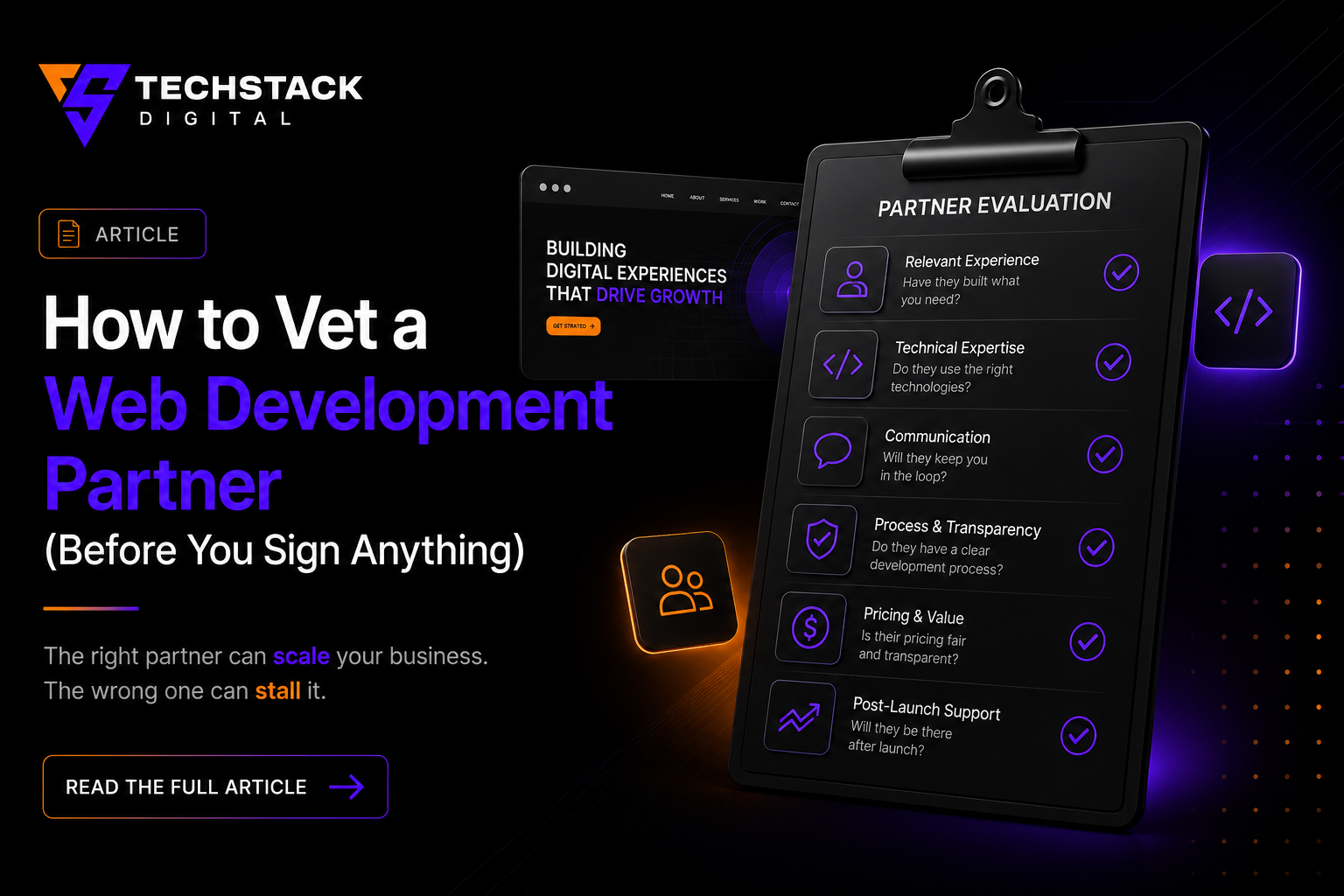
Hiring a web development partner is one of the most consequential decisions a business makes. Get it right, and you have a team that builds something that performs, scales, and represents your brand well for years. Get it wrong, and you're looking at missed deadlines, inflated costs, and a product that needs to be rebuilt six months after launch.
The problem is that most businesses don't know what to look for until they've already been burned once. This guide is designed to change that a practical, no-fluff checklist for evaluating any web development partner before a contract gets signed.
Portfolios are curated. Proposals are optimistic. Case studies are written by the agency, for the agency. Before you take any of this at face value, go a layer deeper.
Ask to see live projects — not screenshots. Click through the actual sites or applications they've built. Test them on mobile. Check load speeds using Google PageSpeed Insights. Look at the code if you have a technical person on your team. Real work reveals real capability in a way that a polished PDF never will.
When reviewing their portfolio, also ask: is this work similar to what you need? A team that builds gorgeous marketing sites may not be equipped to build a multi-integration SaaS platform, and vice versa. Relevant experience in your category matters more than volume of output.
A web development partner should be able to explain, clearly and without defensiveness, what technologies they build with and the reasoning behind those choices. This isn't about gatekeeping through jargon it's about understanding whether their stack suits your project and your future.
Some questions worth asking:
If the answers are vague, defensive, or heavily sales-oriented "we use the best tools for the job" without any specifics — that's a signal. Strong development teams can talk about their technical decisions plainly. They've made those choices deliberately and can explain them.
One of the clearest indicators of a development partner's quality is how seriously they take discovery. Discovery is the phase before any design or code happens — where the team asks deep questions about your business goals, your users, your existing systems, your growth plans, and the technical constraints you're working within.
Partners who skip or rush discovery are usually doing one of two things: they're moving fast to close the sale, or they're planning to build something generic and call it custom. Neither is good for you.
The right partner treats discovery as a billable, structured phase with a defined output a scope document, a technical architecture outline, wireframes, or a project roadmap. This upfront investment protects both sides and dramatically reduces the chance of expensive scope changes mid-build.
Agencies often pitch with their senior people — the founders, the creative directors, the strategists and then hand the project to junior developers or offshore contractors once the contract is signed. This isn't inherently wrong, but you deserve to know it before you commit.
Ask directly: who will be working on my project day-to-day? What are their roles? How senior are the people handling architecture decisions? Will I have a dedicated project manager or account lead?
Ask if you can meet the core team before signing. If the answer is no, or if the team seems to shift every time you ask, that's worth pausing on. The quality of the relationship and the work often depends more on the team assigned than the agency's reputation at the top level.
The best technical team in the world becomes a problem if they're impossible to communicate with. Response speed, clarity of updates, and how they handle questions are all things you can observe before you sign anything.
During the proposal phase, notice: How quickly do they respond to your emails? Do their answers address what you actually asked, or do they redirect to a sales pitch? When you ask a hard question — about budget, about timeline risk, about what happens if something goes wrong — do they engage honestly or get evasive?
Communication style during sales is usually the best version of what you'll get during the project. If it's already difficult, it doesn't improve under the pressure of a live build.
How a development team manages its projects determines whether your build stays on schedule, on budget, and on brief. Ask about their process:
A team with a mature project management process can answer these questions without hesitation. A team that's been improvising will give you vague answers, fall back on "we're flexible," or promise custom processes that don't actually exist yet.
Flexibility is valuable. But flexibility without structure is how projects drift for months while you wait for updates.
The contract is where good intentions meet legal reality. Before you sign anything, make sure you have clarity on:
Ownership: Who owns the code, the design files, and the intellectual property when the project is complete? The answer should be you but not every contract makes this explicit. Some agencies retain partial ownership or license your own product back to you.
Deliverables: Are the outputs clearly defined? Vague language like "a fully functioning website" is not a deliverable. Specific pages, features, integrations, and file formats are.
Payment terms and milestones: When do payments happen, and what triggers them? Milestone-based payment tied to specific deliverables is generally safer than large upfront payments with no accountability.
Change orders: What happens when the scope shifts — and it always shifts? There should be a defined process for how changes are scoped, priced, and approved, rather than just "we'll figure it out."
Termination clauses: Under what circumstances can either party exit the agreement, and what happens to the work completed so far? This matters more than most businesses realize until they're in a situation where they need it.
Post-launch support: Is ongoing maintenance included, and for how long? What does it cover? What's the process for bug fixes after launch?
If any of these elements are missing or unclear in the contract, ask for clarification in writing before signing.
Most agencies will provide references, and most of those references will say positive things. The goal isn't to disqualify a partner based on reference calls it's to ask questions that give you signal beyond the standard testimonial.
Ask previous clients: What was the hardest part of working with this team? Were there any surprises in the budget or timeline? How did they handle problems when they came up? Would you hire them again for a more complex project?
The answers to the "harder" questions tell you far more than "they did great work and delivered on time." Every agency has a best-case story. You want to understand how they behave when things get difficult — because they always get difficult on some level.
All of this due diligence is harder to do when you're unclear on your own requirements. Before you approach any development partner, get clear on: what you're building, who it's for, what it needs to integrate with, what success looks like in six months, and what your realistic budget is.
Knowing your requirements doesn't mean knowing every technical detail that's what the partner is there to help with. But it does mean having enough clarity that you can evaluate whether a partner truly understands what you're asking for, or whether they're just nodding along to close the sale.
For businesses working through this evaluation for the first time, it's worth reading through frameworks that break down what a real development partnership looks like at different stages from discovery through to post-launch support and what separates a long-term digital partner from a one-time vendor. The distinction matters a lot more than most people realize before they've signed their first development contract.
If you're distilling all of this into a short list to bring into your first conversation with any development partner, here's where to start:
How a team answers these questions — not just what they say, but how clearly and honestly they engage will tell you more than any portfolio or proposal.
The right development partner is not necessarily the one with the biggest portfolio, the lowest quote, or the fastest turnaround promise. It's the one whose process is rigorous enough to protect your project, whose communication is clear enough to maintain trust under pressure, and whose technical depth matches what your product actually requires.
The vetting process feels like extra work upfront. But the alternative discovering the wrong partner three months into a build — costs far more in time, money, and momentum than the due diligence would have.
Sign slowly. Build confidently.