English
 Arabic
 French
 Spanish
 Portuguese
 Deutsch
 Turkish
 Dutch
Dutch
 Italiano
 Russian
 Romaian
 Portuguese (Brazil)
 Greek
Greek
What Is QuickBooks Desktop Enterprise? Everything You Need to Know
Other |
2026-06-11 08:04:21
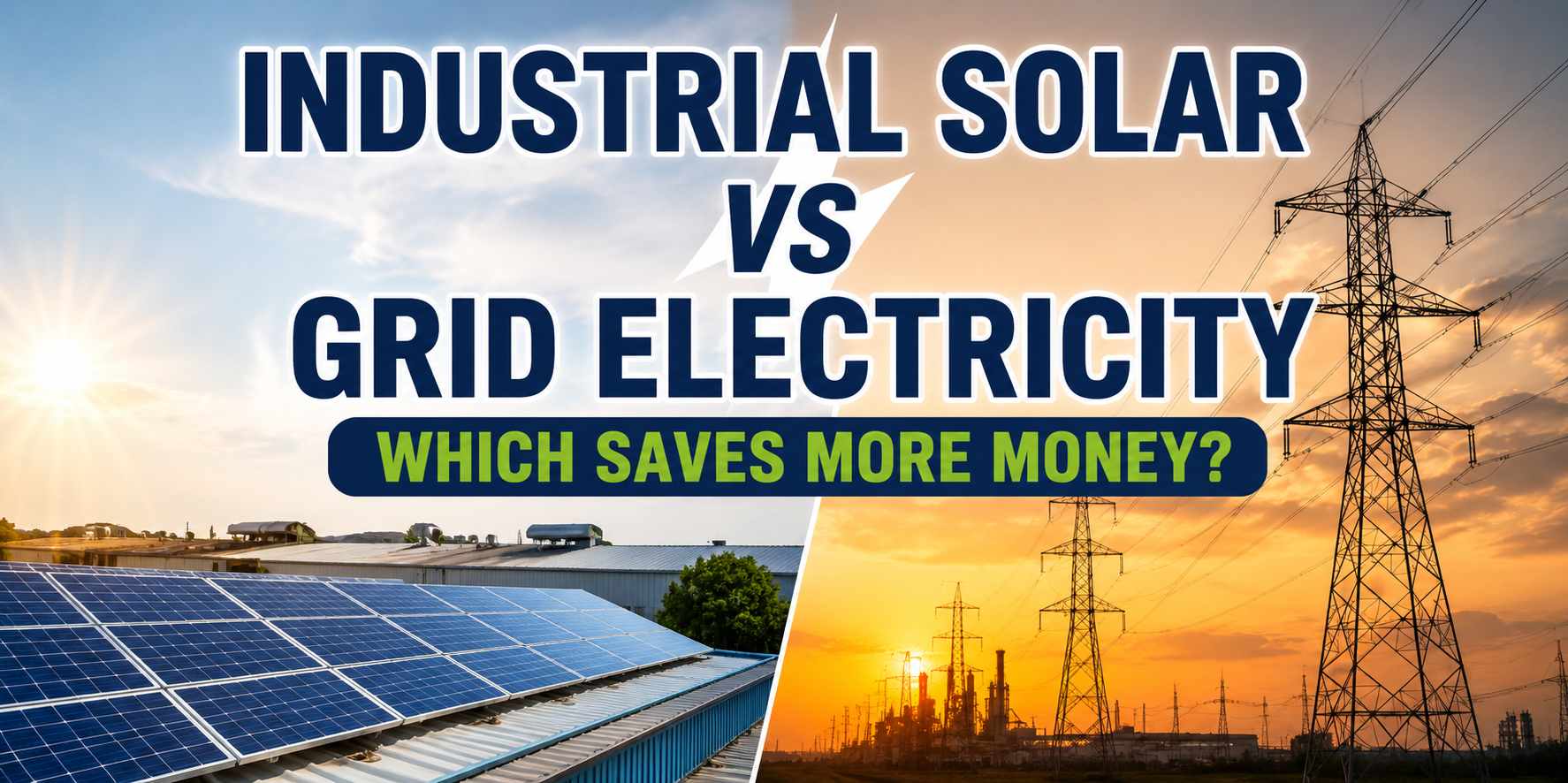
Electricity is one of the biggest operating expenses for many industries in India. Whether it is a manufacturing unit, textile factory, warehouse, or processing plant, a large amount of electricity is needed every day to keep operations running smoothly. As electricity prices continue to rise, many business owners are looking for ways to reduce their energy costs.
One of the most popular solutions today is industrial solar power. But does it really save more money than traditional grid electricity? In this guide, we will compare industrial solar and grid electricity to help businesses make the right decision.
Industrial solar is a solar power system designed to meet the electricity needs of factories, warehouses, and industrial facilities. These systems use solar panels to convert sunlight into electricity, which can then be used to run machines, equipment, lighting, and other operations.
Most industrial solar systems are installed on factory rooftops or available land within the industrial premises. The electricity generated can be used directly, helping businesses reduce their dependence on the power grid.
Grid electricity is the power supplied by electricity distribution companies. Industries receive electricity through a grid connection and pay monthly bills based on their energy consumption.
While grid electricity is reliable and widely available, industrial electricity tariffs are often higher than residential rates. In addition, electricity prices tend to increase over time, which can affect business profitability.
Industrial solar uses sunlight, which is free and renewable. Once the solar system is installed, the energy generated does not have any fuel cost.
Grid electricity is supplied by power generation plants and distribution companies. Businesses must continue paying electricity charges every month based on usage.
Industrial solar requires an initial investment for purchasing and installing solar panels, inverters, and other components.
Grid electricity does not require a major upfront investment because the infrastructure is already available through the utility provider.
This is where industrial solar offers a significant advantage.
After installation, solar power can greatly reduce electricity bills. Industries that consume large amounts of electricity during daytime hours often see substantial savings.
With grid electricity, businesses continue to pay monthly charges, and these costs can increase whenever electricity tariffs rise.
Industrial solar systems require basic maintenance such as panel cleaning and periodic inspections. Modern solar systems are designed to operate efficiently with minimal maintenance.
Grid electricity does not require maintenance from the consumer's side, but businesses remain dependent on the utility provider for uninterrupted supply.
When comparing industrial solar and grid electricity, it is important to look beyond the initial investment and focus on long-term costs.
Industrial solar systems require a higher initial investment compared to grid electricity. The exact cost depends on factors such as system size, location, and energy requirements.
Although the initial cost may seem significant, many businesses recover this investment through electricity bill savings over time.
Industrial solar provides long-term financial benefits because sunlight is free. Once the system starts generating electricity, businesses can significantly reduce their monthly energy expenses.
Grid electricity, on the other hand, remains an ongoing cost. Every increase in electricity tariffs directly impacts operating expenses.
For industries planning long-term growth, solar power often delivers better financial value.
Most industrial solar projects achieve payback within a few years, depending on electricity consumption and system size.
After the payback period, the electricity generated by the solar system effectively becomes a source of low-cost power, helping businesses save money for many years.
Reducing electricity expenses can improve overall profitability. Businesses can use these savings for expansion, equipment upgrades, or other investments.
Electricity rates have increased over time and may continue to rise in the future. Industrial solar helps businesses reduce their exposure to these price increases.
Generating electricity on-site gives industries greater control over their energy supply and reduces dependence on external providers.
Solar energy is clean and renewable. By switching to solar power, industries can reduce carbon emissions and support environmental sustainability.
Customers, investors, and business partners increasingly value environmentally responsible companies. Using solar energy can strengthen a company's reputation.
Although industrial solar offers significant savings, grid electricity still plays an important role.
Solar panels generate electricity during daylight hours. At night or during periods of low sunlight, industries may need support from the grid.
For this reason, many businesses choose an on-grid solar system, which combines solar power with grid electricity to ensure a continuous power supply.
The most practical solution for many industries is to use both solar power and grid electricity.
During the day, the solar system supplies electricity directly to the factory. If additional power is needed, the grid provides support.
In some cases, excess solar power can be exported to the grid through net metering, depending on local regulations and utility policies. This can further improve the financial benefits of a solar installation.
Consider a factory with high daytime electricity consumption.
Without solar power, the factory depends entirely on grid electricity and receives a large monthly electricity bill.
After installing an industrial solar system, a significant portion of the factory's daytime electricity needs is met through solar energy. As a result, monthly electricity expenses decrease substantially.
Over the years, these savings can add up to a significant amount, making industrial solar a valuable long-term investment.
Before investing in industrial solar, businesses should evaluate:
Current electricity consumption
Available rooftop or land space
Budget and investment goals
Future energy requirements
Expected return on investment
A professional solar assessment can help determine the ideal system size and expected savings.
Selecting an experienced solar company is essential for achieving maximum performance and savings.
Shree Hari Solar provides customized industrial solar solutions designed to match the specific energy needs of businesses. From system design and installation to ongoing support, the company focuses on delivering reliable and efficient solar power systems.
Businesses in Surat and across Gujarat can benefit from professional guidance, quality components, and expert installation services that help maximize long-term savings.
Address: 2nd Floor, Plot No. 6 Opp. Nr. Samast Patidar Samaj Hall, Aamba Talavadi, Katargam, Surat, Gujarat, India, 395004.
Phone: +91 90334 69680
When comparing industrial solar and grid electricity, solar power often provides greater long-term savings for businesses. While industrial solar requires an initial investment, it can significantly reduce monthly electricity expenses, protect against rising energy costs, and improve energy independence.
Grid electricity remains important as a backup source, but industries that combine solar power with grid connectivity can enjoy the best of both worlds.
For businesses looking to reduce operating costs and invest in a sustainable future, industrial solar is becoming one of the smartest energy solutions available today.