English
 Arabic
 French
 Spanish
 Portuguese
 Deutsch
 Turkish
 Dutch
Dutch
 Italiano
 Russian
 Romaian
 Portuguese (Brazil)
 Greek
Greek
Still Struggling with Pigmentation? Melalite Forte Cream Might Be the Answer!
Health |
2026-05-26 10:10:41
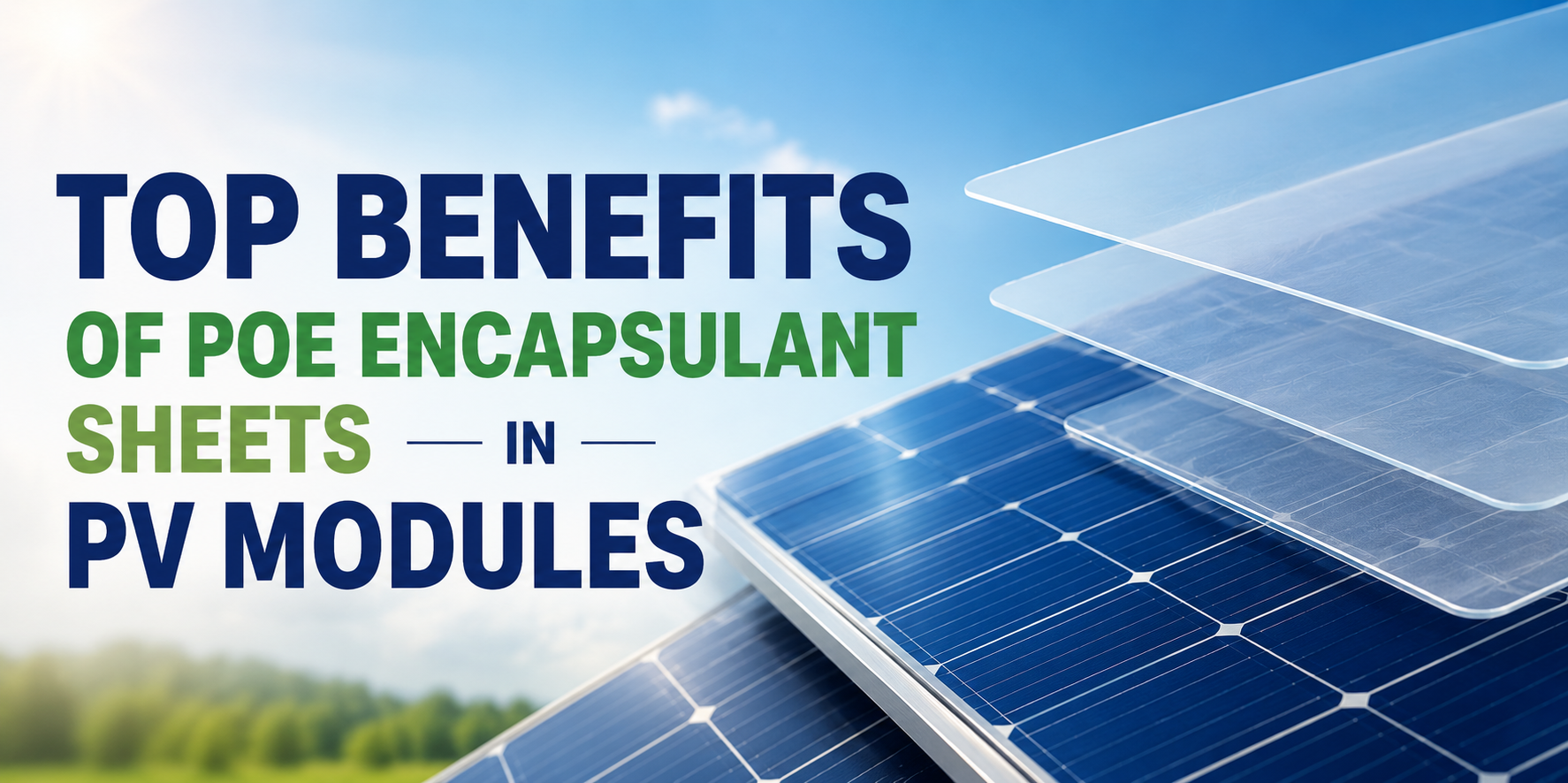
The solar industry continues to grow as businesses and homeowners look for reliable ways to produce clean energy. While solar cells often receive the most attention, the materials used to protect those cells are equally important. One such material is the POE encapsulant sheet, which plays a key role in improving the performance, durability, and lifespan of photovoltaic (PV) modules.
As solar technology advances, manufacturers are increasingly choosing POE encapsulant sheets over traditional alternatives because of their excellent protective properties. In this article, we will explore the top benefits of POE encapsulant sheets in PV modules and why they have become an important component in modern solar panel manufacturing.
POE stands for Polyolefin Elastomer. POE encapsulant sheets are protective layers used inside solar panels to secure and protect solar cells. These sheets are placed between the glass, solar cells, and backsheet during the module lamination process.
The main purpose of a POE encapsulant sheet is to protect solar cells from moisture, heat, UV radiation, and other environmental factors that can reduce the performance of a solar module over time.
As solar panel designs become more advanced, POE encapsulants are becoming a preferred choice because they offer better protection and reliability than many traditional encapsulation materials.
One of the biggest advantages of POE encapsulant sheets is their excellent moisture resistance.
Moisture is one of the main causes of solar module degradation. When water enters a solar panel, it can damage electrical connections, increase corrosion, and reduce energy output.
POE encapsulant sheets have a very low moisture transmission rate, which means they help prevent water from entering the module. This added protection is especially important for solar installations located in coastal regions, humid environments, and areas with heavy rainfall.
By reducing moisture penetration, POE encapsulants help maintain stable performance throughout the life of the solar panel.
Potential Induced Degradation, commonly known as PID, is a serious issue that can affect solar panel performance. PID occurs when voltage differences within the solar module cause power loss over time.
Modern solar systems often operate at higher voltages, making PID resistance more important than ever.
POE encapsulant sheets offer excellent electrical insulation properties that help reduce the risk of PID. This allows solar modules to maintain higher efficiency levels even after years of operation.
For large-scale solar farms and commercial projects, PID-resistant materials can significantly improve long-term energy production and system reliability.
Electrical insulation is an important factor in solar module safety and performance.
POE encapsulant sheets provide high electrical resistance, which helps protect solar cells from electrical leakage and unwanted current flow. This added insulation supports stable operation and helps reduce the risk of electrical failures.
As solar module technologies continue to evolve, strong electrical insulation becomes increasingly important for maintaining performance and meeting industry standards.
Solar panels are exposed to different weather conditions every day. They must withstand heat, cold, rain, humidity, wind, and ultraviolet radiation for many years.
POE encapsulant sheets are designed to perform well under challenging environmental conditions. They maintain their physical and electrical properties even when exposed to temperature changes and long periods of sunlight.
This durability helps solar panels continue generating energy efficiently while reducing the risk of material breakdown over time.
For projects installed in deserts, tropical climates, or regions with extreme temperatures, POE encapsulants provide an extra layer of protection.
Constant exposure to sunlight can gradually affect some encapsulation materials. Over time, this can lead to discoloration, reduced transparency, and lower module performance.
POE encapsulant sheets offer strong resistance to ultraviolet radiation. They remain stable even after years of exposure to sunlight.
This stability helps maintain light transmission to the solar cells, allowing the module to continue producing energy efficiently throughout its service life.
Better UV resistance also supports the overall appearance and structural integrity of solar panels.
Solar module efficiency is not only about initial performance. Long-term energy production is equally important.
Because POE encapsulant sheets offer strong protection against moisture, PID, UV radiation, and environmental stress, they help reduce performance losses over time.
As a result, solar panels can maintain higher energy output for a longer period. This translates into better energy generation and improved return on investment for solar project owners.
Whether the installation is residential, commercial, or utility-scale, maintaining energy production over many years is a major advantage.
The solar industry is rapidly adopting advanced cell technologies such as TOPCon, HJT, and bifacial solar modules.
These next-generation solar technologies require high-performance encapsulation materials that can provide excellent protection and electrical insulation.
POE encapsulant sheets are highly compatible with these advanced module designs. Their strong insulation properties and moisture resistance make them well suited for high-efficiency solar panels.
As demand for advanced solar modules continues to grow, the use of POE encapsulation materials is expected to increase as well.
The lifespan of a solar panel is one of the most important factors for investors, manufacturers, and system owners.
A high-quality encapsulant helps protect internal components and reduces the impact of environmental stress. Since POE encapsulant sheets provide superior protection against common causes of module degradation, they contribute to a longer operational life.
Many manufacturers choose POE materials because they support long-term module reliability and help maintain performance over decades of use.
A longer-lasting solar module means lower replacement costs and greater value from the solar investment.
Maintenance costs can affect the overall profitability of a solar project.
By improving resistance to moisture, corrosion, and electrical issues, POE encapsulant sheets help reduce the likelihood of module-related problems. This can lead to fewer repairs and less maintenance throughout the system's lifespan.
Lower maintenance requirements are particularly valuable for large solar farms where even small improvements in reliability can create significant cost savings.
For project owners, reduced operating expenses contribute to a stronger financial return over time.
EVA encapsulant has been widely used in the solar industry for many years. However, POE encapsulant sheets offer several advantages in modern solar applications.
Compared to EVA, POE generally provides better moisture resistance, stronger PID protection, and improved electrical insulation. These benefits make POE a preferred option for high-performance solar modules and advanced cell technologies.
While both materials have their applications, many manufacturers now select POE when long-term reliability and performance are key priorities.