English
 Arabic
 French
 Spanish
 Portuguese
 Deutsch
 Turkish
 Dutch
Dutch
 Italiano
 Russian
 Romaian
 Portuguese (Brazil)
 Greek
Greek
The Cream That’s Making Dark Spots Disappear Overnight? Meet Melalite 15% Cream!
Health |
2026-05-26 10:10:27
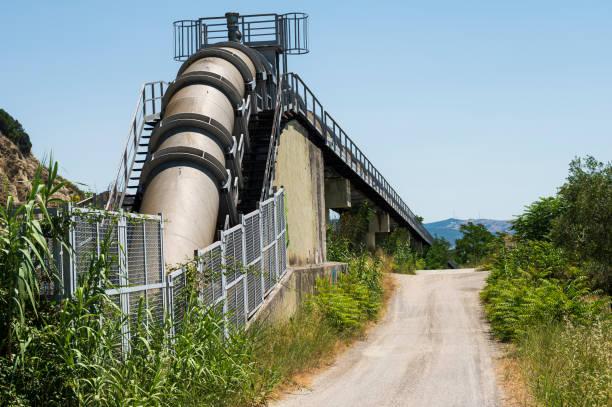
Italy’s water and wastewater pump sector is gaining importance as municipalities, utilities, and industries upgrade aging water networks and treatment systems. Pumps are essential for moving clean water, wastewater, sludge, stormwater, and industrial process fluids across treatment plants, distribution networks, pumping stations, and reuse systems. Their role is becoming more critical as Italy focuses on reducing water losses, improving wastewater handling, and strengthening infrastructure resilience.
According to MarkNtel Advisors, Italy’s water and wastewater pump industry was valued at around USD 354 million in 2025 and is projected to grow from nearly USD 368 million in 2026 to about USD 461 million by 2032, expanding at a CAGR of around 3.8% during 2026–2032. The sector’s future opportunities are linked with modernization of aging water infrastructure, replacement of inefficient pumping systems, and rising investment in wastewater treatment facilities.
Italy has a long-established water network, but several parts of the system require modernization due to aging pipelines, leakage, pressure losses, and uneven regional infrastructure quality. Pumps are central to this renewal because they support water abstraction, treatment, distribution, wastewater transfer, and flood-control operations. When networks are upgraded, utilities often replace older pumps with more efficient and digitally monitored systems.
The European Commission continues to emphasize stronger water protection, efficient resource use, and improved wastewater management across member states. This policy environment supports investments in pumping stations, treatment plants, distribution assets, and monitoring systems that can help utilities improve service reliability and environmental performance.
Wastewater treatment facilities depend on pumps at multiple stages, including influent transfer, sludge handling, chemical dosing, aeration support, filtration, and discharge. As treatment plants become more advanced, pump selection becomes more technical. Operators need equipment that can handle solids, corrosive fluids, varying flow rates, and continuous operating conditions.
Italy’s compliance with European wastewater rules has encouraged improvements in collection and treatment infrastructure. The Italian Ministry of Environment and Energy Security plays an important role in environmental policy, water protection, and sustainable resource management. Such institutional focus strengthens the need for dependable pumping systems that can support better wastewater handling and reduce untreated discharge risks.
Water loss remains a major concern for utilities because leakage increases operating costs, wastes treated water, and affects supply reliability. Pumping systems are closely connected with leakage management because pressure control, flow regulation, and network monitoring can influence how efficiently water moves through distribution systems. Better pumps, variable-speed drives, and automation can help utilities operate networks with improved control.
The Italian National Institute for Environmental Protection and Research provides environmental data and technical knowledge related to water resources, ecosystems, and sustainability. Such information is important as utilities and policymakers evaluate how infrastructure condition, climate pressure, and water availability affect long-term planning.
Industrial facilities in food processing, chemicals, pharmaceuticals, energy, textiles, and manufacturing also create demand for water and wastewater pumps. These users require pumps for process water, cooling, cleaning, effluent treatment, chemical dosing, and sludge movement. In many industrial settings, pump failure can disrupt production, increase compliance risks, or raise maintenance costs.
Pump requirements vary widely by application. Centrifugal pumps are widely used for high-flow water movement, while positive displacement pumps may be preferred for dosing, viscous fluids, or controlled transfer. Submersible pumps are common in wastewater and drainage applications, while vertical turbine and multistage pumps support specific pressure and lifting needs. This application diversity creates demand for tailored engineering rather than one-size-fits-all equipment.
Pumps can account for a significant portion of electricity use in water utilities and industrial facilities. This makes energy efficiency an important purchasing factor. Variable frequency drives, improved impeller design, smart controls, and high-efficiency motors can reduce electricity consumption and improve lifecycle performance.
The European Environment Agency highlights water management as a key environmental priority, especially as climate stress, pollution, and resource demand affect European water systems. For Italy, efficient pumping can support both environmental goals and cost control by reducing avoidable energy use across water and wastewater operations.
Smart pumping systems are becoming more relevant as utilities adopt sensors, SCADA platforms, remote monitoring, and predictive maintenance tools. These technologies help detect abnormal vibration, pressure variation, leakage, clogging, and energy inefficiency before failures occur. For wastewater plants and water networks, early detection can reduce downtime and improve service continuity.
Digital systems also help operators manage seasonal changes in water demand, stormwater events, and treatment plant load variations. This is particularly useful for municipalities and industrial operators that need stable performance while controlling maintenance budgets.
Technical standards are important because pumps operate under different pressures, flow conditions, and fluid characteristics. Proper design, installation, testing, and maintenance can reduce failures and improve safety. ISO standards support consistency across industrial equipment, quality systems, and technical practices, helping manufacturers and operators align with recognized performance expectations.
For Italy’s water and wastewater pump sector, future demand is likely to be shaped by infrastructure renewal, wastewater compliance, leakage control, industrial modernization, and energy-efficient equipment adoption. While high replacement costs and complex procurement cycles may slow upgrades in some areas, long-term investment in resilient water systems is expected to keep pumps central to Italy’s utility and industrial infrastructure.