English
 Arabic
 French
 Spanish
 Portuguese
 Deutsch
 Turkish
 Dutch
Dutch
 Italiano
 Russian
 Romaian
 Portuguese (Brazil)
 Greek
Greek
Longer, Fuller Lashes in Weeks - Lumigan's Magic Revealed!
Health |
2026-05-26 13:25:09
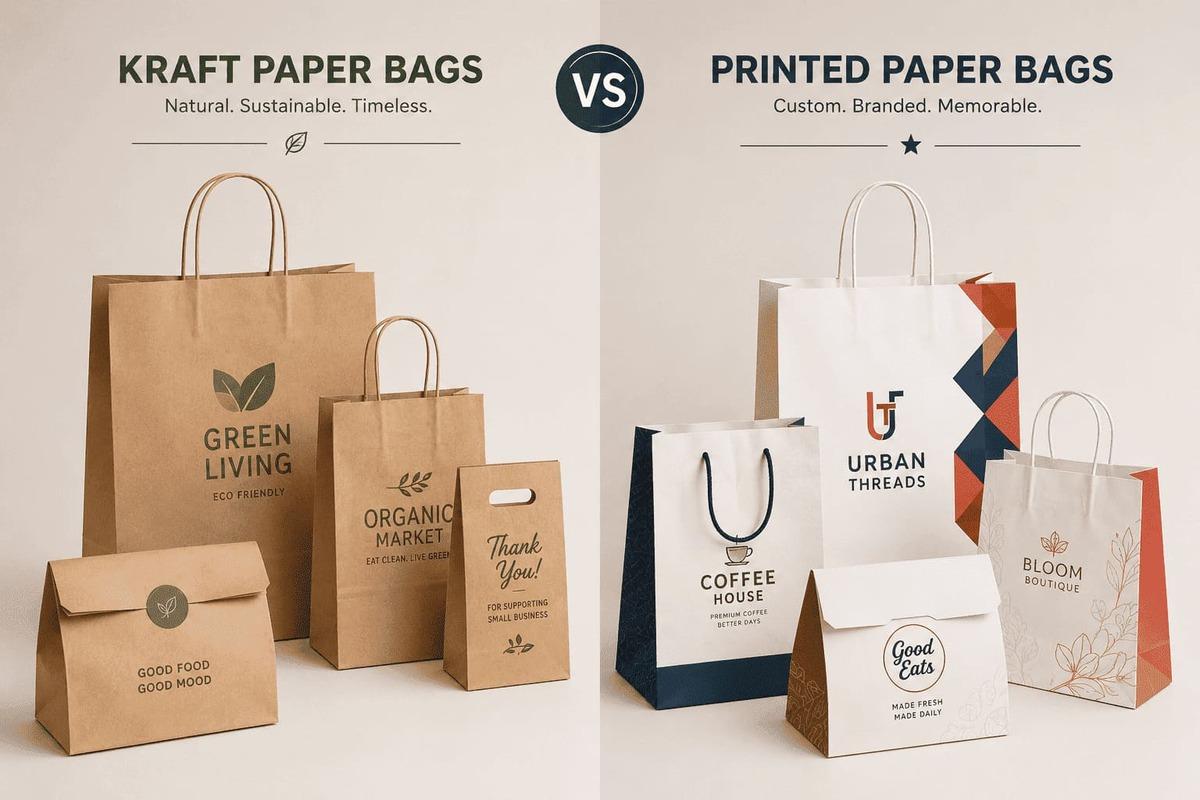
Packaging is no longer just a way to carry products. For modern businesses, it has become an important part of branding, customer experience, and cost management. Every business wants packaging that protects products, looks professional, and supports long-term growth without increasing expenses.
Two popular options in the packaging industry are kraft paper bags and printed paper bags. Both options offer unique benefits, but the right choice depends on a company’s budget, product type, marketing goals, and customer expectations.
Kraft bags are known for their simple appearance, natural texture, and affordable pricing, while printed paper bags help businesses create a stronger brand identity through custom designs and promotional elements. The real question is: which option provides better value and saves more money in the long run?
This guide compares the cost, durability, branding potential, storage needs, and return on investment of both packaging solutions to help businesses make the right decision.
Kraft paper bags are among the most budget-friendly packaging options available for businesses. They are commonly made from recycled or virgin kraft paper, giving them a natural brown or white appearance.
The main reason many companies choose kraft bags is their lower production cost. Since they require fewer finishing processes and minimal customization, manufacturers can produce them at a reduced price.
For small businesses, restaurants, bakeries, retail stores, and startups, kraft bags provide an economical way to package products while maintaining a professional appearance.
Several factors affect the cost of kraft bags, including:
Buying kraft bags in bulk usually lowers the per-unit cost, making them ideal for businesses that need large quantities of packaging without premium printing expenses.
Another advantage is that kraft bags often require less complicated production. Without multiple printing colors, coatings, or decorative finishes, businesses can reduce manufacturing costs while still offering customers a reliable packaging solution.
Printed paper bags usually have a higher upfront cost because they involve additional design and manufacturing steps. Unlike plain kraft bags, printed bags require artwork preparation, ink application, color matching, and sometimes special finishes.
However, the extra investment provides businesses with a powerful marketing tool. A well-designed printed paper bag can act as mobile advertising whenever customers carry it in public.
The cost of printed bags depends on:
Simple one-color printing is generally more affordable, while full-color designs with premium finishes may increase the price.
Although printed bags cost more initially, they can deliver greater brand exposure. For businesses focused on customer recognition and premium presentation, the additional cost can become a valuable marketing investment.
The size of packaging plays an important role in overall cost. Choosing the right dimensions helps businesses avoid paying for unnecessary material and storage space.
In the USA, common paper bag sizes include:
Small Paper Bags
Medium Paper Bags
Large Paper Bags
Businesses should select sizes based on their products rather than choosing oversized bags. Larger bags use more material, increase shipping expenses, and require additional storage space.
A properly sized kraft or printed paper bag can reduce waste and improve cost control.
Branding is where kraft and printed bags differ significantly.
Plain kraft bags offer a clean and natural look. Many businesses add simple logos, stickers, stamps, or labels to personalize them. This approach keeps costs low while still creating brand awareness.
Printed paper bags provide more design freedom. Businesses can showcase:
For companies competing in crowded markets, packaging design can influence purchasing decisions. Customers often associate attractive packaging with product quality.
While printing increases packaging expenses, it can reduce the need for additional advertising materials. A customized bag can serve as both packaging and a marketing channel.
Storage is another important factor that affects packaging expenses.
Kraft bags are often easier to store because they are simple, lightweight, and available in large quantities. Businesses that need everyday packaging can keep a large supply without significant storage concerns.
Printed paper bags may require more careful inventory planning, especially when designs are seasonal or campaign-specific. Ordering too many printed bags can create problems if branding changes or products are updated.
For businesses with frequent promotions or changing collections, smaller printed bag orders may be more practical. Companies with stable branding can benefit from ordering larger quantities to reduce costs.
Proper storage planning helps prevent unnecessary packaging waste and protects the business investment.
A packaging solution should not only look good but also perform well.
Kraft paper bags are popular because they offer reliable strength and durability. High-quality kraft paper can handle everyday retail and food applications while maintaining a natural appearance.
Printed paper bags can also be highly durable because printing does not automatically reduce material strength. Their performance depends on the paper quality, construction, and handle design.
Reusable packaging has become increasingly important among customers. Many consumers prefer bags that can be reused instead of disposable options.
Durable paper bags can improve customer satisfaction and encourage repeat use, giving businesses more brand exposure over time.
Sustainable packaging has become a major factor in purchasing decisions. Customers are paying more attention to businesses that use environmentally responsible materials.
Both kraft and printed paper bags can support sustainability goals when produced using recyclable materials and responsible manufacturing practices.
Kraft bags often have an advantage because their natural appearance immediately communicates an eco-friendly image. They are widely associated with minimal and sustainable packaging.
Printed bags can also support sustainability while adding branding value. Businesses can combine recycled materials with custom printing to create packaging that matches their environmental message.
The return on investment is not only measured by packaging cost. It also includes:
A slightly higher packaging investment can create long-term business value when customers connect with the brand experience.
Different industries have different packaging needs, so there is no single option that works for every business.
Restaurants, bakeries, and cafes often prefer kraft bags because they are affordable, practical, and suitable for everyday use. Their natural look also matches the growing demand for eco-friendly food packaging.
Fashion stores, beauty brands, and specialty shops often benefit from printed bags because packaging becomes part of the shopping experience.
Premium businesses usually choose custom printed paper bags with high-quality finishes because appearance plays a major role in customer perception.
New businesses often start with kraft bags to control costs. As the brand grows, they can upgrade to more customized packaging.
Kraft bags are the better option when cost control is the main priority.
They work well for businesses that:
They are especially useful for businesses that want reliable packaging without investing heavily in design and printing.
For many small and growing businesses, kraft bags provide the best balance between affordability and functionality.
Printed paper bags are ideal when branding and customer experience are important.
They are a better choice for businesses that:
Although the initial cost is higher, printed bags can create stronger customer connections and improve brand recognition.
A well-designed bag can make a business appear more professional and memorable.
Choosing between kraft paper bags and printed paper bags depends on business goals.
If the priority is saving money and maintaining simple, functional packaging, kraft bags are usually the better choice. They offer affordability, durability, and an eco-friendly appearance.
If the goal is building a recognizable brand and creating a premium customer experience, printed paper bags provide greater long-term value.
For many businesses, the best approach is a combination of both. Kraft bags can handle daily packaging needs, while printed bags can be used for special products, promotions, and customer-focused experiences.
The smartest packaging decision is not always the cheapest option. It is the option that provides the best balance of cost, quality, branding, and customer value.