English
 Arabic
 French
 Spanish
 Portuguese
 Deutsch
 Turkish
 Dutch
Dutch
 Italiano
 Russian
 Romaian
 Portuguese (Brazil)
 Greek
Greek
PVDF Resin Market Growth Driven by Expanding Demand for Sustainable Energy Storage Systems and Grid Modernization Projects
Other |
2026-06-02 13:08:24
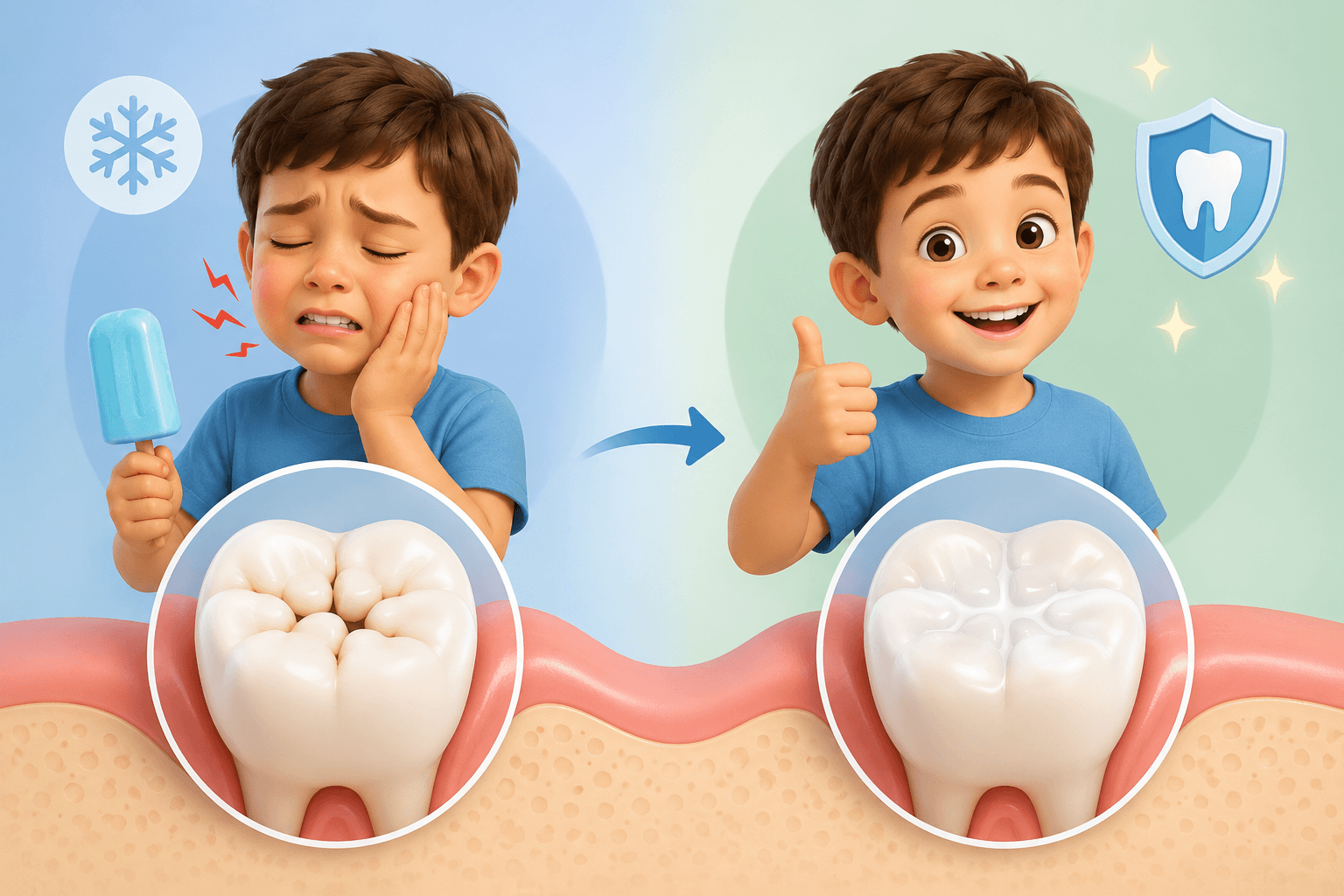
Yes, dental sealants can ease tooth sensitivity in kids by covering the deep grooves where hot, cold, and sweet foods reach the nerve. They're thin protective coatings painted onto the chewing surfaces of back teeth, and the whole process takes just a few minutes per tooth. If your child winces at ice cream or pulls away from cold water, sealants might be exactly the simple fix you're looking for.
A dental sealant is a thin coating, usually made of resin or glass ionomer, that gets painted onto the top surface of your child's back teeth. Think of it like a raincoat for their molars; it sits right over those deep little grooves and pits where food, bacteria, and acid like to hide.
Here's the thing about kids' molars: their chewing surfaces are full of tiny canyons and crevices. A toothbrush bristle just can't get all the way in there, no matter how good your child's brushing technique is. That's where decay usually starts, and it's also where sensitivity often shows up first.
Sealants smooth all of that out. Once applied, the tooth surface becomes flat and easy to clean, with nothing left for bacteria to grab onto.
Tooth sensitivity happens when the protective layer of enamel gets thin, worn, or has tiny openings, exposing the layer underneath called dentin. Dentin has microscopic tubules that lead straight to the nerve. So when something hot, cold, or sweet touches it, that sensation travels right to the nerve and, ouch.
In kids, a few things can cause this. Newly erupted molars sometimes have weaker, less-mineralized enamel. Deep natural grooves can wear thin faster than smoother areas. And some children have a condition where the enamel on certain molars didn't form as strongly as it should, leaving those teeth more reactive to temperature and pressure.
Whatever the cause, the result is the same: a kid who suddenly doesn't want cold juice, or who eats on one side of their mouth to avoid a sore spot.
Once the grooves are sealed, hot and cold foods, sugary snacks, and acidic drinks can't reach the exposed dentin underneath as easily. The sealant acts as a physical shield, so the nerve doesn't get triggered every time your child takes a bite of something cold.
A sensitive tooth with an open, unprotected groove is also a tooth that's more likely to develop a cavity. And a cavity makes sensitivity worse, a lot worse. By sealing the area early, you're not just easing today's discomfort; you're also preventing a bigger problem down the road.
Sealants are great at blocking surface-level triggers, but they don't fix sensitivity that comes from somewhere else, like gum recession near the front teeth or a tooth that's already cracked. If your child's sensitivity seems to be coming from somewhere other than the chewing surfaces of their molars, your dentist will check for other causes too.
The best time is right when the permanent molars come in, usually around age 6 for the first set, and again around age 12 for the second set. Sealing them early means protection is in place before those deep grooves have a chance to trap food and bacteria for years.
That said, sealants can be placed at any age once a molar has fully erupted. If your child is 9 and hasn't had sealants yet, it's not too late; there's still real benefit to having them done now.
This is one of the easiest visits your child will ever have at the dentist. No needles, no drilling, no numbing required.
The dentist or hygienist will first clean and dry the tooth completely. Then a mild solution is applied to the chewing surface for a few seconds, which helps the sealant bond properly. After rinsing and drying again, the sealant material is painted directly onto the grooves of the tooth. A special light is used to harden it in place, and that's it. The whole thing takes just a few minutes per tooth, and your child can eat and drink normally right after.
Most kids describe it as "the dentist painted my tooth", and honestly, that's a pretty accurate description.
Sealants typically last anywhere from 3 to 5 years with normal wear, though many hold up even longer. At regular checkups, your dentist will check that the sealant is still intact and reapply if needed. There's no downside to checking; it's quick, painless, and keeps that protection going.
In most cases, yes. Sealants are designed for the molars and premolars, the back teeth with the deep pits and grooves that are hardest to clean and most prone to both decay and sensitivity. Front teeth are generally smoother and don't usually need this type of coating.
Can sealants really help with tooth sensitivity in kids?
Yes. By covering the exposed grooves on molars, sealants block hot, cold, and sweet triggers from reaching the sensitive layer underneath, which can noticeably reduce discomfort.
Do sealants hurt to apply?
No. The process is completely painless and doesn't require any numbing or drilling. Most kids sit through it without any fuss.
At what age should my child get sealants?
The ideal time is as soon as the permanent molars erupt, typically around age 6 and again around age 12. Sealants can also be done later if your child missed this window.
How long do dental sealants last?
Most sealants last 3 to 5 years, and your dentist will check them at regular visits to see if they need to be reapplied.
Will sealants fix all of my child's tooth sensitivity?
Not always. Sealants help with sensitivity caused by exposed grooves on chewing surfaces, but other causes, like gum recession or a cracked tooth, need a different approach.
Can sealants be placed on baby teeth too?
Yes, in some cases. If a baby molar has deep grooves and is at risk for decay or sensitivity, a dentist may recommend sealing it as well.
Do sealants need to be replaced?
Sometimes. Sealants can wear down over the years, so your dentist will check them at checkups and touch them up if needed.
If your child gets that sharp wince from a cold drink or a bite of ice cream, sealants are one of the simplest, most painless ways to ease that discomfort and prevent cavities at the same time. They're quick, they don't hurt, and they protect exactly the spots where sensitivity tends to start.
If you've noticed your child avoiding certain foods or favoring one side of their mouth, it might be time for a quick check-up at the clinic. Reach out to schedule a visit and find out if sealants are the right fit for your child's smile.