English
 Arabic
 French
 Spanish
 Portuguese
 Deutsch
 Turkish
 Dutch
Dutch
 Italiano
 Russian
 Romaian
 Portuguese (Brazil)
 Greek
Greek
Orange County Social Skills Groups
Health |
2026-05-30 10:58:50
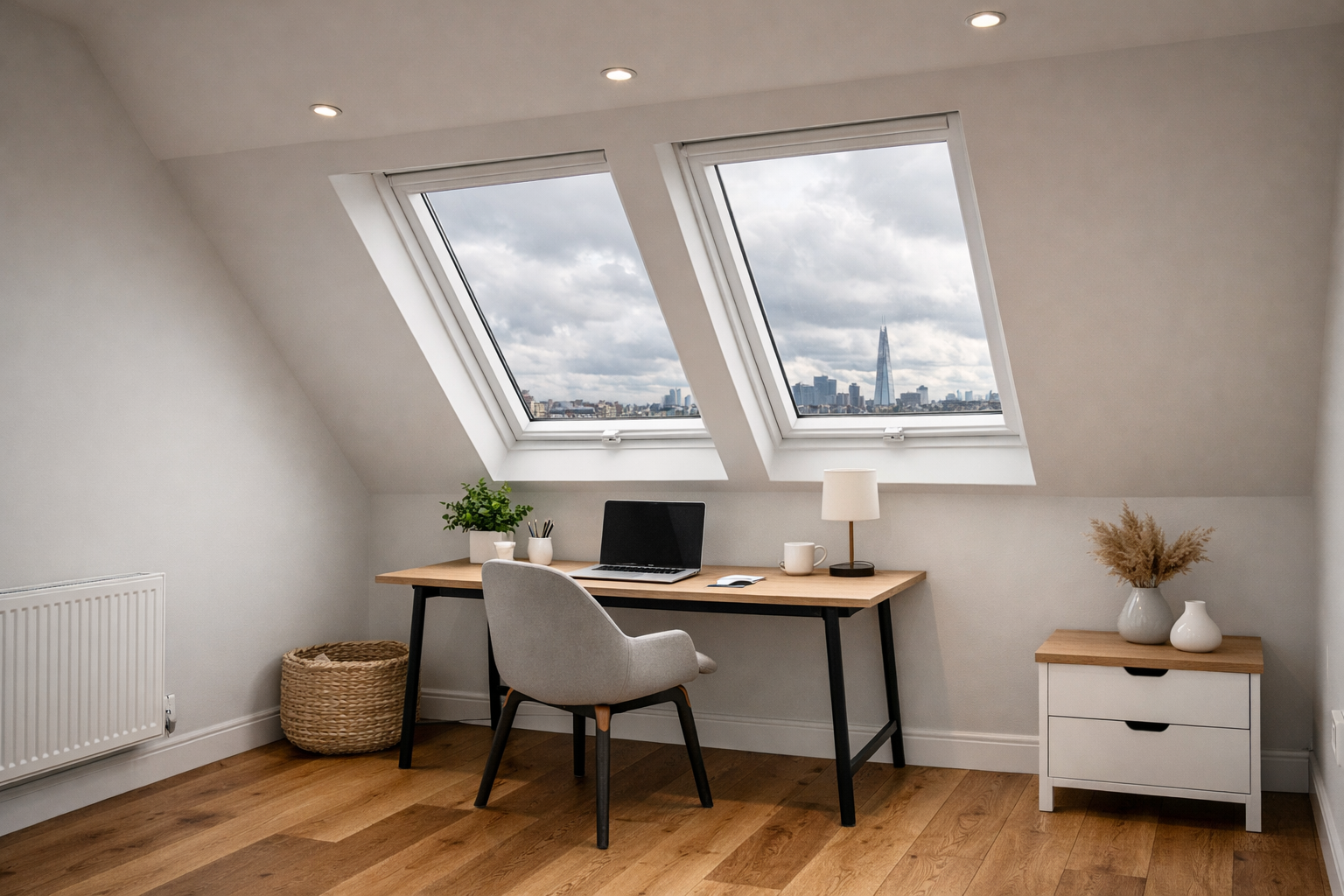
Loft conversion cost is the question most London homeowners ask before anything else — and rightly so. With family needs growing, working from home now permanent for many, and the cost of moving in London at an all-time high, more homeowners are choosing to extend upward rather than relocate. The challenge is that prices vary widely depending on the type of conversion, the size and condition of the existing roof, the borough, and the specification of the finish. This guide sets out exactly what to expect in 2026 — based on real project experience — so homeowners can plan a realistic budget before approaching any builder.
Loft conversion costs in London sit consistently above the UK average, for the same reasons every form of construction does in the capital. Higher labour rates, parking restrictions, the logistics of working on tight terraced streets, and the structural complexity of Victorian, Edwardian, and inter-war housing stock all contribute. As a baseline, London projects typically run 15 to 25 percent above equivalent projects elsewhere in the UK. Across West London — including Hayes, Hillingdon, Ealing, Hounslow, and Richmond — the typical 2026 price ranges are as follows.
A Velux conversion — the simplest type, where roof windows are fitted into the existing slope without changing the roof shape — generally costs between £25,000 and £45,000. A rear dormer conversion, which is by far the most common type across London terraces, typically falls between £50,000 and £80,000. A hip-to-gable conversion for semi-detached and detached homes ranges from £55,000 to £75,000, and is often combined with a rear dormer to maximise space. Mansard conversions, which rebuild the entire roof structure and are common in conservation areas, run from £65,000 to £120,000 or more depending on specification.
These figures cover the structural build itself — the foundations to the existing structure, steelwork, dormer construction, roofing, insulation, plastering, first-fix electrics and plumbing, the new staircase, and basic finishes. They typically exclude bathroom suites, fitted wardrobes, flooring, and decoration, which vary widely based on client preference and can easily add another £6,000 to £15,000 to the total.
Two homeowners on the same street, in identical houses, can receive loft conversion quotes that differ by £20,000 or more. Understanding the factors that drive that variance is the most useful thing a homeowner can do before requesting quotes.
This is the single biggest lever. A standard rear dormer with timber-framed windows, painted plasterboard walls, and a basic en-suite is a very different project from one with full-height aluminium glazing, oak engineered flooring, bespoke storage, a walk-in shower with stone tiling, and integrated lighting. The structural shell is the same; the cost difference is almost entirely in the finishes.
Velux is always the cheapest because no structural alteration is made to the roof shape. Dormers add a flat-walled internal space and require new roofing, but remain efficient to build. Hip-to-gable and L-shaped conversions involve more structural work because the side roof is rebuilt vertically. Mansards are the most expensive because the entire roof plane is reconstructed.
Older Victorian and Edwardian London properties — the dominant housing stock across West London — often reveal issues that only become apparent once work begins. Substandard rafters, deteriorated chimney flashing, lead pipework that needs rerouting, or asbestos in old cement boards are all common discoveries. A 10–15% contingency over the headline build cost is sensible for any London loft project, and essential for properties built before 1940.
Loft conversions need a minimum 2.2 to 2.4 metres head height at the ridge to be usable. Where head height is borderline, a structural solution may be required — typically lowering the ceiling of the floor below or, in extreme cases, raising the ridge under a planning application. Either route adds significant cost, which is why an honest feasibility check at the survey stage matters more than any other decision in the project.
Inner London boroughs and conservation areas tend to be more expensive than outer London because of stricter planning, more demanding design standards, and tighter site logistics. A property on a narrow terraced street with no rear access will cost more to scaffold and supply than a semi-detached home with side access — these are real differences that any honest builder will price for, not gloss over.
The most common cause of disappointment in loft conversion projects is not the headline price — it is the gap between what the homeowner thought was included and what actually was. A reputable London builder's fixed-price quote should clearly state which of the following are included or excluded.
The structural elements that should be included in any reasonable London loft conversion quote are: structural engineer calculations and drawings, new floor joists or steelwork, the dormer or hip-to-gable construction itself, all roofing materials, insulation to current Part L standards, the new fixed staircase, fire-rated doors to the rest of the house, plasterboard and skim plaster to all walls and ceilings, first-fix electrics and plumbing, second-fix electrical fittings to a basic specification, the bathroom suite installation labour, and the building regulations submission and inspection fees.
What is usually excluded — and should always be confirmed line-by-line — includes: the bathroom suite itself (taps, basin, toilet, shower enclosure), flooring across the new space, painting and decoration, fitted wardrobes or bespoke joinery, light fittings beyond a basic specification, and any external works such as drainage modifications. Asking the question "what is excluded?" before signing any contract is one of the most valuable ten-minute conversations a homeowner can have with a prospective builder.
Beyond the build itself, a small number of additional costs almost always apply, and homeowners who fail to plan for them face uncomfortable surprises mid-project. The first is the architectural and planning package, which is typically £800 to £2,000 depending on whether a full planning application or a Lawful Development Certificate is required. The second is structural engineer calculations, where they are not bundled into the build cost — usually £600 to £1,200. The third is party wall agreements, which are required for almost every terraced and semi-detached property in London under the Party Wall etc. Act 1996. Where neighbours sign written consent, no surveyor is needed and there is no additional cost; where consent is withheld, surveyor fees can range from £900 to £2,500 per neighbour.
A separate consideration is the cost of remaining in occupation during the build. The household can usually stay in the property throughout — work is contained within the loft and accessed via external scaffolding — but families with young children or working-from-home arrangements should budget for some disruption, particularly during the noisier first three to four weeks when steelwork is installed and the dormer is opened.
The financial case for a loft conversion in London is strong, but it is worth being precise about it rather than relying on vague promises of "added value." A 2025 Nationwide report found that adding a large double bedroom and bathroom through a loft conversion can add up to 24 percent to the value of a three-bedroom home. In London — where property values are already high — that percentage represents a particularly strong return on investment, often comfortably exceeding the build cost itself.
The configuration matters more than the size. A 25-square-metre loft fitted out as a master suite with en-suite consistently delivers a stronger return than a larger loft fitted out as two cramped spare rooms. The same principle applies to layout decisions about where the staircase lands — a poorly designed conversion that compromises an existing first-floor bedroom can negate much of the value gained.
It is also worth remembering what the alternative costs. Estate agent fees, stamp duty, legal fees, and removal costs on a typical West London upgrade can reach £60,000 to £80,000 in transaction costs alone — before factoring in the price gap to the next property. A loft conversion delivers the same extra bedroom for less money, with considerably less stress.
Online cost calculators are useful for an initial ballpark, but they cannot account for ground conditions, existing structure, party wall complexity, or specification choices — and the gap between an online estimate and a real fixed-price quote regularly runs into tens of thousands of pounds. The only reliable route is a proper site survey by a builder who handles the design, planning, structural engineering, and construction in-house.
When booking surveys, homeowners should ask at least two reputable London builders to quote against the same specification, request fully itemised written quotes rather than lump sums, and confirm in writing what is excluded. References for comparable recent projects — ideally in the same borough — are non-negotiable. So is evidence of public liability insurance, employer's liability insurance, and a written contract that clearly defines the programme, payment stages, and approach to variations.
Those looking to work with a trusted local specialist can speak to Signature Build Properties, a West London–based design and build firm covering Hayes, Hillingdon, Ealing, Hounslow, Richmond upon Thames, and Surrey. Every project begins with a free, no-obligation site visit at which feasibility is confirmed, the planning position is established, and a fully itemised, fixed-price written quote is provided.
A loft conversion remains one of the most cost-effective improvements available to London homeowners — but only when the budget is set realistically, the specification is matched to the property, and the builder is held accountable for a clear fixed-price contract. The headline figures in this guide reflect 2026 market rates across West London and the surrounding boroughs, but the only number that ultimately matters is the one that comes from a proper site survey on the specific property in question. Homeowners who take the time to understand the cost drivers, plan for the small but real hidden expenses, and choose a builder with full design-to-build accountability are the ones who consistently end up satisfied with both the result and the investment.