English
 Arabic
 French
 Spanish
 Portuguese
 Deutsch
 Turkish
 Dutch
Dutch
 Italiano
 Russian
 Romaian
 Portuguese (Brazil)
 Greek
Greek
Mastering the RICS Assessment: A Practical Guide for Professionals
Other |
2026-06-22 15:02:12
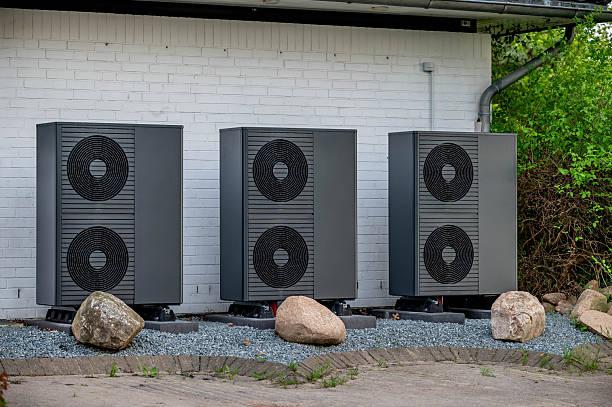
Europe’s heat pump sector is becoming increasingly important as governments, households, commercial buildings, and industries look for cleaner and more efficient heating and cooling solutions. Heat pumps can reduce dependence on fossil-fuel boilers by transferring heat from air, ground, or water sources into buildings. As energy security, climate targets, and building efficiency standards become stronger priorities, heat pump adoption is gaining long-term relevance.
According to MarkNtel Advisors, the Europe Heat Pump Market was valued at around USD 22.5 billion in 2025 and is projected to grow from USD 24.57 billion in 2026 to USD 41.66 billion by 2032. The low carbon heating outlook reflects a CAGR of around 9.2% during 2026–2032, supported by electrification of heating, policy incentives, building renovation, and demand for energy-efficient systems.
A major driver of Europe’s heat pump demand is the need to reduce emissions from buildings. Space heating and water heating remain significant contributors to energy use across residential and commercial properties. Heat pumps offer a practical pathway because they can deliver heating, cooling, and hot water while using electricity more efficiently than direct electric resistance systems.
The European Commission energy efficiency framework supports lower energy consumption across buildings, appliances, and infrastructure. This policy environment is relevant because heat pumps fit naturally into renovation strategies, new building standards, and efforts to reduce reliance on gas or oil-based heating systems.
Air source heat pumps accounted for around 72% share of Europe’s heat pump sector in 2026, according to the MarkNtel study. Their strong position reflects easier installation, lower upfront complexity compared with ground-source systems, and suitability for residential and light commercial buildings. They can be used for heating, cooling, and hot water in both new and retrofit applications.
The International Energy Agency identifies heat pumps as an important technology for improving building energy efficiency and reducing emissions. Air source systems are especially relevant because they can be deployed across a wide range of housing types, helping accelerate adoption where deeper infrastructure changes may be difficult.
The residential segment held around 63% share of the Europe heat pump sector in 2026. This reflects the scale of household heating needs across the region and the growing replacement of conventional boilers in homes. Residential adoption is influenced by energy prices, subsidies, installer availability, consumer awareness, insulation quality, and national building policies.
The European Commission REPowerEU plan strengthened Europe’s focus on energy security and reduced fossil-fuel dependence. Heat pumps align with this direction because they support electrified heating and can work alongside renewable power generation, helping households and communities reduce exposure to volatile fuel markets.
Germany accounted for around 22.7% share of Europe’s heat pump sector in 2026, making it the largest country-level market in the region. Its position is supported by building renovation activity, policy focus on heating transition, a large housing base, and demand for alternatives to fossil-fuel boilers. Germany’s heat pump adoption also reflects broader European interest in efficient and lower-emission heating systems.
However, deployment is not only a policy matter. It also depends on skilled installers, grid readiness, consumer affordability, building insulation, and product availability. Countries with older housing stock often need coordinated renovation planning so that heat pumps can operate efficiently and deliver expected performance.
Although residential demand leads, commercial and industrial applications are becoming more important. Offices, hotels, schools, hospitals, retail buildings, district heating systems, and light industrial facilities are exploring heat pumps for space conditioning, water heating, and process heat. Larger systems can support energy savings when designed around building load, climate conditions, and operational schedules.
The International Renewable Energy Agency highlights heat pumps as part of broader electrification and renewable energy transition pathways. For Europe, this connection matters because heat pumps can become more climate-beneficial as electricity grids add more renewable generation. Their value improves when efficient equipment is paired with cleaner power supply.
Europe’s heat pump sector is expected to grow steadily as building decarbonization, energy security, efficiency regulation, and replacement demand continue to shape investment. Future growth will likely favor air source systems, hybrid solutions, smart controls, high-efficiency compressors, low-GWP refrigerants, and integrated building-energy platforms.
The European Environment Agency tracks energy and environmental issues across Europe, reinforcing the importance of reducing emissions while improving system resilience. For the heat pump sector, the next stage will depend on affordability, installer capacity, policy stability, grid readiness, and building renovation quality. As Europe moves toward cleaner heating, heat pumps are likely to remain central to the region’s energy transition.