English
 Arabic
 French
 Spanish
 Portuguese
 Deutsch
 Turkish
 Dutch
Dutch
 Italiano
 Russian
 Romaian
 Portuguese (Brazil)
 Greek
Greek
Get 5 Premium Monogram Embroidery Digitizing For Jackets
Art |
2026-05-15 12:28:59
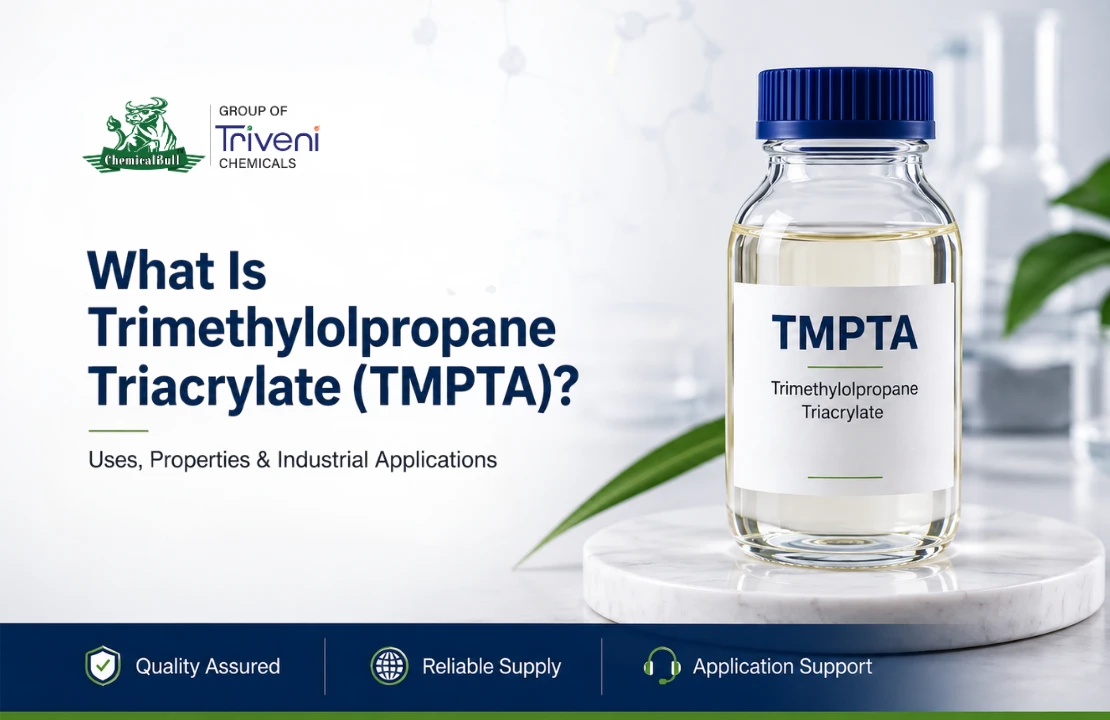
The development of high-performance polymer materials has increased the demand for specialty chemicals that provide improved durability, strength, and functional properties. Industries such as coatings, adhesives, printing, electronics, and plastics rely on advanced monomers to enhance the performance of their formulations.
Among various reactive monomers, Trimethylolpropane Triacrylate (TMPTA) has gained significant importance due to its multifunctional structure, high reactivity, and excellent crosslinking ability. It is widely used in UV-curable systems, polymer formulations, and industrial coating applications where superior performance is required.
Trimethylolpropane Triacrylate, commonly known as TMPTA, is a trifunctional acrylate monomer containing three reactive acrylate groups. These functional groups allow TMPTA to participate in polymerization reactions and form highly crosslinked polymer networks.
Due to its unique chemical structure, TMPTA provides excellent hardness, durability, chemical resistance, and adhesion properties to finished products.
It is commonly used as:
A multifunctional reactive monomer
A crosslinking agent
A reactive diluent
A performance-enhancing additive in polymer formulations
For a detailed overview of Trimethylolpropane Triacrylate (TMPTA) uses, properties, and applications, industry professionals can explore this technical resource.
The performance of TMPTA is mainly associated with its multifunctional acrylate structure. Some important characteristics include:
High reactivity during polymerization
Excellent crosslinking efficiency
Good compatibility with various resins
Improved mechanical strength of polymers
Enhanced surface properties
These properties make TMPTA suitable for applications requiring strong and durable polymer networks.
One of the primary applications of TMPTA is in UV-curable coating systems. UV coatings are widely used because they provide rapid curing, low emissions, and excellent surface performance.
TMPTA improves coating properties such as:
Surface hardness
Scratch resistance
Chemical resistance
Gloss retention
Durability
It helps manufacturers develop coatings suitable for wood finishes, plastic coatings, metal protection, and electronic applications.
The printing industry uses UV-curable inks that require fast curing and excellent adhesion. TMPTA acts as a reactive component that improves ink performance and enhances the durability of printed surfaces.
Benefits of TMPTA in printing inks include:
Faster curing speed
Improved print quality
Better resistance to chemicals and abrasion
Enhanced surface finish
TMPTA used as UV-curable adhesive formulations where strong bonding and durability are required. Its crosslinking ability improves the mechanical strength and stability of adhesive systems.
It is used in applications such as:
Electronic assembly adhesives
Optical bonding systems
Industrial adhesive formulations
In polymer industries, TMPTA is used to modify material properties by increasing crosslink density. It helps improve the strength, rigidity, and resistance characteristics of polymer systems.
TMPTA-based formulations are used for developing materials with improved:
Thermal stability
Mechanical performance
Environmental resistance
Long-term durability
The growing use of TMPTA across industries is due to its several performance advantages.
TMPTA contains three reactive groups that create strong interconnected polymer structures. This improves the strength and stability of cured materials.
Products formulated with TMPTA demonstrate better resistance against wear, chemicals, moisture, and environmental conditions.
Its high reactivity allows manufacturers to achieve faster curing cycles, improving production efficiency.
TMPTA improves coating appearance, hardness, adhesion, and overall surface performance.
Industries are increasingly adopting technologies that reduce energy consumption and improve environmental performance. UV-curable systems containing TMPTA support these goals by enabling fast curing processes and reducing the requirement for solvent-based systems.
The use of multifunctional monomers like TMPTA supports the development of advanced materials with improved performance and efficiency.
The demand for specialty monomers is expected to increase as industries continue to develop advanced coatings, adhesives, and polymer materials.
Future applications of TMPTA are expected to expand in:
High-performance protective coatings
Sustainable UV curing systems
Advanced printing technologies
Electronic material protection
Industrial polymer solutions
With its excellent reactivity and versatility, TMPTA will continue to remain an important chemical ingredient for modern industrial applications.
According to the Chemical bull, Trimethylolpropane Triacrylate (TMPTA) is a highly versatile multifunctional acrylate monomer used in coatings, adhesives, printing inks, and polymer industries. Its excellent crosslinking ability, fast curing performance, and ability to improve material properties make it a valuable chemical for advanced formulations.
As industries continue to demand high-performance and efficient materials, TMPTA will remain an important component in the development of next-generation polymer and coating technologies.