English
 Arabic
 French
 Spanish
 Portuguese
 Deutsch
 Turkish
 Dutch
Dutch
 Italiano
 Russian
 Romaian
 Portuguese (Brazil)
 Greek
Greek
Anti-Aging Market Competitive Landscape and Key Industry Players
Health |
2026-05-27 09:20:40
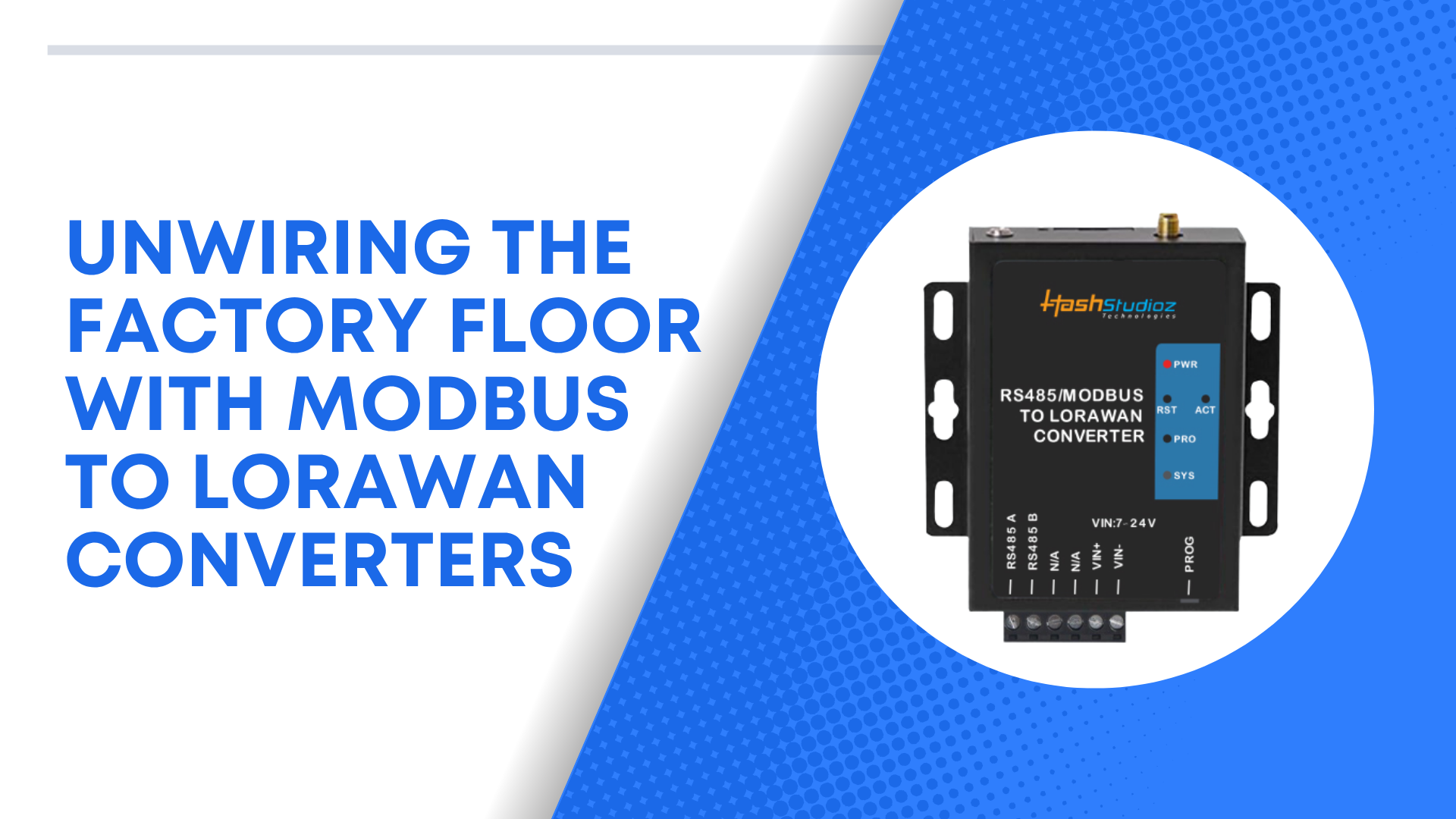
Factory wiring is expensive. Every meter of conduit costs labor and material. Every new sensor often means a new cable run back to a control panel. A Modbus to LoRaWAN Converter changes this equation. It lets Modbus devices report data over a wireless network that spans kilometers, not meters. This article looks at how this device works, why plants adopt it, and where it fits best.
Most industrial sensors and meters speak Modbus. It is simple, well documented, and cheap to implement. The problem is not the protocol. The problem is the wire. A typical Modbus RTU network runs on RS-485 cable. This cable needs a clear path from each device back to a master or gateway. In older plants, this means:
Running new conduit through walls, floors, and ceilings.
Coordinating electrical shutdowns for safe cable pulls.
Paying skilled labor for termination and testing.
Repeating this work every time a sensor moves or a new one gets added.
Large facilities often delay projects because wiring costs exceed the price of the sensors themselves. A tank farm with sensors spread across several acres faces this problem directly. Trenching cable across open ground adds weeks to a project timeline.
A Modbus to LoRaWAN Converter reads data from a Modbus device, then sends it over a LoRaWAN radio link. No new cable trench is needed. No conduit run is needed. The converter attaches directly to the existing Modbus port on a meter, sensor, or controller.
The device generally works in three steps:
It polls a Modbus RTU or Modbus TCP device for register values.
It packages this data into a small radio payload.
It transmits that payload to a LoRaWAN gateway, which forwards it to a network server and then to an application.
This setup keeps the sensor's native protocol untouched. Only the transport layer changes. That distinction matters for plant engineers who do not want to reconfigure existing equipment.
LoRaWAN was built for long range and low power. These two traits solve real problems in industrial settings.
A single gateway can cover a radius of several kilometers in open, rural terrain.
Urban or indoor sites, with more obstacles, still often reach a few hundred meters to a kilometer.
Battery-powered end nodes can run for several years without a change.
The network uses unlicensed spectrum, so it avoids ongoing carrier fees.
These features solve the wiring problem directly. A sensor at the far end of a yard, a remote pump station, or an outdoor tank no longer needs a physical link back to the control room.
This is not a niche trend. The LoRa and LoRaWAN IoT market reached close to $11 billion in 2025 and continues to grow at a compound annual rate above 30% through the early 2030s, according to multiple market research firms. Hardware, including gateways and converters, holds the largest share of that spending, close to 48% of the total market in recent estimates.
Industrial applications drive much of this growth. Broader industrial IoT spending is projected to approach $1.1 trillion by 2026 across manufacturing, energy, and supply chain sectors. LoRaWAN captures a growing slice of that spending because it solves a specific, common problem. It connects sensors that sit too far from existing network infrastructure.
North America currently holds the largest regional share of LoRaWAN deployment, close to 33% to 40% depending on the report, driven by private industrial networks and utility monitoring projects. Asia-Pacific shows the fastest growth rate, fueled by manufacturing expansion and smart agriculture projects.
Many industrial devices still use RS-485 as their physical layer, even when the protocol on top is Modbus RTU. An RS485/Modbus to LoRaWAN Converter addresses this directly. It connects to the RS-485 terminals on a device, polls Modbus registers, and forwards readings wirelessly.
This matters because RS-485 remains extremely common in the field. Flow meters, level sensors, energy meters, and many PLCs all default to RS-485 wiring. A converter built specifically for this interface avoids extra adapters or signal converters. It reads the native electrical signal and handles the protocol translation in one box.
Key technical features to expect in this type of converter:
Dual power options: mains power for fixed installations, battery power for remote nodes.
Configurable polling intervals: from seconds to hours, based on how often data changes.
Local buffering: storing readings if the LoRaWAN link is briefly unavailable.
Multiple Modbus function code support: reading holding registers, input registers, and coils.
Downlink commands: allowing a control system to write values back to the device in some models.
Water utilities often place meters far from any communication backbone. A Modbus to LoRaWAN Converter reads meter registers and reports usage every few minutes. No trenching is needed across streets or fields.
Fuel and chemical tanks spread across large sites often use Modbus level sensors. A converter on each tank sends level and temperature readings to a central dashboard. Staff avoid manual rounds and reduce spill risk.
Pump controllers in remote fields often use Modbus for local control. A converter reports pump status and flow rates back to a farm office, even where cellular coverage is weak.
Submeters on HVAC and lighting circuits use Modbus to track consumption. Retrofitting older buildings with new cable is costly. A converter sends this data wirelessly, avoiding disruption to finished ceilings and walls.
Plant teams often ask whether wireless conversion truly saves money over new cable. A side-by-side view helps clarify the decision.
Installation time: Wired RS-485 runs can take days per segment. A converter install takes minutes per device.
Distance limits: RS-485 cable segments typically max out near 1.2 kilometers before needing a repeater. LoRaWAN can reach several kilometers from a single gateway.
Site disruption: Cable trenching disrupts traffic, landscaping, or production. Wireless converters need no ground disturbance.
Scalability: Adding one more wired device may mean pulling a new cable branch. Adding a wireless node means placing a converter and registering it on the network.
Maintenance: Wired connections rarely fail once installed correctly. Wireless nodes need periodic battery checks, though modern designs often run for five years or more.
Neither approach wins every scenario. Short, fixed runs inside a single building may still favor wired RS-485. Long distances, difficult terrain, or frequent layout changes favor a wireless converter.
Teams considering this shift should follow a structured process.
List candidate devices: Identify which Modbus sensors sit far from existing wiring or network drops.
Check register maps: Confirm which Modbus function codes and register addresses each device exposes.
Survey radio conditions: Test signal strength between planned converter locations and the nearest gateway.
Choose power source: Decide between mains power, solar, or battery based on site access and sun exposure.
Select polling frequency: Balance battery life against how often the process needs fresh data.
Pilot before scaling: Deploy a small batch of converters first, then expand once data quality is confirmed.
LoRaWAN includes network and application layer encryption by default. Data traveling from an RS485/Modbus to LoRaWAN Converter to the network server stays protected against casual interception. Still, plant teams should confirm a few practices:
Use unique network keys for each device rather than shared defaults.
Rotate keys periodically, especially after staff changes.
Monitor for duplicate frame counters, which can signal a replay attempt.
Keep gateway firmware updated to patch known vulnerabilities.
These steps keep a wireless deployment as trustworthy as a wired one, without adding daily overhead.
Wired fieldbuses will not disappear from factories. Many devices sit close enough to existing infrastructure that new cable makes sense. But the economics shift once distance, terrain, or disruption enter the picture. A Modbus to LoRaWAN Converter gives engineers a practical option for exactly those cases.
Market growth backs this shift. LoRaWAN hardware spending keeps climbing, and industrial monitoring remains one of its strongest use cases. Plants that once accepted long cable runs as a fixed cost now question that assumption. A converter often costs less than a single day of trenching labor, and it deploys in far less time.
Unwiring the factory floor does not mean abandoning proven protocols like Modbus. It means changing how that data travels. A Modbus to LoRaWAN Converter, or an RS485/Modbus to LoRaWAN Converter for RS-485 native devices, keeps the sensor layer untouched while removing the cost and delay of new cable runs. As industrial sites keep growing in size and complexity, this kind of wireless bridge will keep earning its place on the plant floor.