English
 Arabic
 French
 Spanish
 Portuguese
 Deutsch
 Turkish
 Dutch
Dutch
 Italiano
 Russian
 Romaian
 Portuguese (Brazil)
 Greek
Greek
CDK4/6 Inhibitor Drug Class Market Size, Share, and Growth Forecast : Key Trends and Segment Analysis
Other |
2026-06-30 15:10:54
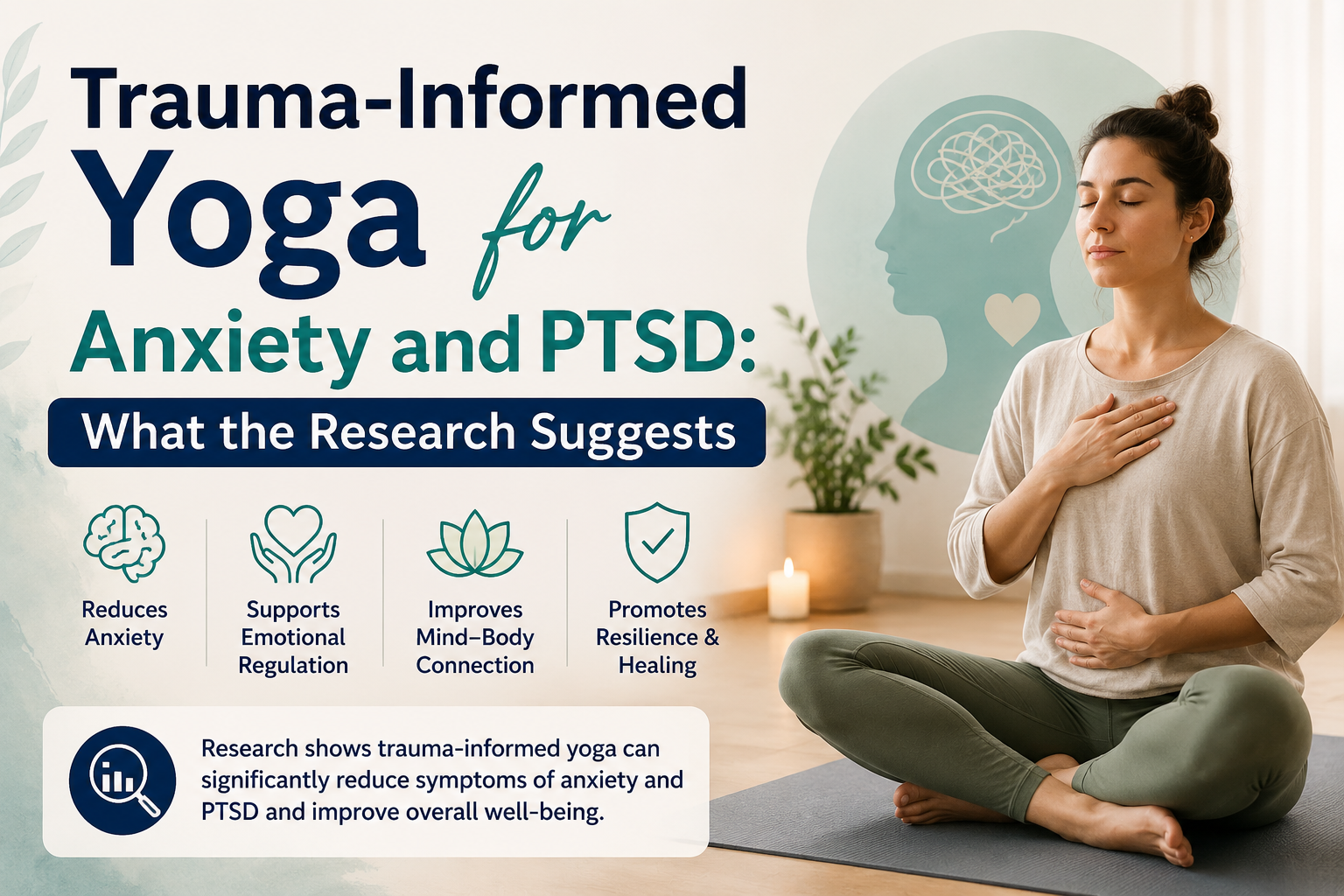
Trauma-informed yoga can support anxiety and PTSD symptom management by helping regulate the nervous system through breath, movement and choice-based practice, and several studies — including clinical trials on trauma-sensitive yoga — show measurable reductions in PTSD symptom severity. It is a complementary practice, not a replacement for trauma-focused therapy or medical treatment. If you're weighing whether this kind of yoga could help you personally, here's what's actually known, and what it can't do.
Anxiety and PTSD are, at a physiological level, largely nervous system conditions — the body stays stuck in a stress response (hyperarousal) or a shutdown response (numbness, dissociation) even when there's no present danger. Trauma-informed yoga targets this directly through:
A body of research on trauma-sensitive yoga — the clinical, therapy-adjacent form of this work — has found reductions in PTSD symptom severity in populations including veterans and survivors of interpersonal trauma, when yoga was used alongside or following standard treatment. Studies on yoga more broadly also consistently show reductions in self-reported anxiety and improvements in heart rate variability, a marker of nervous system regulation.
Two honest caveats worth naming: most of the strongest clinical evidence comes from trauma-sensitive yoga delivered in structured, often research-supervised settings — not from a general studio class labeled "trauma-informed." And yoga's effect sizes in these studies are generally moderate, useful as a complementary tool rather than a standalone treatment for clinically significant PTSD or anxiety disorders.
It's not a diagnosis, a treatment plan, or a substitute for licensed mental health care. A trauma-informed yoga teacher is trained to teach safely and recognize signs of dysregulation — not to treat PTSD, anxiety disorders or any clinical condition. If you're navigating a diagnosed condition, trauma-informed yoga works best as a complement alongside — not instead of — professional support.
Beyond a single class, some people prefer an immersive, guided environment specifically built around emotional regulation and nervous system support. Oceanic Yoga's Emotional Healing Retreat in Goa is designed for exactly this — a shorter residential format focused on release, regulation and renewal, distinct from the full teacher training.
Can yoga help with PTSD? Research on trauma-sensitive yoga shows measurable reductions in PTSD symptom severity for some populations when used alongside standard treatment, though it works best as a complement to therapy, not a replacement for it.
Is trauma-informed yoga safe for anxiety? Generally yes, and often more accessible than standard classes because of its choice-based pacing — but individual response varies, and some elements like prolonged stillness can be activating for some people if not offered with alternatives.
Do I need a trauma diagnosis to benefit from trauma-informed yoga? No. Trauma-informed classes are built as a safety standard for everyone, not a specialized track requiring disclosure of any diagnosis or history.
What's the difference between trauma-informed yoga and trauma-sensitive yoga for treating PTSD? Trauma-sensitive yoga is the clinical, research-supported modality typically used alongside licensed therapy for diagnosed PTSD. Trauma-informed yoga is a general teaching approach for regular classes and isn't a clinical treatment.
Should I tell my yoga teacher about my anxiety or trauma history? That's a personal choice. A well-trained trauma-informed teacher creates a class where you don't need to disclose anything for the practice to feel safer, though some students find it helpful to mention it privately if they want specific accommodations.
Curious what a trauma-informed approach looks like in a full practice? See what to expect in the Nervous System Regulation & Trauma Informed Yoga Teacher Training, or explore the Emotional Healing Retreat for a shorter, guided experience.
This article is educational and does not constitute medical or psychological advice. If you are experiencing PTSD, anxiety, or related distress, please consult a licensed mental health professional.