English
 Arabic
 French
 Spanish
 Portuguese
 Deutsch
 Turkish
 Dutch
Dutch
 Italiano
 Russian
 Romaian
 Portuguese (Brazil)
 Greek
Greek
Why Businesses Are Replacing Spreadsheets with Smarter Time & Expense Systems
Other |
2026-06-02 13:07:26
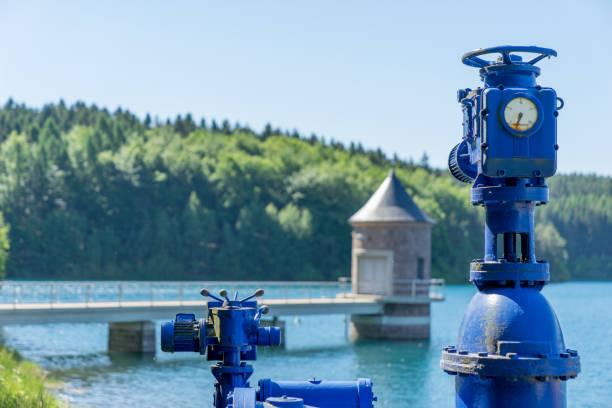
Germany’s water pump landscape is closely tied to the country’s mature municipal infrastructure, industrial base, and strict environmental standards. Pumps support water supply, wastewater treatment, heating and cooling systems, industrial processing, irrigation, and building services. As older assets require replacement and operators seek lower energy consumption, demand is increasingly shaped by modernization rather than only new installation.
According to MarkNtel Advisors, the Germany Water Pump Market was valued at around USD 2.66 billion in 2025 and is projected to grow from USD 2.73 billion in 2026 to USD 3.43 billion by 2032. The sector is projected to expand at a CAGR of 3.88% during 2026–2032, supported by infrastructure renewal, water and wastewater investment, and demand for efficient pump technologies.
Germany has one of Europe’s most developed water management systems, but mature infrastructure also brings long-term maintenance requirements. Pumping stations, distribution networks, wastewater plants, and industrial water systems require periodic upgrades to maintain reliability. The report notes that nearly 30% of Germany’s water infrastructure is over 40 years old, making replacement and efficiency upgrades an important demand driver.
This modernization trend is reinforced by public-sector water policy and environmental governance. Germany’s Federal Environment Agency highlights water protection, wastewater treatment, and sustainable resource management as core areas of national environmental responsibility. For pump suppliers, this creates steady demand for equipment that can support compliance, energy savings, and operational continuity.
The water and wastewater segment captured 26.67% of Germany’s water pump industry size in 2025 and is expected to be the fastest-growing end-user category, with a projected CAGR of 4% during 2026–2032. This reflects the ongoing importance of pumps in sewage handling, sludge circulation, clean water transfer, stormwater systems, and treatment plant operations.
Germany’s municipal systems also operate within a wider European regulatory framework. The European Commission’s urban wastewater rules continue to influence how countries manage collection, treatment, monitoring, and discharge standards. As compliance requirements evolve, municipalities and utilities are expected to invest in more reliable and efficient pumping equipment.
Centrifugal pumps lead the Germany water pump sector, supported by their simple design, high efficiency, relatively low maintenance needs, and suitability for high-flow applications. They are widely used in municipal water transfer, industrial circulation, building systems, and wastewater movement. Their versatility makes them suitable for both replacement projects and new system integration.
The broader water policy environment also supports demand for dependable pumping solutions. The European Union’s Water Framework Directive focuses on protecting water bodies and improving water quality across member states. In practice, this increases the importance of infrastructure that can support treatment performance, water movement, and efficient resource management.
Pumps can account for a significant share of energy use in water systems, industrial plants, and buildings. This makes energy efficiency a key purchasing factor. Operators are increasingly considering variable frequency drives, high-efficiency motors, digital monitoring, and smart control systems to reduce electricity consumption and improve lifecycle costs.
Germany’s focus on efficient technology adoption aligns with wider European energy policy. The European Commission’s energy efficiency framework encourages reduced energy consumption across buildings, industry, and infrastructure. For pump manufacturers, this creates a shift from selling equipment alone toward offering integrated systems that improve performance, monitoring, and long-term operating efficiency.
Germany’s strong manufacturing base also supports pump consumption across chemicals, food processing, pharmaceuticals, machinery, power, and other industrial sectors. Pumps are essential for fluid handling, cooling, pressure control, circulation, dosing, and process water management. In these settings, reliability and downtime reduction are often just as important as upfront equipment cost.
Industrial buyers are also moving toward digitalized systems. Sensors, predictive maintenance tools, and connected pump controls can help operators monitor vibration, pressure, temperature, and energy use. This fits Germany’s wider Industry 4.0 environment, where automation and data-supported maintenance are increasingly used to improve efficiency and reduce operational risk.
Germany’s water pump demand is expected to remain steady rather than explosive, reflecting a mature but technically advanced economy. Growth will likely come from replacement cycles, municipal upgrades, wastewater treatment requirements, industrial modernization, and energy-efficient system adoption. The sector’s value will increasingly depend on performance, compliance, and long-term cost savings.
The OECD’s water governance work also emphasizes the importance of coordinated policy, infrastructure planning, and efficient resource management. For Germany, this context is especially relevant because water systems must balance reliability, sustainability, affordability, and regulatory compliance. As a result, the country’s pump industry is expected to evolve around smarter, more efficient, and more resilient water infrastructure.