English
 Arabic
 French
 Spanish
 Portuguese
 Deutsch
 Turkish
 Dutch
Dutch
 Italiano
 Russian
 Romaian
 Portuguese (Brazil)
 Greek
Greek
Wearbale Injectors Market Share and Size Report: Emerging Trends and Forecast Analysis
Other |
2026-06-29 14:46:49
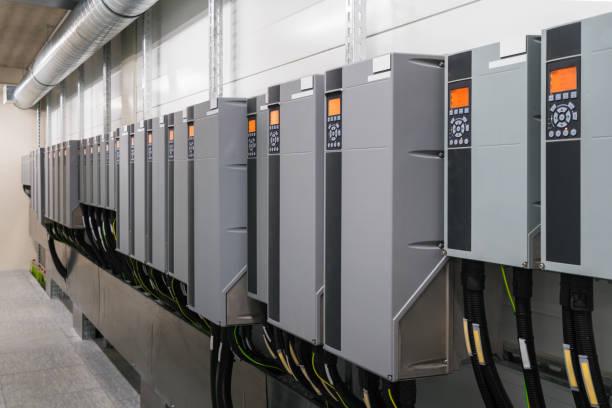
Variable Frequency Drives are becoming increasingly important across India’s industrial and commercial energy systems. These devices control the speed and torque of electric motors by adjusting the frequency and voltage supplied to them. In practical terms, VFDs help motors run only at the required speed, reducing unnecessary energy consumption in pumps, fans, compressors, conveyors, HVAC systems, and process equipment.
According to MarkNtel Advisors, the India Variable Frequency Drives Market was valued at around USD 0.49 billion in 2025 and is projected to grow from USD 0.52 billion in 2026 to USD 0.76 billion by 2032. The sector is expected to register a CAGR of around 6.5% during 2026–2032. This energy-efficient motor control outlook reflects rising demand for automation, industrial energy savings, process optimization, and efficient electrical equipment.
Electric motors account for a major portion of power use in industrial facilities, especially in manufacturing, water treatment, cement, metals, chemicals, textiles, and commercial buildings. When motors operate at fixed speeds even when full output is not needed, they consume more electricity than necessary. VFDs address this issue by matching motor output with actual load requirements.
The Bureau of Energy Efficiency plays a central role in promoting energy efficiency across India. Its work is relevant to VFD adoption because motor-driven systems offer large potential for electricity savings when supported by better controls, efficient equipment, and improved maintenance practices. For energy-intensive users, VFDs can help reduce operating costs while improving equipment performance.
India’s manufacturing landscape is gradually becoming more automated, with greater use of sensors, controllers, robotics, process monitoring, and digitally managed production lines. VFDs fit into this transition because they allow precise motor control, smoother acceleration, reduced mechanical stress, and better integration with automation systems.
The Ministry of Heavy Industries supports industrial development and manufacturing capability in India, which provides wider context for equipment modernization. As factories upgrade production systems, VFDs are increasingly used in machine tools, conveyor systems, blowers, compressors, pumps, and packaging lines. Their value is not limited to electricity savings; they also improve process consistency and reduce wear on mechanical components.
According to the MarkNtel study, low voltage VFDs held the largest share of India’s variable frequency drives landscape. These drives are widely used because they suit many common applications across small and medium-sized motors, commercial HVAC systems, water pumps, industrial machinery, and building services. Their relatively broad applicability makes them a practical entry point for energy optimization.
Technical standards and electrical safety frameworks remain important for VFD deployment. The Bureau of Indian Standards supports standardization across industrial and electrical products in India. For VFD users, compliance with relevant technical requirements can support safer installation, better equipment compatibility, and more reliable long-term operation in industrial environments.
VFDs are widely used in pumps and fans, which makes them relevant for water supply, wastewater treatment, irrigation, cooling systems, and building infrastructure. In pump applications, VFDs help regulate flow and pressure instead of relying only on throttling or on-off control. This can reduce energy waste and improve system stability.
The Ministry of Power provides national policy direction for India’s electricity sector, including power availability, efficiency, and infrastructure development. As electricity demand rises across cities, industries, and commercial buildings, motor efficiency becomes an important part of demand-side management. VFDs help reduce avoidable load, especially in facilities with variable operating conditions.
The MarkNtel report identifies West India as the leading regional segment, with around 34.53% share. This reflects the strong industrial presence of Maharashtra and Gujarat, including chemicals, textiles, oil and gas, pharmaceuticals, automotive manufacturing, metals, ports, and commercial infrastructure. These sectors use large numbers of motors and therefore create consistent demand for motor-control technologies.
The Invest India manufacturing sector overview provides broader context on India’s industrial base and manufacturing growth priorities. For VFD suppliers, regional industrial clusters are important because demand is often concentrated around factories, process industries, utilities, and infrastructure corridors where energy savings and operational reliability directly affect competitiveness.
The future of VFD adoption in India will likely be shaped by industrial energy efficiency, automation, smart buildings, water infrastructure, and rising electricity demand. Customers are expected to focus on lifecycle savings, not only upfront equipment cost. This may support wider use of drives with better diagnostics, remote monitoring, harmonic control, and integration with industrial control systems.
Variable Frequency Drives will remain a practical technology for improving energy performance in motor-driven systems. As India expands manufacturing and infrastructure, VFDs can help industries reduce waste, improve process control, and operate electrical equipment more efficiently. Their role will become increasingly important as companies balance productivity, reliability, and energy-cost pressures.