English
 Arabic
 French
 Spanish
 Portuguese
 Deutsch
 Turkish
 Dutch
Dutch
 Italiano
 Russian
 Romaian
 Portuguese (Brazil)
 Greek
Greek
Meilleur casino en ligne et transformation cognitive des pratiques de jeu numériques
Other |
2026-06-15 04:36:59
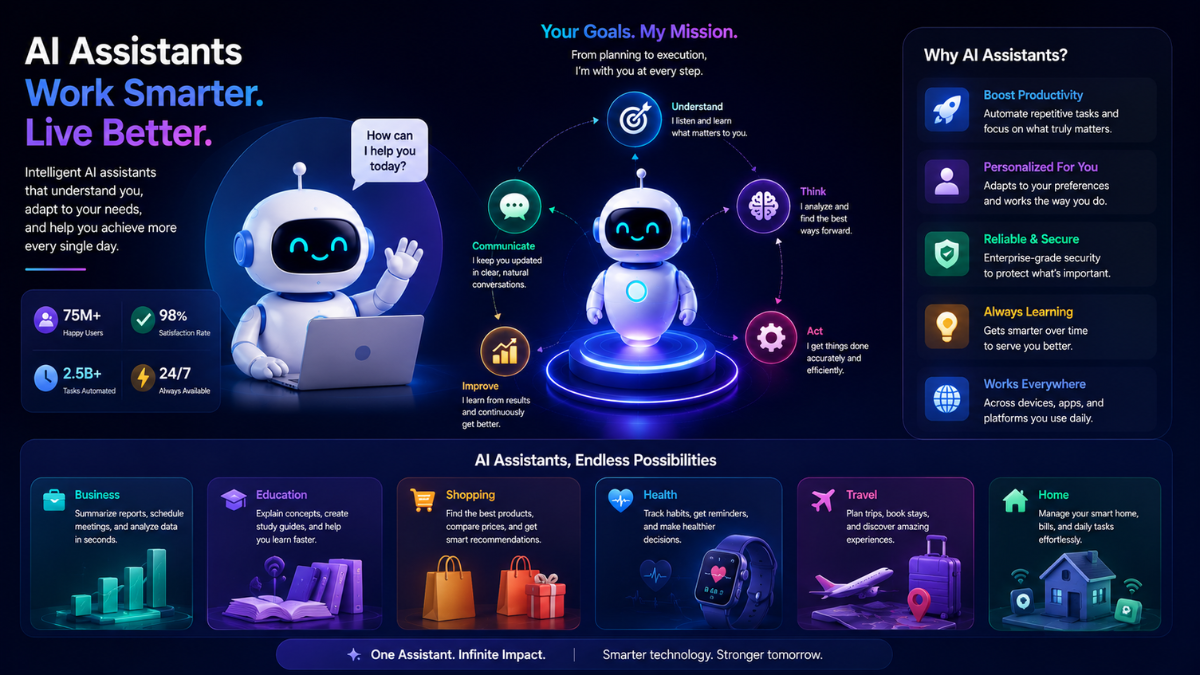
Artificial Intelligence (AI) is transforming the way people work, communicate, and solve problems. From writing emails and answering customer questions to managing entire business workflows, AI has become an essential part of modern life. As AI technology continues to evolve, two major categories have emerged: Assistive AI Chatbots and Agentic AI Systems. While both rely on advanced machine learning and natural language processing, they serve different purposes.
Choosing between these two technologies depends on your goals, business requirements, and the level of automation you need. Understanding their differences will help you make the right investment for personal or professional use.
What Are Assistive AI Chatbots?
Assistive AI Chatbots are AI-powered tools designed to help users complete tasks by providing information, generating content, and answering questions. These systems are reactive, meaning they respond to prompts provided by the user.
Examples include AI writing assistants, customer support chatbots, virtual assistants, and coding assistants. They excel at simplifying repetitive tasks while keeping humans in control of the decision-making process.
A typical assistive chatbot can:
The chatbot waits for user instructions before performing any action, making it ideal for situations where human oversight is important.
What Are Agentic AI Systems?
Agentic AI Systems represent the next generation of artificial intelligence. Instead of simply responding to commands, these systems can independently plan, reason, and execute multiple tasks to achieve a defined objective.
Rather than asking for every instruction, an Agentic AI understands the desired outcome, breaks the objective into smaller tasks, executes them, monitors progress, and adjusts its strategy when necessary.
For example, if instructed to launch a marketing campaign, an Agentic AI could:
This level of autonomy makes Agentic AI significantly more powerful than traditional chatbots.
Key Differences Between Assistive AI Chatbots and Agentic AI Systems
Although both Assistive AI Chatbots and Agentic AI Systems are powered by artificial intelligence, they are designed for different purposes. Here are the key differences:
Benefits of Assistive AI Chatbots
Assistive AI Chatbots remain the preferred solution for many organizations because they are affordable, reliable, and easy to implement.
Some of their major advantages include:
Businesses that primarily need AI assistance rather than complete automation often find chatbots to be the most practical solution.
Benefits of Agentic AI Systems
Agentic AI Systems offer far greater capabilities for organizations seeking advanced automation.
Their advantages include:
As companies scale their operations, Agentic AI becomes valuable because it can manage numerous interconnected tasks without requiring constant human supervision.
Which One Is Better for Businesses?
There is no universal answer because the best choice depends on business objectives.
Small businesses, startups, freelancers, educators, and content creators generally benefit more from Assistive AI Chatbots. These tools improve productivity while allowing users to maintain complete control over decisions.
Large enterprises, technology companies, financial institutions, healthcare providers, and logistics organizations often gain greater value from Agentic AI Systems. These businesses manage complex workflows where intelligent automation can significantly reduce costs and improve efficiency.
Many organizations are now combining both technologies. Employees use Assistive AI Chatbots for daily productivity, while Agentic AI Systems automate larger operational processes behind the scenes.
Cost and Implementation Considerations
Assistive AI Chatbots usually require less investment and can often be deployed within days or weeks. They integrate easily with websites, messaging platforms, and productivity software.
Agentic AI Systems demand more planning, infrastructure, and governance. Since these systems make decisions and execute workflows independently, organizations must establish monitoring, security controls, and compliance measures before deployment.
Although implementation costs are higher, the long-term return on investment can be substantial for businesses handling large-scale operations.
The Future of AI
The future of artificial intelligence is moving toward greater autonomy. Experts predict that AI systems will increasingly collaborate with humans rather than simply responding to instructions.
Instead of replacing Assistive AI Chatbots, Agentic AI Systems are expected to complement them. Users will continue relying on chatbots for communication and quick assistance, while autonomous AI agents manage complex projects, business operations, research, and decision-making processes.
As AI technology advances, organizations that successfully combine human expertise with intelligent automation will likely gain a significant competitive advantage.
Conclusion
Choosing between Assistive AI Chatbots and Agentic AI Systems depends on your specific needs. If your goal is to improve productivity, enhance customer interactions, or generate content with human oversight, Assistive AI Chatbots remain an excellent choice. However, if your organization requires intelligent automation capable of independently managing complex workflows, Agentic AI Systems offer a far more powerful solution.
Rather than viewing these technologies as competitors, businesses should consider them complementary tools. Assistive AI empowers people to work more efficiently, while Agentic AI extends automation to an entirely new level. By selecting the right solution—or combining both—you can maximize efficiency, reduce operational costs, and prepare for the future of AI-driven innovation.