English
 Arabic
 French
 Spanish
 Portuguese
 Deutsch
 Turkish
 Dutch
Dutch
 Italiano
 Russian
 Romaian
 Portuguese (Brazil)
 Greek
Greek
Gluten-Free Bakery Products Market Size, Share, Trends, Growth & Forecast Explained
Other |
2026-06-19 12:06:57
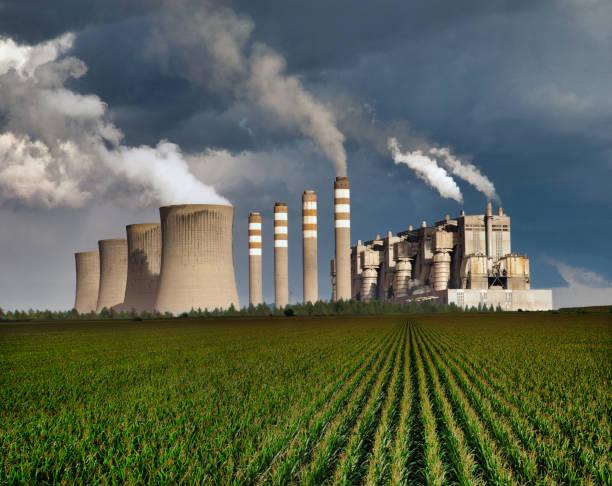
Carbon farming is emerging as an important approach within sustainable agriculture, linking land management practices with climate mitigation. It focuses on improving the ability of soils, crops, forests, and grazing systems to capture and store carbon while supporting farm productivity. As governments, companies, and landowners explore practical climate solutions, carbon farming is gaining attention for its role in soil health, biodiversity, and emissions reduction.
According to MarkNtel Advisors, the Global Carbon Farming sector was valued at USD 0.62 billion in 2025 and is projected to grow from USD 0.70 billion in 2026 to USD 1.5 billion by 2032. The sector is projected to expand at a CAGR of 13.54% during 2026–2032, supported by rising demand for carbon sequestration, climate-smart agriculture, and verifiable land-based carbon outcomes.
Carbon farming involves agricultural and land-use practices that increase carbon storage or reduce greenhouse gas emissions. These practices may include cover cropping, reduced tillage, agroforestry, rotational grazing, biochar application, reforestation, wetland restoration, and improved nutrient management.
The Food and Agriculture Organization explains that carbon balance in agriculture is shaped by land-use choices, soil management, and production systems. This makes carbon farming relevant not only for climate planning but also for improving long-term soil resilience.
Soil is one of the most important carbon reservoirs in agricultural landscapes. When managed carefully, soils can store organic carbon while improving water retention, nutrient cycling, and crop resilience. However, soil carbon gains depend on local climate, soil type, crop system, and management consistency.
The USDA Natural Resources Conservation Service highlights soil health as a foundation for productive and resilient agriculture. Practices that improve soil structure and biological activity can support both farm performance and carbon storage over time.
For carbon farming to scale, carbon outcomes must be measurable and credible. Landowners, project developers, and carbon-credit buyers need clear methods to estimate, monitor, report, and verify sequestration outcomes. This is challenging because soil carbon changes can vary across fields, seasons, and farming systems.
The Intergovernmental Panel on Climate Change has emphasized the role of land in climate mitigation while also noting the complexity of land-based carbon outcomes. Reliable monitoring, conservative accounting, and transparent verification will remain central to building trust in carbon farming programs.
Farmers and landowners play a central role because carbon farming depends on real changes in land management. Participation may offer additional income opportunities through carbon credits or sustainability-linked programs, but adoption depends on practical economics, technical guidance, contract clarity, and long-term benefits.
Many producers will evaluate carbon farming based on whether it improves soil productivity, lowers input dependence, or supports climate resilience. Programs that are too complex, costly, or uncertain may struggle to achieve broad participation. Practical advisory services and locally relevant protocols will therefore be important.
Carbon farming is increasingly linked to national climate strategies, voluntary carbon programs, and sustainable agriculture initiatives. Governments are exploring ways to reward land-based carbon sequestration while ensuring environmental integrity. Policy frameworks can influence project standards, farmer incentives, and carbon-credit credibility.
The European Commission has developed policy direction around carbon removals and carbon farming, reflecting growing institutional interest in verified land-based climate action. Similar attention across regions is helping carbon farming move from concept to structured implementation.
Digital tools are becoming more relevant in carbon farming. Remote sensing, soil testing, farm-management software, geospatial analytics, and AI-based modeling can help track land-use changes and estimate carbon outcomes. These tools are improving project monitoring, although field-level validation remains important.
The World Bank identifies climate-smart agriculture as an approach that improves productivity, resilience, and emissions performance. Carbon farming fits within this broader transition when it combines farmer incentives, credible measurement, and sustainable land management.
Carbon farming is expected to become more structured as climate commitments, sustainable agriculture goals, and carbon-credit systems mature. Its growth will depend on credible verification, fair farmer participation, transparent pricing, and practical implementation across different regions.
The next phase will likely focus on moving beyond broad climate claims toward measurable outcomes. If programs can balance environmental integrity with farm-level practicality, carbon farming can support soil restoration, rural income diversification, and more resilient agricultural systems.