English
 Arabic
 French
 Spanish
 Portuguese
 Deutsch
 Turkish
 Dutch
Dutch
 Italiano
 Russian
 Romaian
 Portuguese (Brazil)
 Greek
Greek
Broken Planet Summer Sale Live Now | 75% Off Hoodies, Tracksuits & Streetwear
Shopping |
2026-05-04 10:25:59
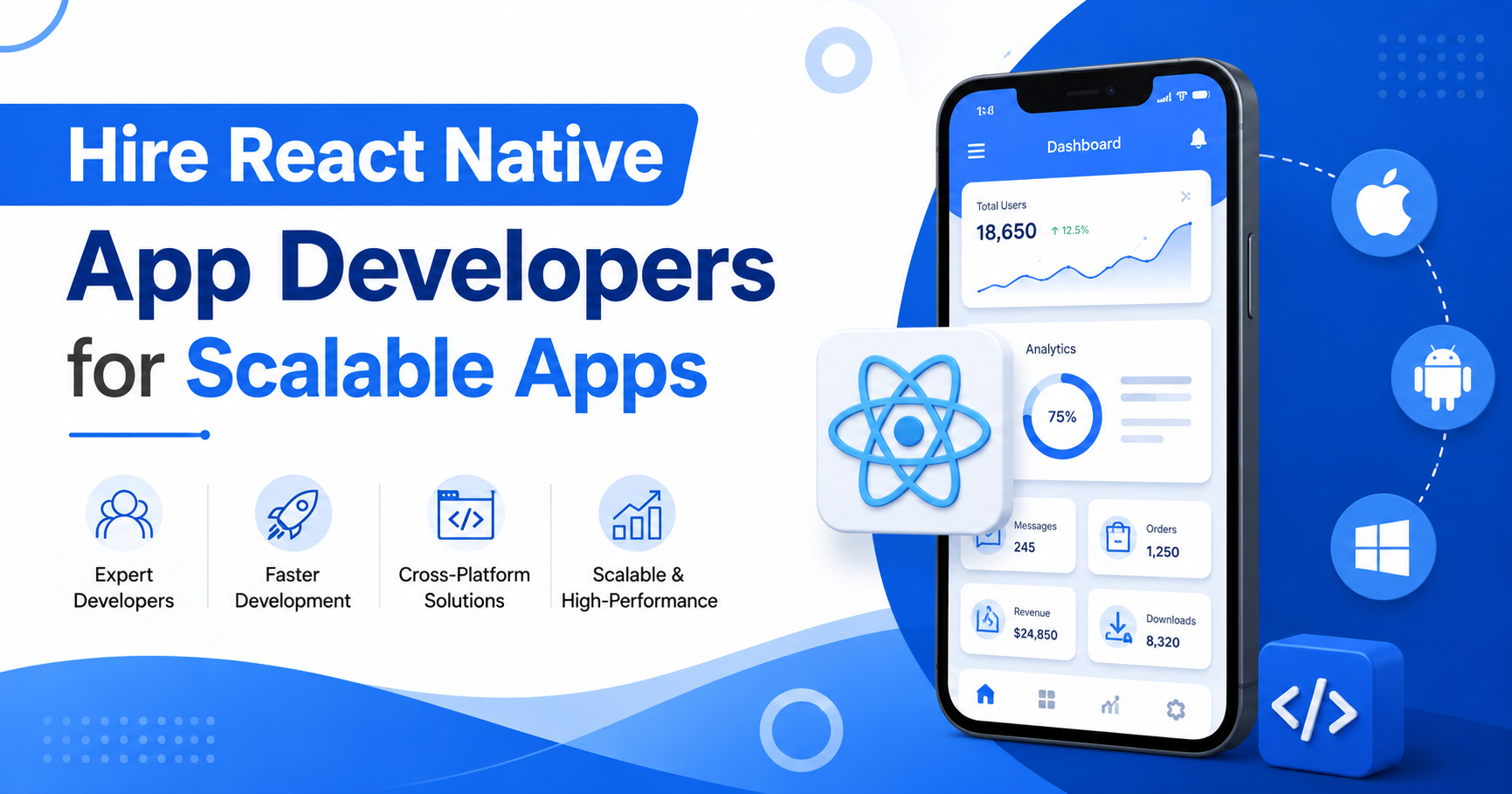
Apps rarely break the day they launch. They break six months later, when user numbers climb past whatever the original build was quietly designed to handle, and suddenly screens that used to load instantly start lagging, state management that worked fine with a handful of test users turns into a tangled mess of bugs, and a feature that should take a day to add takes two weeks because the underlying architecture was never built to accommodate it cleanly. Scalability isn't something you bolt onto an app after the fact — it's a property that gets baked in, or fails to get baked in, during the earliest architectural decisions, often made under deadline pressure by whoever happened to be available at the time.
This is exactly why the conversation around React Native development needs to shift, for any business with real growth ambitions, from "can someone build this app" to "can someone build this app in a way that won't collapse under its own success." Getting that second question right starts with understanding what actually breaks as apps scale and who's genuinely equipped to prevent it.
Scalability problems rarely announce themselves clearly. They show up gradually, as small performance hiccups that get dismissed as minor bugs until they compound into something genuinely disruptive. State management is often the first casualty — an approach that worked fine for a simple app with a few screens turns chaotic once dozens of components need to share and update data consistently, leading to bugs that are maddeningly difficult to trace back to their root cause. API call patterns that seemed efficient enough during testing can quietly overwhelm a backend once real user volume hits, causing slowdowns that frustrate users long before anyone on the team notices a clear cause.
The deeper issue is that these problems often originate from decisions made early, when nobody was deliberately thinking about scale because the immediate priority was simply getting something working and shipped. This isn't a failure of effort — it's a natural consequence of prioritizing speed during early development, but it becomes a real liability if nobody revisits those early shortcuts once growth actually starts happening.
Recognizing these patterns early, and revisiting foundational decisions deliberately as growth approaches, is often what separates apps that scale smoothly from ones that require a painful, disruptive rebuild mid-growth.
The businesses that avoid most of these scalability headaches share a common trait: they brought in genuinely experienced talent early enough to make foundational architectural decisions correctly the first time, rather than discovering the consequences of poor decisions only after real users started exposing them. Choosing to Hire React Native Developers with specific, demonstrated experience scaling apps past their early growth stage — not just building MVPs — makes an enormous difference in how an app's underlying architecture holds up once usage actually grows.
Developers with this kind of experience bring pattern recognition that's only built through having hit these walls before on other projects. They know which state management libraries tend to scale well versus which ones create maintenance nightmares past a certain complexity threshold, how to structure API calls efficiently to avoid unnecessary backend strain, and how to build component architecture that supports new features without requiring constant, disruptive rework.
Business owners who prioritize this specific kind of experience during hiring, rather than simply looking for general React Native familiarity, tend to avoid the costly, disruptive rebuilds that often hit apps growing faster than their original architecture was prepared to handle.
As an app moves from early traction into genuine sustained growth, the demands on a development team shift considerably, often requiring more coordinated effort than a single developer can reasonably provide alone. This is the stage where many businesses need to Hire React Native App Developers as a properly structured team, with responsibilities divided thoughtfully across architecture, performance optimization, and ongoing feature development rather than relying on one person to juggle every aspect of a growing, increasingly complex codebase simultaneously.
This team-based approach becomes particularly valuable once an app's complexity reaches a point where no single person can reasonably hold the entire system in their head at once. Dividing responsibilities allows each area to benefit from focused, dedicated attention — someone deeply familiar with performance bottlenecks, someone else focused on architecture decisions that affect long-term maintainability, and others handling the steady stream of new feature requests that growth inevitably brings.
Recognizing when an app has genuinely outgrown what a single developer can reasonably manage, and building team structure accordingly, is an important signal that a business is taking its own growth seriously rather than hoping existing resources will simply stretch further indefinitely.
Even with the right hires and team structure in place, scalability isn't a problem that gets solved once and then forgotten — it requires continuous attention as user numbers, data volume, and feature complexity keep evolving over time. Comprehensive React native app development services that extend well beyond the initial build are essential here, covering ongoing performance monitoring, regular architecture reviews, and proactive optimization work that catches emerging bottlenecks before they become visible problems affecting real users. Businesses that treat their app as a finished product after initial launch, rather than an evolving system requiring sustained investment, tend to find scalability issues resurfacing repeatedly as growth continues.
This ongoing relationship also matters because the specific scalability challenges an app faces tend to shift as it matures. Early growth often strains state management and basic performance; later growth tends to surface more complex challenges around data consistency, caching strategy, and coordinating increasingly sophisticated features across a larger, more complex codebase. A development partner who stays engaged through these shifting challenges, rather than disappearing after the initial build, provides continuity that makes addressing each new challenge considerably easier.
Businesses that invest in this ongoing relationship consistently outperform those treating scalability as a problem to be solved once at launch and never revisited again as the app and its user base continue to evolve.
The businesses building genuinely scalable React Native apps aren't necessarily the ones with the biggest development budgets — they're the ones who treated scalability as a discipline requiring deliberate attention from the earliest architectural decisions through every subsequent stage of growth, rather than something to address reactively only after problems became impossible to ignore. Getting the right talent involved early, building team structure that matches actual complexity as it grows, and maintaining an ongoing development relationship that adapts to shifting challenges over time are what genuinely separates apps that scale smoothly from those that require painful, disruptive rebuilds along the way.
There's no single moment where an app becomes "scalable" and the work is done. It's an ongoing practice, and businesses that understand this from the start tend to build apps that keep performing well no matter how large their user base eventually grows.