English
 Arabic
 French
 Spanish
 Portuguese
 Deutsch
 Turkish
 Dutch
Dutch
 Italiano
 Russian
 Romaian
 Portuguese (Brazil)
 Greek
Greek
Why Omaxe Super Corridor Indore Could Be the Next Big Real Estate Landmark in Madhya Pradesh
Other |
2026-06-26 10:29:05
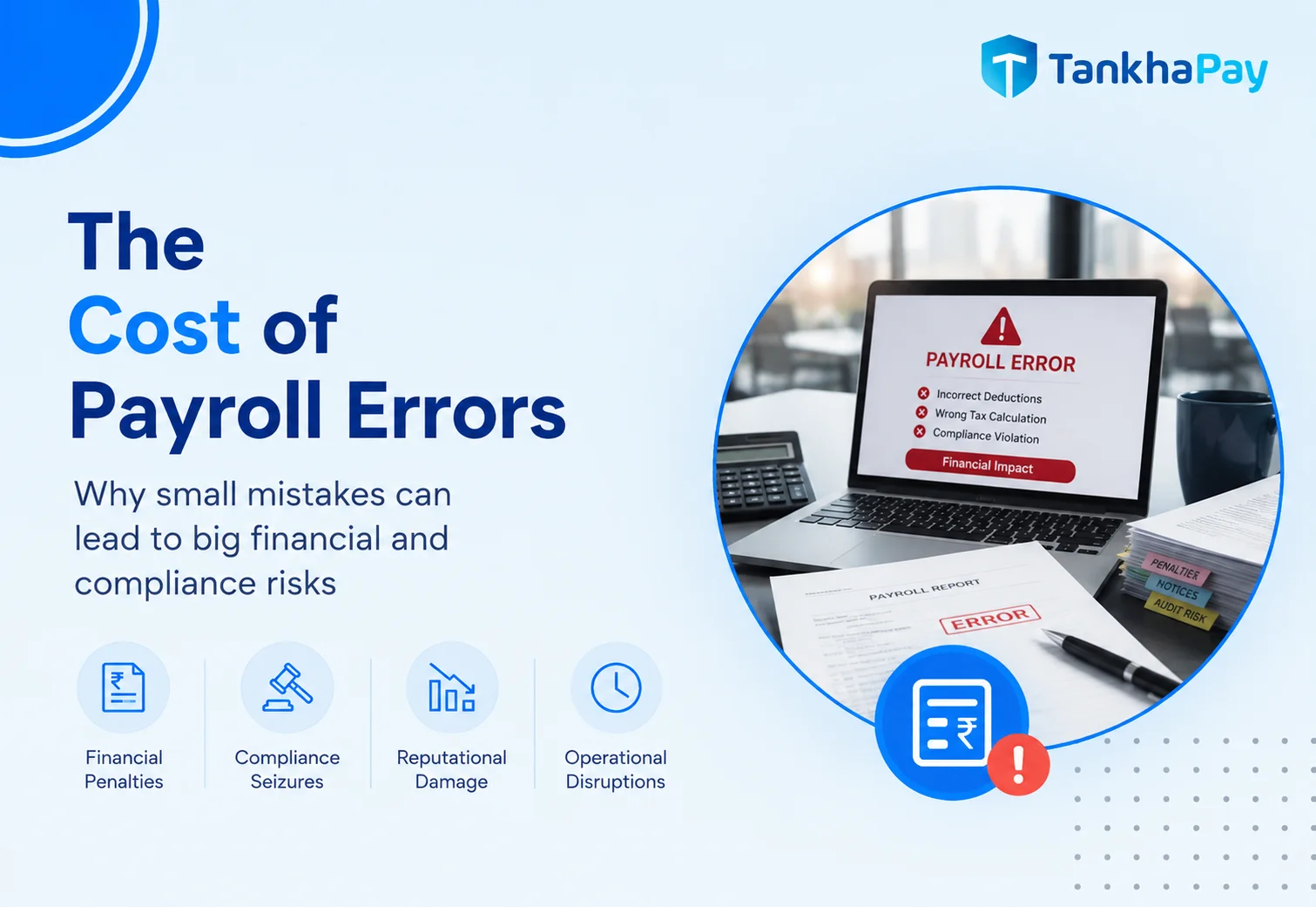
In business, some mistakes arrive loudly. A failed product launch, a missed sales target, or a public relations crisis often commands immediate attention. Payroll errors are different. They emerge quietly, hidden inside spreadsheets, calculations, compliance reports, and salary slips. Yet their impact can be surprisingly far-reaching.
For Indian businesses navigating an increasingly complex employment landscape, payroll accuracy has evolved from a back-office administrative task into a strategic business imperative. As labor laws become more intricate and workforce expectations continue rising, the cost of payroll errors in India is no longer limited to a few accounting discrepancies. It now extends into compliance exposure, employee retention, productivity, employer branding, and long-term business growth.
Much like a small crack in a building's foundation, payroll inaccuracies may appear insignificant initially. Left unchecked, however, they can gradually undermine the stability of the entire structure.
India's workforce ecosystem is undergoing a remarkable transformation. Organizations are managing full-time employees, contractual workers, gig professionals, apprentices, remote teams, and distributed workforces across multiple states. Simultaneously, employers must comply with numerous statutory requirements involving Provident Fund (PF), Employee State Insurance (ESI), Professional Tax, Tax Deducted at Source (TDS), labor welfare regulations, bonus calculations, gratuity provisions, and evolving labor codes.
Within this environment, payroll processing has become considerably more sophisticated than merely calculating monthly salaries.
A single payroll cycle often involves hundreds of variables. Attendance records, overtime hours, incentives, reimbursements, deductions, tax declarations, leave balances, and statutory contributions must align perfectly. When even one element is mishandled, the resulting consequences can ripple throughout the organization.
The most visible impact of payroll mistakes is financial loss.
Underpayments force organizations to issue corrections, process additional transactions, and address employee grievances. Overpayments create recovery challenges that can strain employee relationships and consume administrative resources.
For larger enterprises, these seemingly minor discrepancies can accumulate rapidly. A recurring calculation error affecting hundreds of employees over several months can translate into lakhs of rupees in unexpected liabilities.
Additionally, payroll teams often spend substantial time investigating, reconciling, and correcting mistakes. Hours that could have been invested in strategic workforce planning are instead devoted to resolving avoidable issues.
According to HR technology experts, organizations frequently underestimate the indirect costs associated with payroll corrections. Administrative overhead, management involvement, legal consultation, and employee support efforts often exceed the original financial error itself.
One of the most significant contributors to the cost of payroll errors in India is regulatory non-compliance.
Indian labor and tax regulations require accurate reporting and timely contributions. Errors involving PF deductions, ESI contributions, professional tax filings, or TDS calculations can trigger penalties, interest charges, and regulatory scrutiny.
In many cases, the immediate fine is only the beginning.
Regulatory audits can consume valuable organizational resources. Documentation reviews, employee record verification, and corrective filing requirements often place considerable pressure on HR and finance departments.
For growing companies seeking investment or expansion opportunities, compliance violations can also raise concerns during due diligence processes. Investors increasingly evaluate governance and operational discipline, making payroll compliance a critical component of corporate credibility.
Payroll is fundamentally about trust.
Employees may tolerate occasional operational challenges, but few workplace issues generate frustration as quickly as salary inaccuracies. Compensation represents the direct exchange between effort and reward. When that exchange becomes unreliable, employee confidence begins to erode.
Imagine an employee who has carefully planned monthly expenses, loan repayments, school fees, and household obligations based on an expected salary amount. An unexpected payroll error can disrupt personal finances immediately.
Repeated inaccuracies often create deeper consequences.
Employees may begin questioning management competence, HR effectiveness, and organizational reliability. Over time, dissatisfaction can evolve into disengagement, reduced productivity, and increased attrition.
In competitive industries where talent retention is already challenging, payroll accuracy becomes a surprisingly powerful contributor to employee experience.
The cost of payroll errors in India extends well beyond accounting departments.
When payroll issues occur, employees contact HR teams, managers escalate concerns, finance personnel investigate records, and leadership may become involved in resolving disputes. What begins as a simple calculation mistake frequently evolves into a company-wide distraction.
Productivity losses are difficult to quantify but impossible to ignore.
Instead of focusing on innovation, customer service, project delivery, or revenue generation, valuable resources are redirected toward administrative troubleshooting.
For businesses operating in highly competitive markets, even minor productivity disruptions can influence profitability and growth trajectories.
India's diverse regulatory landscape introduces additional payroll challenges.
Different states may have unique professional tax structures, labor welfare requirements, minimum wage regulations, and compliance obligations. Organizations operating across multiple jurisdictions must continuously monitor regulatory changes while ensuring payroll consistency.
Manual payroll systems often struggle to keep pace with this complexity.
As workforce mobility increases and remote employment becomes more common, organizations face heightened risks of compliance mismatches and reporting inaccuracies. The resulting costs can be substantial, particularly when errors remain undetected across multiple payroll cycles.
Fortunately, advancements in payroll technology are helping businesses significantly reduce error rates.
Modern payroll platforms leverage automation, artificial intelligence, cloud-based infrastructure, and real-time validation mechanisms to improve accuracy. By eliminating repetitive manual calculations, organizations can reduce human error while increasing operational efficiency.
Automated compliance updates are particularly valuable in India's dynamic regulatory environment. Rather than relying on manual interpretation of legislative changes, businesses can benefit from systems that continuously adapt to evolving requirements.
By integrating AI-driven insights, organizations can also identify anomalies before payroll processing is completed, preventing costly mistakes before they affect employees or compliance records.
Forward-thinking organizations increasingly view payroll as a strategic function rather than an administrative necessity.
Accurate payroll supports employee satisfaction, strengthens compliance readiness, improves financial forecasting, and enhances organizational credibility. Companies that consistently deliver error-free payroll create a foundation of trust that positively influences workplace culture.
In an era where employer reputation can significantly impact talent acquisition, payroll reliability has become an important competitive differentiator.
Businesses that invest in payroll modernization often discover benefits extending far beyond risk reduction. Improved reporting capabilities, enhanced workforce analytics, stronger governance frameworks, and better employee experiences contribute directly to organizational resilience.
Reducing the cost of payroll errors in India requires a proactive approach.
Organizations must prioritize process standardization, regular audits, employee data accuracy, compliance monitoring, and technology adoption. Equally important is ongoing training for HR and payroll professionals responsible for managing increasingly sophisticated payroll environments.
The most successful companies recognize that payroll accuracy is not merely about avoiding mistakes. It is about creating operational confidence across the organization.
As India's employment ecosystem continues evolving, payroll will remain one of the most critical intersections between business performance, regulatory compliance, and employee trust.
The cost of payroll errors in India is far greater than most organizations initially assume. Financial losses, compliance penalties, administrative inefficiencies, employee dissatisfaction, and reputational damage collectively create a substantial business risk.
In today's fast-moving economy, payroll accuracy is no longer a routine administrative objective. It is a strategic business necessity.
Organizations that invest in robust payroll processes, intelligent automation, and compliance-focused systems are not simply preventing errors. They are building stronger, more resilient businesses capable of attracting talent, maintaining trust, and sustaining growth in an increasingly competitive marketplace.
Ultimately, every accurate salary payment sends a powerful message: the organization values precision, accountability, and the people who drive its success.