English
 Arabic
 French
 Spanish
 Portuguese
 Deutsch
 Turkish
 Dutch
Dutch
 Italiano
 Russian
 Romaian
 Portuguese (Brazil)
 Greek
Greek
On Cloud Shoes vs Adidas: Comfort and Cushioning Comparison
Trading & Crypto |
2026-06-17 11:00:59
Waikiki, located on the southern coast of Oʻahu in Hawaii, is one of the most famous beachfront destinations in the world. Known for its golden sand, warm turquoise waters, and the iconic backdrop of Diamond Head crater, it offers a rare combination of natural beauty and urban convenience. Hotels, restaurants, shopping streets, and beaches are all closely connected, creating a vibrant coastal district that attracts millions of visitors each year.
Among its many attractions, the weekly fireworks display is one of the most memorable and emotionally impactful experiences. Though brief, it transforms the Waikiki shoreline into a glowing stage of color, reflection, and sound, blending ocean, sky, and city into a single visual moment.
The Waikiki fireworks display is most closely associated with the Hilton Hawaiian Village Waikiki Beach Resort. It originally began as part of the resort’s entertainment programming, designed to enhance guest experience and create a festive atmosphere on Friday nights.
Over time, what started as a private resort feature evolved into a widely recognized public tradition. Locals and visitors alike began gathering along the shoreline to watch, and the event naturally expanded beyond hotel grounds. Today, it functions as a shared weekly celebration that anyone in Waikiki can enjoy.
Held primarily on Friday evenings, weather permitting, the fireworks have become a symbolic marker of the end of the workweek. For many people on Oʻahu, it represents a transition into relaxation, leisure, and weekend social life.
Unlike large annual fireworks festivals in many cities, Waikiki’s display is distinctive because of its consistency. The weekly repetition creates a rhythm that becomes part of the local experience, giving both residents and tourists a familiar event to anticipate.
The fireworks are typically launched on Friday nights shortly after sunset. The launch site is located near the Hilton Hawaiian Village lagoon on the western side of Waikiki Beach. From this position, fireworks are launched outward over the Pacific Ocean rather than inland, allowing for a wide, open reflection across the water.
Timing plays a crucial role in the overall experience. As the sun sets, the sky gradually shifts through a spectrum of colors—orange, coral, pink, lavender, and deep indigo. This natural transition creates a layered backdrop that enhances the brightness and contrast of the fireworks when they begin.
Because Waikiki is a dense beachfront district, the display is visible along a long stretch of coastline. This wide visibility makes the event accessible without requiring tickets or designated viewing areas. Thousands of people can experience it simultaneously from different perspectives.
The ocean itself becomes part of the visual performance. Its surface reflects light, doubles color intensity, and adds movement that changes with the waves. On calm nights, the reflections appear sharp and mirror-like; on windier nights, they scatter into shimmering patterns.
One of the strongest aspects of the Waikiki fireworks experience is the variety of viewing options, each offering a slightly different atmosphere and perspective.
Fireworks in Waikiki is the most popular viewing area. Visitors often arrive well before sunset to secure a good position on the sand. From here, the fireworks appear directly over the ocean, framed by palm trees, hotel silhouettes, and the distant glow of city lights. The reflections on the water create a layered effect that enhances the visual depth of the display.
Located near the Hilton Hawaiian Village, Kahanamoku Beach is one of the closest public viewpoints to the launch site. Because of its proximity, the fireworks feel larger and more immersive. The sound is slightly louder, and the visual impact more direct. It is often less crowded than central Waikiki Beach, making it a preferred option for those seeking a balance between closeness and comfort.
Just east of the main hotel area, Fort DeRussy Beach Park offers a more relaxed viewing environment. With wider open space, grassy areas, and fewer crowds, it is a good alternative for families or visitors who prefer a quieter setting while still maintaining a clear ocean view.
Many hotels in Waikiki offer ocean-facing rooms with private balconies. For guests, this provides one of the most comfortable ways to experience the fireworks. The setting is quiet, private, and uninterrupted, with panoramic views of the shoreline and sky. It is especially popular for couples or travelers celebrating special occasions.
A unique perspective comes from viewing the fireworks from the ocean itself. Catamaran cruises and sailing tours often schedule evening departures specifically for Friday nights. From offshore, viewers can see the entire Waikiki coastline illuminated behind the fireworks, creating a cinematic contrast between the glowing city and the dark open sea.
The fireworks experience begins long before the first burst lights up the sky. As sunset approaches, Waikiki becomes increasingly active. Beachgoers spread towels on the sand, families set up picnic spots, and couples walk along the shoreline watching the changing colors of the sky.
Along Kalākaua Avenue, street performers add music, dance, and cultural performances to the evening atmosphere. Restaurants and bars fill with diners, while surfers continue riding the last waves of daylight.
As dusk deepens, a noticeable shift occurs. Conversations become softer, movement slows, and attention gradually turns toward the ocean. There is a shared sense of anticipation across the entire beachfront, as if the crowd is collectively waiting for a single moment to begin.
This gradual build-up is essential to the experience. The fireworks feel like the natural climax of an evening shaped by environment, community, and rhythm.
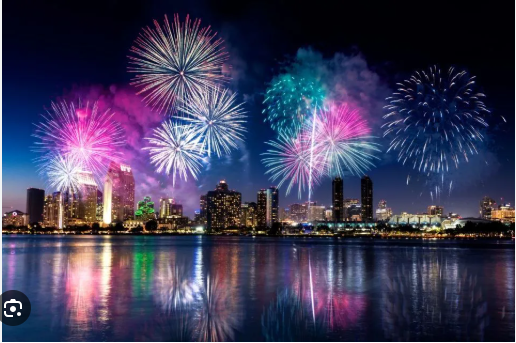
When the fireworks begin, Waikiki transforms instantly. Bright explosions of color rise into the night sky—deep reds, electric blues, gold, and green—spreading across the horizon above the ocean.
Although the display typically lasts only five to ten minutes, it is carefully structured to maximize visual and emotional impact. It often begins with smaller bursts, gradually increasing in intensity before building toward a short, powerful finale that draws cheers from the crowd.
The reflections on the water are central to the experience. Each burst of light is mirrored on the ocean’s surface, effectively doubling the visual effect and creating a sense of depth between sky and sea.
Sound also plays a key role. Firework explosions echo across the water but are softened by the continuous rhythm of ocean waves. This blend of sharp bursts and natural sound creates a layered atmosphere that feels both powerful and calming.
The audience contributes significantly to the experience. Gasps, applause, and moments of silence ripple across the beach, reflecting a shared emotional response. For a few minutes, thousands of individuals are unified by a single visual moment.
Once the final burst fades, the sky returns to darkness and the reflections slowly disappear. There is a brief pause where everything feels still before normal activity resumes.
Some visitors leave immediately, heading back to hotels, restaurants, or nightlife venues. Others remain on the beach, enjoying the calm ocean air and the gentle sound of waves. Many take slow walks along the shoreline, absorbing the contrast between the bright spectacle and the quiet night.
This transition from intensity to stillness is one of the most memorable parts of the experience. It provides emotional closure and reinforces the impact of what has just been witnessed.
To fully enjoy Waikiki fireworks, arriving early is strongly recommended. The most popular viewing areas fill quickly, especially on weekends and during peak tourist seasons.
Bringing simple essentials such as a towel, water, light clothing, and snacks can make the wait more comfortable. Because the event is outdoors, checking the weather forecast in advance is also important, as wind or rain may affect visibility or lead to cancellations.
For photography enthusiasts, a tripod and long exposure settings can help capture the reflections and motion of light across the ocean. However, many visitors find the most meaningful experience comes from simply watching without distractions.
As with many fireworks displays worldwide, environmental considerations are increasingly important. Concerns include noise levels, potential effects on marine life, and beach cleanliness after large gatherings.
Efforts are made to manage the event responsibly, with attention to safety and environmental protection. Visitors are encouraged to respect the shoreline by disposing of waste properly and minimizing disturbance to the natural surroundings.
Maintaining Waikiki’s coastal environment is essential to preserving the balance between tourism, entertainment, and ecological sustainability.
Fireworks in Waikiki are more than a weekly spectacle—they are a tradition that reflects the unique character of one of the world’s most iconic coastal destinations. Though short in duration, the display creates a powerful combination of visual beauty, natural atmosphere, and shared human experience.
Whether viewed from the beach, a hotel balcony, or a boat offshore, the fireworks capture the essence of Waikiki: vibrant, welcoming, and deeply connected to the ocean and sky. For many visitors, it becomes one of the most unforgettable moments of their time in Hawaii, symbolizing celebration, connection, and the quiet magic of a shared night beneath a glowing horizon.