English
 Arabic
 French
 Spanish
 Portuguese
 Deutsch
 Turkish
 Dutch
Dutch
 Italiano
 Russian
 Romaian
 Portuguese (Brazil)
 Greek
Greek
Abacavir Tablets: Empowering HIV Management with Confidence and Convenience
Health |
2026-05-25 11:05:48
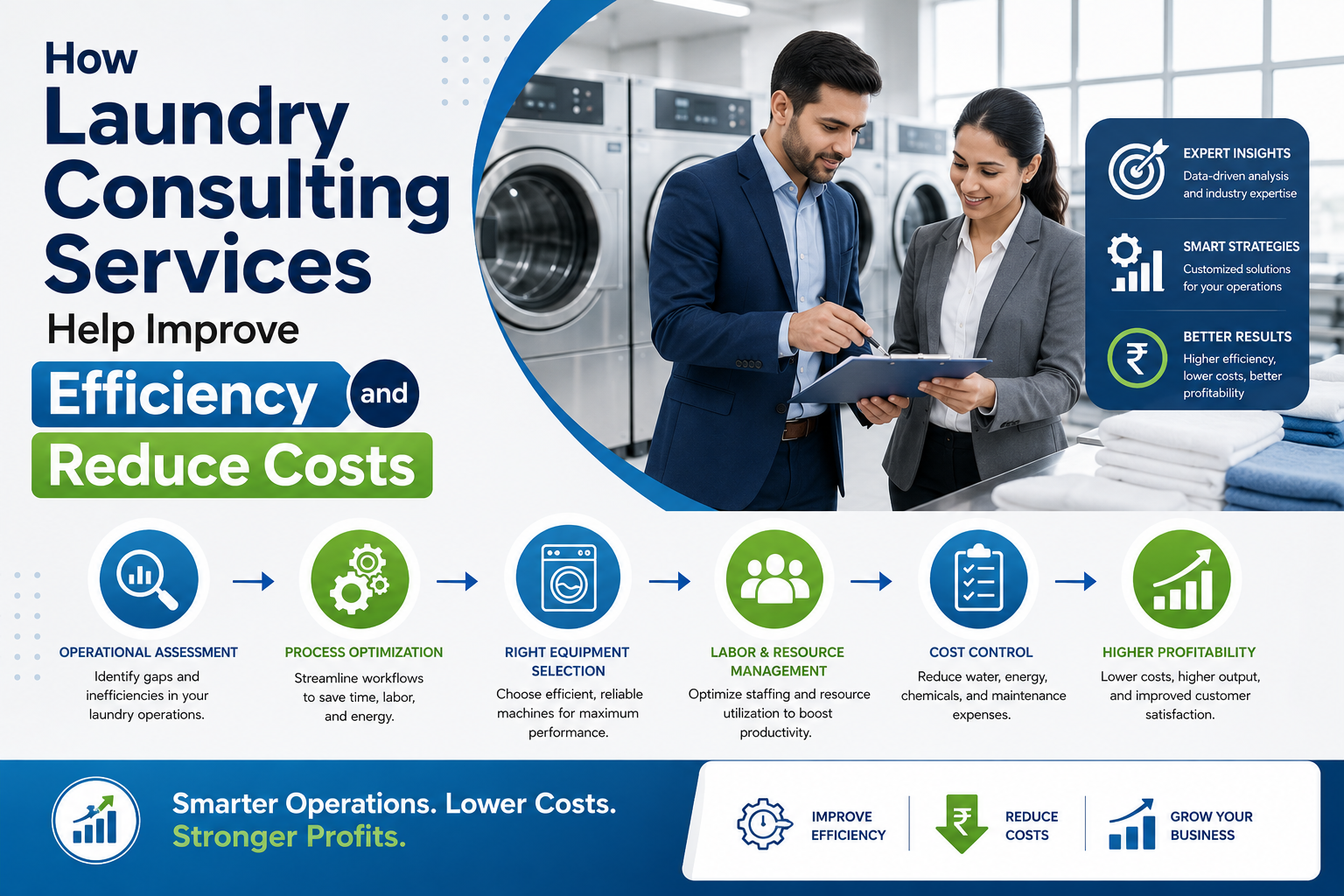
The laundry industry has evolved significantly in recent years. Rising operational expenses, increasing customer expectations, and the need for sustainable practices have made it essential for businesses to optimize every aspect of their operations. Whether it is a hotel laundry, healthcare facility, commercial laundry, or industrial plant, improving productivity while controlling expenses has become a top priority.
This is where laundry consulting services play an important role. Experienced professionals analyze existing operations, identify inefficiencies, and recommend practical solutions that improve workflow, reduce waste, and enhance profitability. By focusing on operational excellence, businesses can achieve long-term growth without compromising service quality.
Laundry operations involve much more than washing and drying textiles. They require careful planning of equipment, chemical usage, staffing, utility management, workflow design, and quality control. Even small inefficiencies in these areas can lead to increased costs and reduced productivity.
A professional laundry consultant evaluates the complete laundry process, from linen collection to final delivery. Their goal is to identify bottlenecks, optimize resources, and create systems that improve performance while reducing operational expenses.
Rather than offering generic advice, consultants develop customized strategies based on the specific requirements of each business.
One of the biggest advantages of hiring experts is their ability to identify hidden inefficiencies that often go unnoticed by internal teams.
Common issues found in laundry operations include:
Excessive water and energy consumption
Improper machine utilization
Poor workflow design
Overuse of chemicals
High rewash rates
Inadequate preventive maintenance
Inefficient staffing patterns
When these issues accumulate, they significantly increase operating costs. Consultants conduct detailed audits and performance assessments to determine where resources are being wasted and how improvements can be made.
By addressing these inefficiencies early, businesses can achieve measurable savings and smoother operations.
A poorly designed workflow can slow down operations and create unnecessary labor costs. Employees may spend extra time transporting linens, waiting for machines, or handling repetitive tasks.
Consultants analyze the movement of textiles throughout the facility and redesign processes to maximize efficiency. This may involve:
Rearranging equipment placement
Streamlining sorting and folding areas
Reducing transportation time
Implementing automation solutions
Improving inventory management
An optimized workflow allows businesses to process more loads in less time while maintaining consistent quality standards.
The result is improved productivity, faster turnaround times, and better utilization of labor resources.
Water, electricity, and gas are among the largest operating costs in any laundry facility. Inefficient equipment settings or outdated processes can significantly increase utility bills.
Industry experts evaluate utility consumption patterns and recommend strategies such as:
Installing energy-efficient machines
Optimizing wash cycles
Implementing water recycling systems
Improving steam generation efficiency
Monitoring utility usage regularly
Even small improvements in resource management can produce substantial savings over time.
Lower utility costs not only improve profitability but also contribute to environmentally responsible business practices.
Laundry chemicals are essential for achieving proper cleaning and fabric care. However, excessive or incorrect chemical usage can lead to unnecessary expenses, damaged textiles, and inconsistent results.
Consultants assess current chemical dosing methods and recommend optimized solutions that ensure:
Proper stain removal
Reduced chemical waste
Improved fabric lifespan
Consistent wash quality
Enhanced worker safety
Automated dosing systems are often introduced to improve accuracy and eliminate manual errors.
Efficient chemical management helps businesses maintain quality standards while keeping operating costs under control.
Laundry equipment represents a major investment. When machines are not operating efficiently, productivity suffers and maintenance expenses increase.
Consultants examine:
Machine utilization rates
Equipment age and condition
Preventive maintenance practices
Production capacity
Downtime patterns
Based on their findings, they may recommend equipment upgrades, maintenance schedules, or process adjustments.
Properly maintained equipment operates more efficiently, consumes fewer resources, and experiences fewer breakdowns. This extends the lifespan of machines and reduces repair costs.
Businesses can therefore maximize the return on their capital investments.
Labor costs often account for a significant portion of operating expenses in commercial laundry operations.
Many facilities struggle with issues such as:
Overstaffing during slow periods
Understaffing during peak demand
Inefficient task allocation
Lack of employee training
Inconsistent work standards
Consultants analyze staffing patterns and develop strategies to improve workforce productivity.
This may include:
Defining clear operating procedures
Training employees on best practices
Establishing productivity benchmarks
Implementing performance monitoring systems
Optimizing shift schedules
When employees understand their roles and processes are clearly defined, productivity naturally improves.
Higher labor efficiency leads to lower costs and better service delivery.
Rewashing garments or linens is one of the most expensive hidden costs in laundry operations. It increases labor, chemical consumption, water usage, and equipment wear.
Common causes of rewash include:
Incorrect wash formulas
Improper chemical dosing
Poor sorting procedures
Equipment calibration issues
Inadequate staff training
Consultants identify the root causes of these problems and implement corrective measures.
Additionally, proper washing techniques and textile care practices help extend the lifespan of linens, uniforms, and garments.
Reducing textile replacement frequency can generate substantial savings, especially for hotels, hospitals, and industrial laundries that process large volumes daily.
Sustainability has become an important objective for modern businesses. Customers increasingly prefer organizations that minimize environmental impact and adopt eco-friendly practices.
Consultants help businesses implement sustainable initiatives such as:
Water conservation programs
Energy-efficient technologies
Eco-friendly chemical systems
Heat recovery systems
Waste reduction strategies
These initiatives reduce operating expenses while improving corporate reputation.
Sustainable laundry operations also help businesses comply with environmental regulations and prepare for future industry standards.
Modern laundry operations generate a large amount of performance data. However, many businesses fail to use this information effectively.
Consultants introduce performance metrics and reporting systems that monitor:
Utility consumption
Production output
Machine efficiency
Chemical usage
Labor productivity
Linen loss rates
By analyzing these metrics regularly, businesses can make informed decisions and quickly address operational challenges.
Data-driven management creates a culture of continuous improvement, ensuring long-term efficiency gains.
The primary goal of operational consulting is not simply to cut expenses temporarily. Instead, it focuses on building systems that generate sustainable cost savings over many years.
Businesses that invest in expert guidance often experience:
Lower operating costs
Increased productivity
Improved service quality
Better equipment performance
Reduced utility consumption
Enhanced customer satisfaction
Stronger competitive advantage
These benefits contribute directly to profitability and business growth.
As the laundry industry becomes increasingly competitive, organizations that prioritize efficiency are better positioned to succeed.
Improving efficiency and controlling expenses are essential for every modern laundry operation. Small inefficiencies in workflow, utilities, chemicals, equipment, or labor can quickly accumulate and impact profitability.
Professional laundry consulting services provide businesses with the expertise needed to identify these challenges and implement practical solutions. An experienced laundry consultant brings industry knowledge, operational insights, and strategic recommendations that help organizations streamline processes, reduce waste, and maximize performance.
By investing in expert guidance, laundry businesses can create efficient, sustainable, and cost-effective operations that remain competitive in an evolving market. The result is not only lower costs but also improved quality, greater customer satisfaction, and long-term business success.