English
 Arabic
 French
 Spanish
 Portuguese
 Deutsch
 Turkish
 Dutch
Dutch
 Italiano
 Russian
 Romaian
 Portuguese (Brazil)
 Greek
Greek
Why Modern Operations Need More Than Basic Task Tracking
Other |
2026-05-26 08:57:31
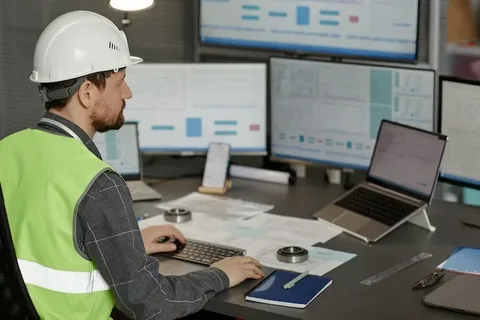
Every construction project starts with a plan — a set timeline, a defined budget, and clear goals. But somewhere between groundbreaking and completion, things often go sideways. Costs creep up. Schedules slip. Scope changes without warning.
This is where construction project controls services make a real difference. They provide the structure and oversight needed to catch problems early, before they turn into expensive setbacks.
Construction project controls services refer to a set of management practices used to monitor, measure, and manage the performance of a construction project. They bridge the gap between planning and execution.
These services typically cover:
Cost control — tracking expenditures against the approved budget
Schedule management — monitoring timelines and flagging delays
Risk management — identifying and responding to potential threats
Document control — maintaining accurate records of changes and approvals
Progress reporting — giving stakeholders a clear, real-time view of project status
Together, these functions create a system of accountability across all phases of a project.
Without a structured controls framework, even well-planned projects can run into serious trouble.
Some common problems include:
Budget overruns caused by untracked change orders or poor cost forecasting
Schedule delays from missed milestones or resource mismanagement
Scope creep when changes are approved informally without documenting the cost impact
Communication gaps between owners, contractors, and subcontractors
A 2023 industry report found that a significant portion of large construction projects exceed their original budget by 20% or more. In most cases, the root cause isn't poor construction — it's poor controls.
The most visible benefit of project controls is financial. Here's how these services protect your budget at each stage:
Before work begins, project controls teams establish a cost baseline — a detailed breakdown of expected expenses tied to a work schedule. This becomes the benchmark against which all future spending is measured.
EVM is a core technique in project controls. It compares the value of work completed to the amount spent and the original plan. It answers a simple but powerful question: Are we getting what we paid for?
For example, if a project is 40% complete but has consumed 60% of the budget, EVM flags that discrepancy early — giving decision-makers time to respond.
One of the biggest budget killers in construction is uncontrolled change orders. Project controls services create a formal process for evaluating, approving, and recording every change — and its cost impact.
This prevents scope creep from quietly inflating the final price.
Rather than waiting until the end to tally costs, project controls teams use current data to forecast where the project is heading. If spending trends suggest a budget overrun, corrective action can be taken weeks or months in advance.
These services are used across a wide range of project types and roles:
Project owners who want transparency and financial protection
General contractors managing complex, multi-trade projects
Construction managers responsible for delivering within client expectations
Government agencies with strict accountability requirements on public infrastructure
Projects of all sizes can benefit, though the complexity and formality of controls typically scales with project size and risk.
If you're evaluating construction project controls services, here are the core capabilities to consider:
|
Capability |
What It Does |
|
Cost engineering |
Builds and maintains the project budget |
|
Scheduling |
Creates and updates the master project timeline |
|
Risk analysis |
Models potential scenarios and their financial impact |
|
Reporting |
Delivers clear, consistent updates to all stakeholders |
|
Document control |
Tracks contracts, submittals, RFIs, and change orders |
A strong controls team works proactively — not just reporting what happened, but helping you understand what's likely to happen next.
When Should You Bring in Project Controls?
The earlier, the better.
Ideally, construction project controls services are engaged during the pre-construction phase, when baselines are being set and risks are still manageable. Bringing controls in mid-project is still valuable, but it takes more time to establish accurate baselines from existing data.
Think of project controls like a GPS for your project. You can turn it on mid-journey, but you'll get much more value if it's running from the start.
Construction project controls services aren't a luxury reserved for mega-projects. They're a practical tool for any team that wants to finish on time and within budget.
By setting clear baselines, tracking performance in real time, managing change orders carefully, and forecasting future outcomes, project controls give owners and contractors the visibility they need to make smarter decisions — and avoid costly surprises.
If your projects are regularly running over budget or behind schedule, a structured controls framework may be exactly what's missing.