English
 Arabic
 French
 Spanish
 Portuguese
 Deutsch
 Turkish
 Dutch
Dutch
 Italiano
 Russian
 Romaian
 Portuguese (Brazil)
 Greek
Greek
Granite and Marble Maintenance: Keep Your Stone Looking New
Home |
2026-05-05 12:19:14
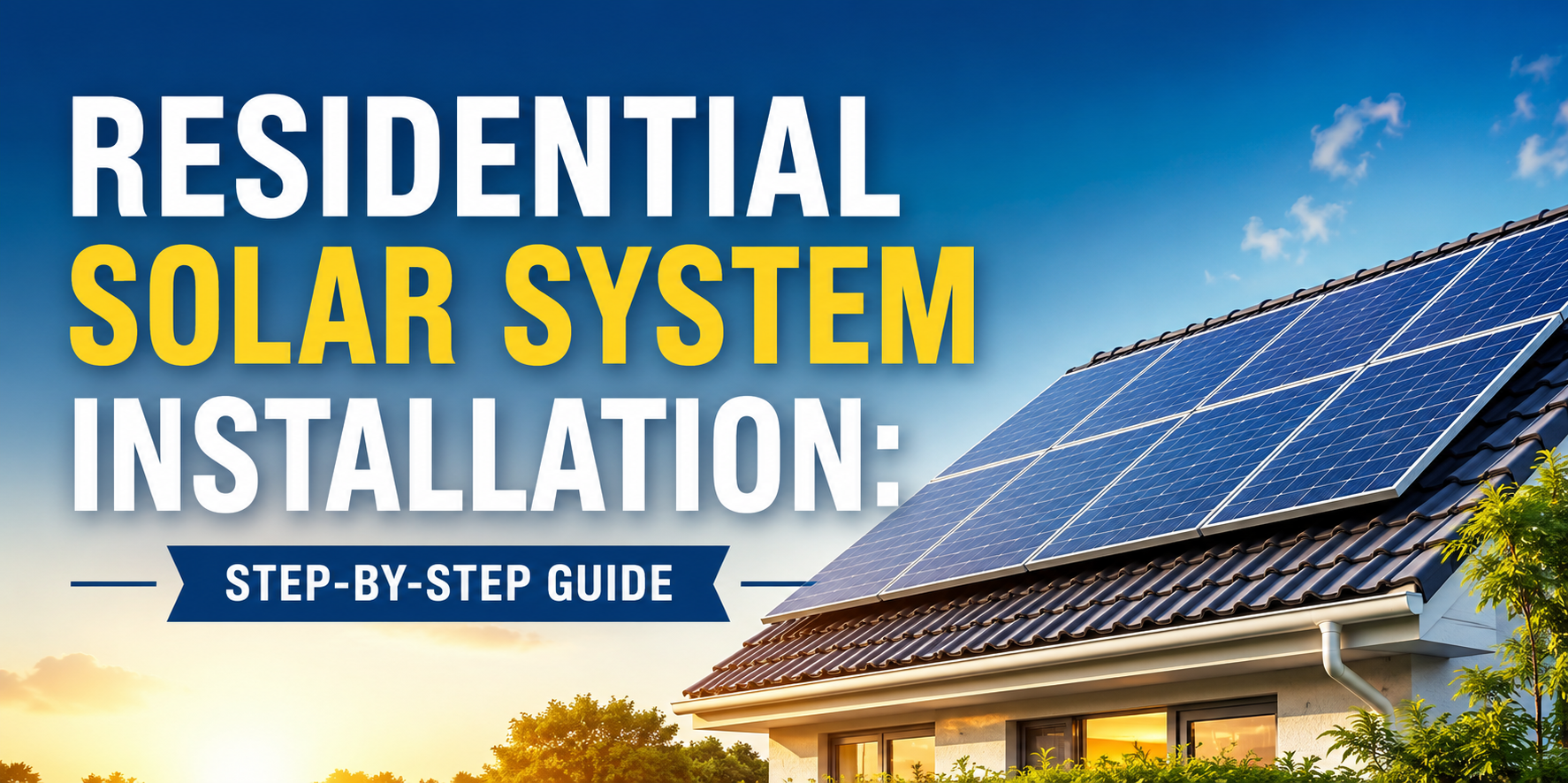
Electricity costs are increasing every year, and many homeowners are looking for ways to reduce their monthly bills. A residential solar system is one of the best solutions for generating clean energy while saving money. Solar power allows you to use sunlight to produce electricity for your home, reducing your dependence on the grid.
In this guide, we will explain the complete residential solar system installation process in simple terms so you can understand what to expect before installing solar panels on your home.
A residential solar system is a setup that uses solar panels to convert sunlight into electricity for household use. It is usually installed on the rooftop of a house where it receives maximum sunlight.
A typical residential solar system includes:
Together, these components help generate and manage electricity for your home.
Installing a residential solar system offers many advantages for homeowners.
Solar energy helps reduce your monthly electricity expenses by generating power directly from sunlight.
Solar power is a renewable energy source that does not produce pollution, making it environmentally friendly.
Homes with solar systems are often more attractive to buyers because they offer long-term energy savings.
Solar systems require very little maintenance. Regular cleaning and periodic inspections are usually enough.
Homeowners may be eligible for government subsidies that can reduce the overall installation cost.
The first step is to understand how much electricity your home uses. Your solar installer will review your electricity bills and calculate your average monthly consumption.
This helps determine the right solar system size for your home.
A professional team visits your property to inspect the roof and installation area.
During this inspection, they check:
This ensures the system will perform efficiently.
There are different types of residential solar systems available.
This system is connected to the electricity grid. It is the most common choice for homes because it is cost-effective and supports net metering.
This system works independently and usually includes batteries to store electricity.
A hybrid system combines grid connectivity with battery backup, providing additional flexibility.
Your installer can help you choose the best option based on your needs and budget.
Once the site inspection is complete, a custom solar system design is prepared.
This includes:
A well-planned design helps maximize energy production.
Before installation begins, necessary approvals may be required from the local electricity department.
If government subsidies are available, the installer can guide you through the application process and documentation requirements.
Completing these formalities early helps avoid delays.
The mounting structure acts as the foundation for solar panels.
The installation team securely fixes the structure on the rooftop while ensuring proper alignment and stability.
A strong mounting structure is important for long-term system performance.
After the mounting structure is ready, solar panels are installed and fixed in place.
The panels are positioned to receive maximum sunlight throughout the day.
Proper installation is essential for achieving the best energy output.
The solar panels generate direct current (DC) electricity. The inverter converts this into alternating current (AC), which is used by household appliances.
The installation team completes all electrical connections and performs safety checks to ensure smooth operation.
For on-grid systems, a net meter is installed.
Net metering allows homeowners to send extra electricity back to the grid. In return, they receive credits that help reduce future electricity bills.
This feature makes solar energy even more cost-effective.
Before the system is activated, technicians perform a complete inspection and testing process.
They check:
Once everything is verified, the solar system is switched on and begins generating electricity.
The installation timeline depends on the system size and project requirements.
In most cases:
A standard residential solar system can often be completed within a few days after approvals are received.
The cost of a residential solar system depends on several factors, including:
Government subsidies may help reduce the overall investment.
Although the initial cost may seem significant, solar systems can provide savings on electricity bills for many years, making them a smart long-term investment.
To get the best results, avoid these common mistakes:
A system that is too small may not meet your energy needs, while an oversized system can increase costs unnecessarily.
Installing solar panels on a damaged roof can create future problems.
Working with a trusted solar company helps ensure proper installation and long-term performance.
Regular maintenance helps keep the system operating efficiently.
Solar systems are easy to maintain, but a few simple steps can improve performance.
Proper maintenance helps maximize energy production and system life.
Choosing the right solar partner is just as important as choosing the right solar system.
Raynex Power provides reliable residential solar solutions designed to meet the unique needs of homeowners.
With Raynex Power, you get:
The team focuses on delivering efficient and long-lasting solar solutions that help homeowners save money and enjoy clean energy.
The cost depends on the system size, equipment quality, and installation requirements. Government subsidies may help reduce the cost.
The number of panels depends on your electricity consumption and the capacity of the selected solar panels.
Yes, solar panels can still generate electricity during cloudy weather, although production may be lower than on sunny days.
Most solar panels have a lifespan of 25 years or more when properly maintained.
Yes, government subsidy programs may be available for eligible residential solar installations.
Installing a residential solar system is a smart way to reduce electricity bills, increase energy independence, and contribute to a cleaner environment. By understanding each step of the installation process, homeowners can make informed decisions and enjoy the long-term benefits of solar energy.
If you are planning to install a residential solar system, Raynex Power can help you with expert guidance, quality products, and professional installation services from start to finish.
Address: 806, Sarthana Business Hub, Sarthana-Jakatnaka, Surat , Gujarat - 395006
Phone:
+91 9033232512