English
 Arabic
 French
 Spanish
 Portuguese
 Deutsch
 Turkish
 Dutch
Dutch
 Italiano
 Russian
 Romaian
 Portuguese (Brazil)
 Greek
Greek
Laserreinigung: Effiziente Oberflächenpflege für moderne Anwendungen
Other |
2026-06-16 11:12:00
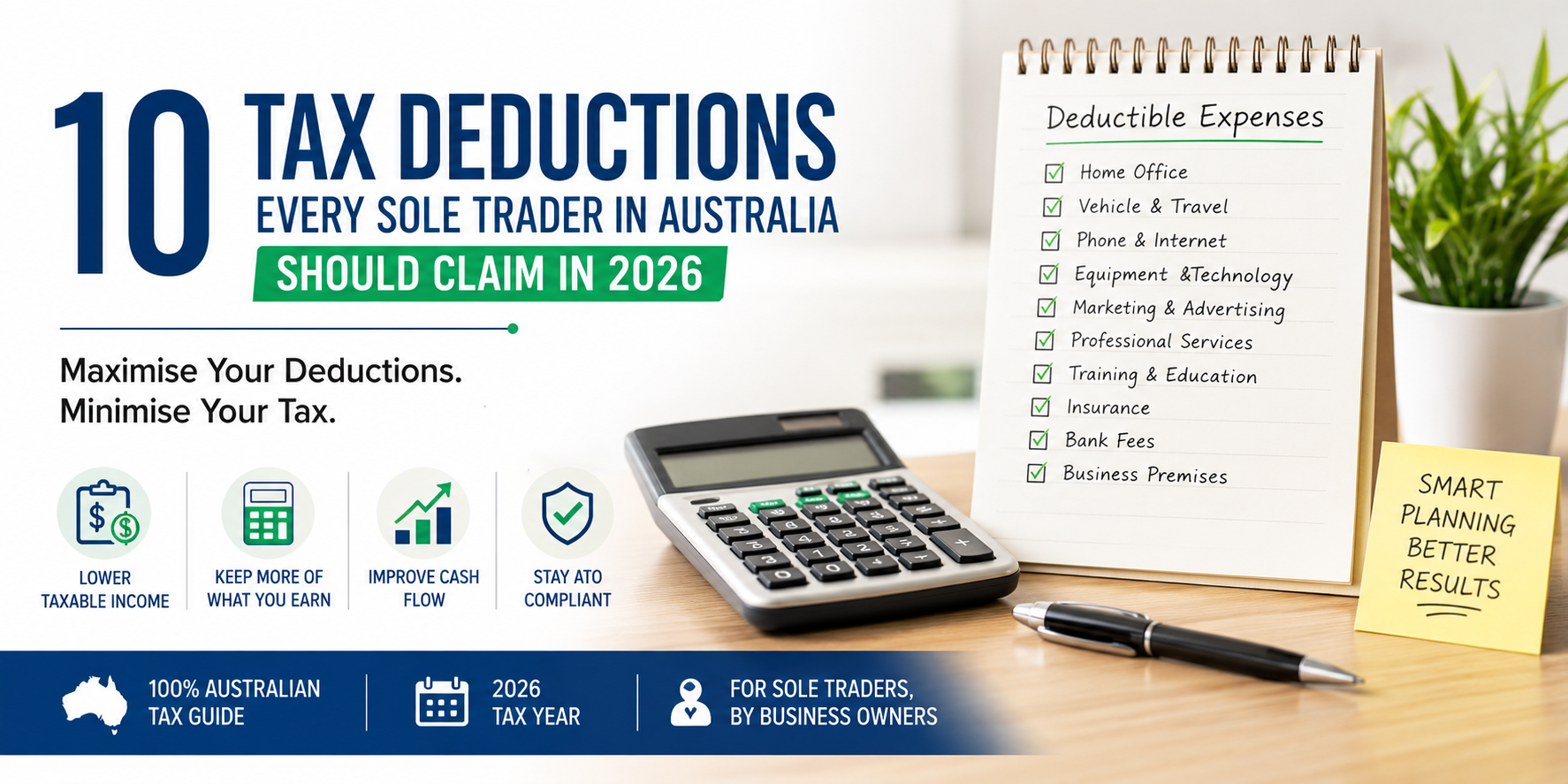
Running a business as a sole trader comes with flexibility and independence, but it also means managing your own finances and tax obligations. The good news is that the Australian tax system allows sole traders to claim a range of legitimate business expenses that can reduce taxable income and improve cash flow.
Understanding tax deductions for sole traders Australia is more important than ever in 2026, especially as the Australian Taxation Office (ATO) continues to increase its focus on accurate record-keeping and compliance. Many sole traders miss out on valuable deductions simply because they are unaware of what they can legally claim.
In this guide, we'll explore ten important tax deductions that every sole trader should consider claiming in 2026.
Tax deductions reduce the amount of income that is subject to tax. The lower your taxable income, the less tax you may need to pay.
To claim a deduction, the expense must generally:
Be directly related to earning business income
Not be private or personal in nature
Have appropriate records or receipts
Be incurred during the financial year
Keeping accurate records throughout the year makes claiming deductions easier and helps you remain compliant with ATO requirements.
With remote work now common across many industries, home office expenses remain one of the most valuable deductions available to sole traders.
You may be able to claim:
Electricity and gas used for work
Internet expenses
Phone costs
Office furniture
Computer equipment
Cleaning expenses for your dedicated workspace
If you operate your business primarily from home, maintaining detailed records of business usage can help maximise your claim while meeting ATO guidelines.
Many sole traders use their vehicles for business-related activities such as visiting clients, attending meetings, or transporting equipment.
Common deductible vehicle expenses include:
Fuel
Registration
Insurance
Repairs and maintenance
Lease payments
Depreciation
You can generally use either the cents-per-kilometre method or the logbook method, depending on your circumstances.
Remember that travel between your home and a regular workplace is usually considered private and may not be deductible.
Most businesses rely heavily on communication tools to connect with clients and suppliers.
You may claim the business-use portion of:
Mobile phone bills
Internet plans
Data subscriptions
Business communication apps
Keeping records of business versus personal usage is essential. If your phone or internet is used for both purposes, only the business percentage can be claimed.
Technology investments can significantly improve productivity and efficiency.
Deductible equipment may include:
Laptops
Desktop computers
Tablets
Printers
Monitors
Business software
Industry-specific tools
Depending on current tax rules and asset thresholds, some items may be claimed immediately, while others may need to be depreciated over several years.
Many business owners seek professional guidance before purchasing major assets to ensure they achieve the best tax outcome.
Growing a business often requires investment in marketing.
Common deductible marketing expenses include:
Website development
Search engine optimisation (SEO)
Google Ads
Social media advertising
Business cards
Promotional materials
Content marketing campaigns
As competition continues to increase online, digital marketing has become one of the most common expenses claimed by sole traders across Australia.
Professional advice can help businesses avoid costly mistakes and remain compliant with changing tax regulations.
You may generally claim expenses related to:
Accounting services
Tax return preparation
Bookkeeping services
Legal advice
Business consulting
Working with experienced professionals can also help identify deductions you may otherwise overlook.
Many growing businesses choose to work with a Sole Trader Accountant to streamline tax management and improve financial decision-making.
Investing in your skills can often be tax deductible when the training directly relates to your current business activities.
Examples include:
Industry courses
Workshops
Seminars
Professional certifications
Online training programs
Continuing education
Professional development can help sole traders remain competitive while also reducing taxable income.
However, courses that prepare you for a completely new career may not qualify for a deduction.
Business insurance helps protect your income and assets from unexpected events.
Potential deductible insurance expenses include:
Public liability insurance
Professional indemnity insurance
Business equipment insurance
Cyber insurance
Business interruption insurance
Insurance is often overlooked when calculating deductions, yet it can represent a significant annual expense for many sole traders.
Business banking costs are often fully deductible when connected to business operations.
Eligible expenses may include:
Business account fees
Merchant fees
Transaction charges
Loan interest on business borrowings
Payment gateway fees
Maintaining separate business and personal accounts can make it much easier to identify deductible financial expenses throughout the year.
If you operate from rented commercial premises, many associated costs may be deductible.
These expenses can include:
Rent payments
Utilities
Cleaning services
Security services
Property maintenance
Office supplies
Even businesses that occasionally use co-working spaces may be able to claim relevant costs when directly related to earning assessable income.
While claiming deductions can reduce tax liability, mistakes can attract unwanted ATO attention.
Common errors include:
Effective record management is essential for maximising tax deductions for sole traders Australia.
Best practices include:
Storing digital copies of receipts
Using accounting software
Separating personal and business transactions
Updating records regularly
Maintaining vehicle logbooks
Tracking home office usage
The ATO generally requires records to be retained for several years, making digital storage solutions increasingly valuable.
Businesses looking for ongoing support often benefit from working with an experienced accountant in perth who understands current tax regulations and deduction opportunities.
As the 2026 financial year progresses, proactive tax planning can help sole traders reduce stress and improve financial outcomes.
Consider reviewing:
Current expenses
Asset purchases
Business income
GST obligations
Record-keeping systems
Potential deduction opportunities
Regular financial reviews throughout the year are often more effective than trying to organise everything at tax time.
Understanding and claiming legitimate tax deductions for sole traders Australia can make a significant difference to your business's financial position in 2026. From home office costs and vehicle expenses to marketing, training, and professional services, there are numerous opportunities to reduce taxable income while remaining compliant with ATO requirements.
The key is maintaining accurate records, understanding what qualifies as a business expense, and seeking professional advice when necessary. By taking a proactive approach to tax planning, sole traders can improve cash flow, reduce tax liabilities, and focus more energy on growing their businesses.