English
 Arabic
 French
 Spanish
 Portuguese
 Deutsch
 Turkish
 Dutch
Dutch
 Italiano
 Russian
 Romaian
 Portuguese (Brazil)
 Greek
Greek
Why Used Air Compressors Continue to Be a Smart Industrial Investment
Business & Finance |
2026-05-15 12:57:27
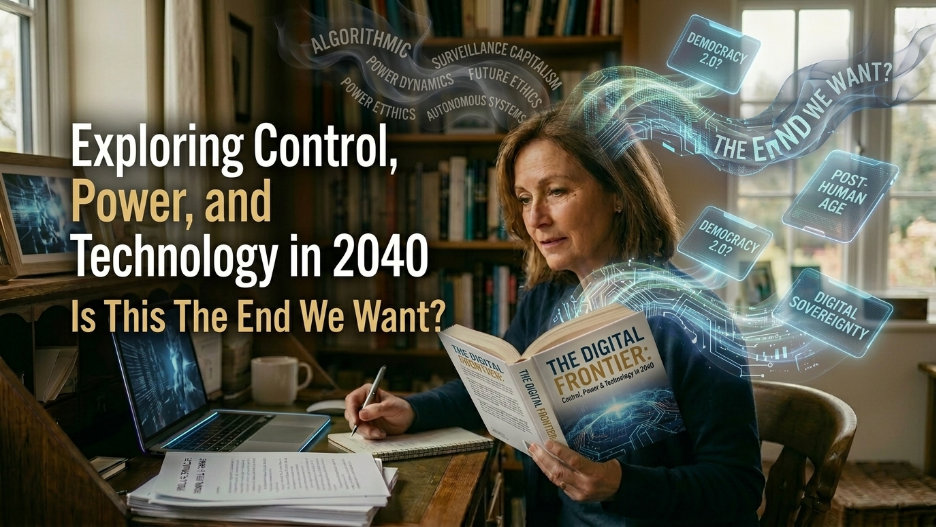
2040 by Howard Atkins delivers a stark and unsettling look at a society drifting toward controlled order. The 2040- Is This The End We Want Book is a prequel to 2084 and is mostly about how the foundations for a very controlled future are carefully put in place. The story doesn't depend on big changes or sudden falls apart. The goal of governments is to keep things stable. As technology changes, it changes with the promise of safety.
People get used to new rules without really questioning them. Atkins builds a world with great care so that resistance seems dangerous and control seems reasonable. This way of writing makes the book make you think about the choices you make now and how they will affect you in the future. In the end, 2040 asks if people can spot danger before it's too late to stop it.
In the year 2040, authority gets stronger through rules and regulations instead of visible force. Laws are made by leaders that make sense at first glance. Each strategy says it will protect, help the economy get better, or keep things stable in society. People agree with these changes because they think they are important. Over time, these rules make it harder for people to make choices and lessen the public's power. Institutions keep working, but their main goal changes from making things better to keeping things under control. The change happens slowly, so most people don't notice it. Atkins shows that fighting isn't always the best way to get power. Society starts to lose its ability to question authority and protect individual freedom when rules take the place of discussion.
In the year 2040, spying is a normal part of life. Modern systems keep an eye on what's going on in both public and private areas. People like them because they make life easier and make people feel safer. Over time, monitoring moves into places that were once thought to be private. When people know they are being watched, they change how they act. This shift changes the way people think and act. They stop being free to say what they want and start being careful and controlled. Atkins talks a lot about the importance of normalization. People stop questioning how ongoing observation affects freedom and personal identity when it seems normal to do so.
Economic instability plays a major role in shaping the events of 2040. When financial systems are unstable, a lot of people have a hard time staying stable. In response, governments put in place strict rules and central control. These steps offer recovery, but they make people more reliant on authority. Citizens focus on staying alive instead of fighting back. As economic stress rises, social gaps get bigger. When communities stop trusting each other, it's hard for them to work together. In this setting, leadership can improve its position without any opposition. Atkins shows how fear of the economy can change how people act. Uncertainty about money can have a big effect on both public opinion and the long-term direction of society.
Safety takes on a new meaning in 2040. Authorities say it means following all the rules that are already in place. People start to think that obeying means safety and fighting back means danger. Society works in a whole new way because of this change. People don't question choices because they're afraid of what will happen if they do. Norms change over time to help people follow them. Over time, people internalize these standards and learn how to control themselves. Atkins shows that control works better when people are the ones who impose it. The idea of safety doesn't protect freedom anymore. Instead, it makes it smaller. This change makes society stable, but it takes away people's freedom and ability to think critically.
2040 offers a powerful reflection on how societies can drift toward control without realising it. Howard Atkins shows through his thorough story that the biggest threats often come out slowly, hidden in systems that are meant to keep them out. The book clearly links to the year 2084 and shows how early decisions shape the future long before it unfolds. That makes the point even stronger that technology and AI are not inherently dangerous.
What they do relies on who leads, what their goals are, and who is responsible for what. Atkins creates a realistic and thought-provoking situation by focusing on policy, the economy, and how people act in groups. 2040 tells people to question authority, keep up with changing social norms, and value their own thoughts. It reminds us that freedom needs our full attention all the time. Without it, stability can turn into a quiet way to keep power over people and limit their freedom.