English
 Arabic
 French
 Spanish
 Portuguese
 Deutsch
 Turkish
 Dutch
Dutch
 Italiano
 Russian
 Romaian
 Portuguese (Brazil)
 Greek
Greek
The Business Case for Rebuilding Your Practice Website
Tech & Digital |
2026-05-20 14:47:55
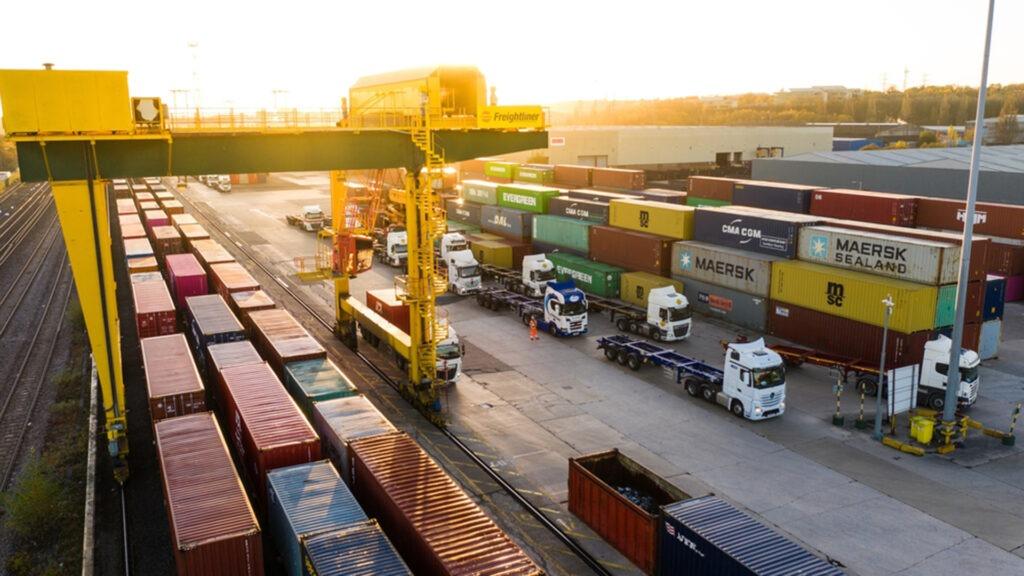
Trade between Canada and the United States is among the world's most dependable channels. The large American market offers excellent opportunities to Canadian producers, wholesalers, and online businesses. Yet import/export of commercial products entails a well-structured regulatory system. One error in entering data, a document omitted, a wrong code on a product - such issues can cause you an expensive delay in transport, storage fees, or even confiscation of your merchandise at the border. Making customs bewilderment your ally in the form of a regular, efficient process is the secret to a perfectly integrated cross-border supply chain.
This operational guide provides a practical, step-by-step approach to managing your cross-border shipping Canada to US logistics and guaranteeing a smooth transition of your commercial freight through customs.
Long before your trailer even gets loaded, it's crucial to correctly identify the shipment's contents by Harmonized Tariff Schedule (HTS) code.
The Importance of HTS Accuracy
Every commercial item is assigned an 8- 10 digit HTS code. This code on all items indicates the type of item, all of its constituents, as well as any tariffs and restrictions to US Customs and Border Protection. Assigning a wrong code to reduce duty tax is a criminal offense with hefty penalties. Classifications need to be technically justified and audited regularly.
Leveraging the USMCA Advantage
Under the United States-Mexico-Canada Agreement (USMCA), many goods manufactured in Canada are entitled to duty-free entry. However, this preferential treatment is not automatic, and shippers must submit a digital USMCA Certification of Origin form that demonstrates that the items comply with specific rules of origin.
Customs officers rely on the paperwork of your shipment to make their first assessment. If there is any missing or unclear information, it is very likely that a physical check will be done. Make sure your international shipment is equipped with these basic documents:
The Commercial Invoice
This is a record of the contract between the buyer and seller. It explicitly lists quantities, prices (and the currency used - USD or CAD), product descriptions, and the country of origin. Do not give a general description; for instance, say "Threaded stainless steel hex bolts" instead of "Hardware."
The Bill of Lading (BOL)
Originally issued by the freight carrier, this document acts as a confirmation of the terms of carriage, destination, and details of the shipment.
The Packing List
This detailed document lists all the aspects of your shipment, like individual pallet sizes, net and gross weights, and the packaging material used.
To legally manage the customs clearance process on your behalf, all commercial imports into the US must have a licensed US Customs Broker. Your broker uses specialized software connected to the US Automated Commercial Environment (ACE) to submit your documentation and clear your goods electronically. They are also responsible for acquiring the required Customs bond (either single entry or continuous) for any shipments valued over $2,500.
Speed is essential in transborder freight, and manual processing at the border should rarely hold up drivers. This is enabled by the Pre-Arrival Processing System (PAPS).
How the PAPS Protocol Works
The carrier will apply a PAPS barcode to your shipment.
The carrier will send the e-manifest of the shipment's contents to US Customs via ACE, while your customs broker will submit the related customs entry.
The PAPS barcode will match the carrier's e-manifest with the broker's customs entry.
The documentation must be sent at least an hour prior to the truck's scheduled arrival time at the border, allowing border officers to digitally process the paperwork so that all the driver has to do at the border is scan the PAPS barcode for quick release.
So when your truck crosses the border, that is not the end of the customs clearance process. Your customs broker has to send in the Entry Summary, which is the CBP Form 7501, within ten working days of your goods arriving in the United States. They do this to figure out the amount of duties you have to pay. The US Customs can also check any imports for up to five years after the goods entered the country. To make things easier, if they do check, you should keep all your documents like invoices and customs entry numbers in order and easy to find.
Shipping goods across the border is complicated and needs knowledge and equipment. It also needs people to talk to each other and plan. Cleveland Bay Logistics Inc can help companies with all their shipping needs. They can provide services to manage all the shipping, special help to get goods across the border and people to support you so your goods arrive on time when you send them to the United States.