English
 Arabic
 French
 Spanish
 Portuguese
 Deutsch
 Turkish
 Dutch
Dutch
 Italiano
 Russian
 Romaian
 Portuguese (Brazil)
 Greek
Greek
666rs APK: Advanced Features That Set It Apart from Other Platforms
Other |
2026-06-24 13:37:25
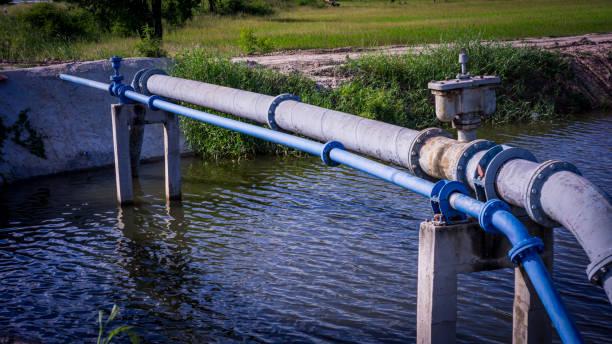
Japan’s water and wastewater infrastructure is entering an important renewal phase. Extensive networks developed during the country’s rapid post-war expansion are aging, while municipalities face increasing pressure to maintain reliable services, control energy consumption, manage urban flooding, and address workforce shortages. These conditions are strengthening the need for efficient pumps across water distribution, sewage transport, treatment facilities, industrial processes, and stormwater drainage systems.
According to MarkNtel Advisors, Japan’s water and wastewater pump sector was valued at approximately USD 726 million in 2025 and is expected to increase from USD 738 million in 2026 to USD 985 million by 2032. The projected 4.9% annual growth reflects replacement programs, digital monitoring adoption, water-reuse initiatives, industrial demand, and investment in resilient municipal infrastructure.
Japan operates an extensive network of water-distribution and sewer pipelines, much of which was installed during the 1960s and 1970s. As pipelines, pumping stations, and treatment facilities exceed their intended service lives, utilities face higher leakage risks, equipment failures, declining hydraulic efficiency, and growing maintenance expenditure.
Guidance published by Japan’s Ministry of Land, Infrastructure, Transport and Tourism emphasizes the importance of maintaining and upgrading public infrastructure. For water operators, modernization increasingly involves replacing fixed-speed and mechanically controlled pumps with corrosion-resistant, energy-efficient equipment capable of supporting automated operations.
Municipal water and wastewater applications represented around 66.7% of total industry demand in 2025. This position is supported by continued expenditure on drinking-water networks, sewage treatment plants, drainage infrastructure, pumping stations, and urban flood-management systems.
Reliable pumping capacity is particularly important in densely populated cities, where service interruptions can affect households, businesses, and public institutions. Broader principles promoted through the OECD Water Governance Programme also highlight the need for coordinated, efficient, and accountable management of water resources across national and local authorities.
Digital transformation is changing how pumps are operated and maintained. Sensors, variable-speed drives, automated controls, and supervisory control and data acquisition systems allow utilities to observe flow, pressure, vibration, temperature, and energy use in real time.
These capabilities help identify abnormal performance before equipment fails. Predictive maintenance can reduce emergency repairs, extend component life, and improve service continuity. Remote monitoring is also becoming valuable as Japan’s utility workforce ages and operators seek to manage several facilities with fewer personnel.
Centrifugal pumps account for the largest share of demand because they are well suited to transferring high volumes of water at treatment plants, distribution facilities, and drainage stations. Their relatively simple construction, ease of maintenance, and compatibility with variable-speed operation support broad municipal use.
Submersible models are gaining relevance in sewage handling and flood-control applications, while positive-displacement pumps serve specialized industrial processes involving chemicals, sludge, viscous fluids, or precise dosing. International ISO water-quality standards provide common methods and practices for water monitoring, treatment, sampling, and performance assessment across these applications.
Although municipal infrastructure remains dominant, industrial water and wastewater applications are projected to expand at a CAGR of approximately 6.1% between 2026 and 2032. Electronics, chemicals, food processing, manufacturing, and other water-intensive industries require dependable systems for process-water circulation, effluent transfer, filtration, cooling, and reuse.
Japan’s Ministry of the Environment promotes resource efficiency and environmental protection, encouraging facilities to reduce discharge impacts and improve water circulation. As industrial users invest in advanced treatment and recycling systems, demand is likely to rise for pumps capable of handling variable pressure, corrosive fluids, suspended solids, and continuous operation.
Water reuse is becoming increasingly relevant as municipalities and industries pursue circular resource management. Decentralized treatment facilities, membrane bioreactors, and advanced filtration systems require pumps for circulation, pressure control, sludge transfer, and reclaimed-water distribution.
The World Health Organization’s water-quality guidance underscores the importance of managing risks throughout water collection, treatment, storage, and distribution. Pumps that maintain stable flows and prevent operational interruptions are therefore essential to ensuring consistent treatment performance.
Japan’s next infrastructure cycle will be shaped by replacement needs, digitalization, energy efficiency, and decentralized water management. Rather than simply increasing equipment volumes, this transition is likely to raise demand for intelligent, durable, and application-specific pumping solutions that can support long-term reliability across municipal and industrial systems.