English
 Arabic
 French
 Spanish
 Portuguese
 Deutsch
 Turkish
 Dutch
Dutch
 Italiano
 Russian
 Romaian
 Portuguese (Brazil)
 Greek
Greek
The Ultimate Guide to Choosing the Best Logistics Outsourcing Company
Other |
2026-06-16 12:38:30
For years, the company tried to eliminate spreadsheets.
A new ERP was introduced. Reporting tools were deployed. Dashboards became available. Teams received training. Leadership expected spreadsheets to disappear naturally.
They didn't.
In fact, more spreadsheets appeared.
Not because employees disliked the new systems. Not because the technology was inadequate. The spreadsheets survived because they solved a problem that software wasn't solving. They helped people bridge gaps between departments, workflows, approvals, and information sources. They became the unofficial operating layer of the business.
This happens more often than most organizations realize. Companies invest heavily in enterprise technology but continue relying on spreadsheets to manage exceptions, track status updates, reconcile data, and coordinate activities. The spreadsheet becomes the place where reality lives while official systems become places where information is stored.
The issue is rarely employee resistance. Most teams prefer reliable systems over manual tracking. The problem is that business operations are rarely as simple as software categories suggest. A sales opportunity affects finance. Finance affects planning. Planning affects operations. Operations affect customer outcomes. When those relationships are not fully connected, employees create their own methods for keeping work moving.
That is why many businesses discover that software adoption and operational alignment are not the same thing. A company can successfully deploy modern applications while still struggling with fragmented execution. The technology may be new, but the operational experience remains complicated.
This is also why many application modernization initiatives fail to deliver the expected results. Organizations replace legacy software but leave operational disconnects untouched. Employees continue creating workarounds because the underlying challenge was never the interface. It was the flow of information across the business.
A modern low code application platform helps address this challenge differently. Instead of forcing teams to adapt to rigid systems, businesses can build applications and workflows around how operations actually function. Processes evolve faster, workflows become easier to adjust, and information can move more naturally between departments.
The same principle applies to a workflow automation platform. Automation delivers value when it removes friction. But if disconnected processes remain unchanged, automation simply accelerates the movement of information through a fragmented environment. The business becomes faster, but not necessarily better aligned.
Forward-thinking organizations are beginning to approach modernization from a different perspective. Rather than asking which application they need next, they ask why employees continue relying on manual workarounds. Those answers often reveal more about operational health than any software evaluation ever could.
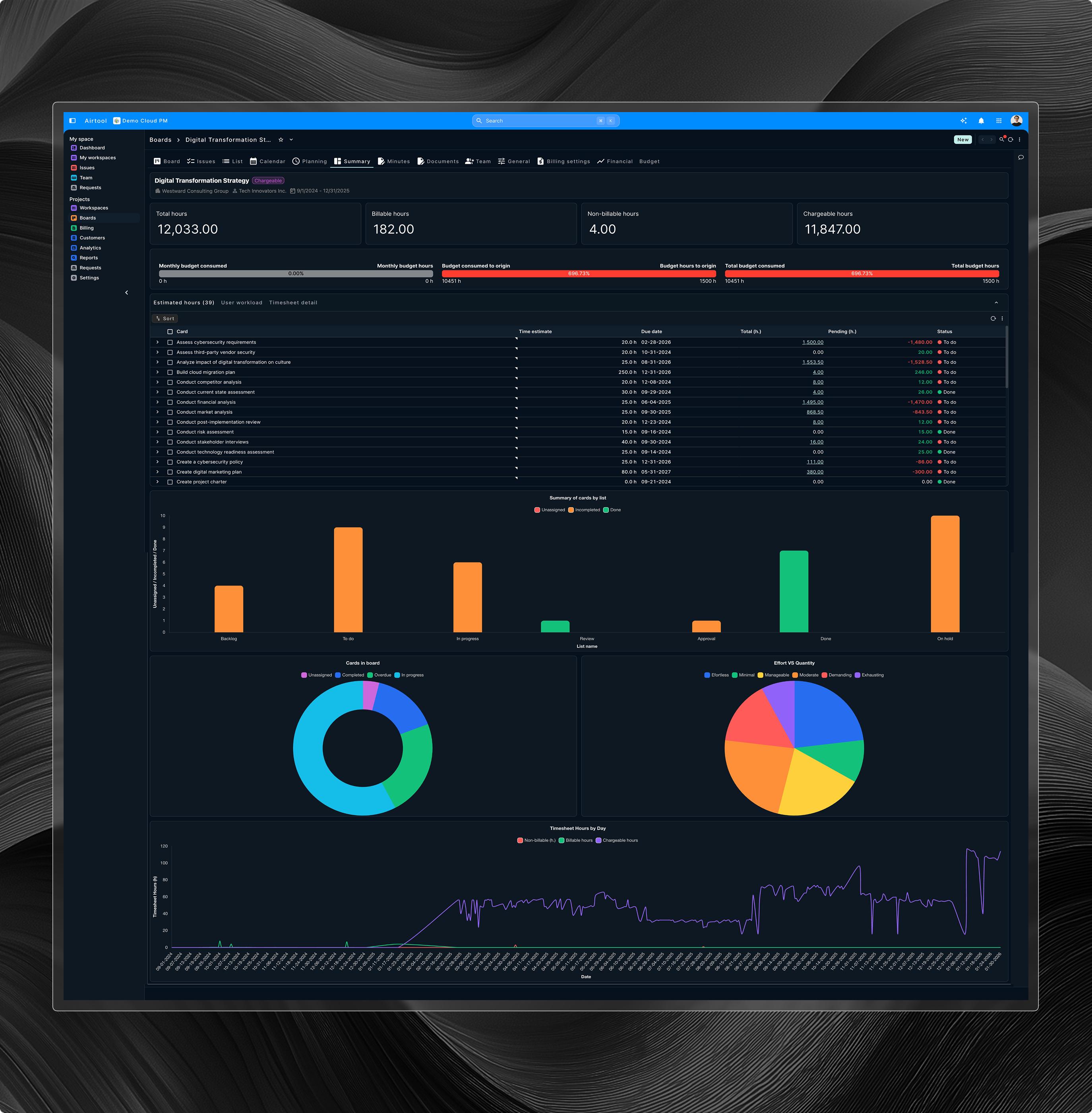
This is where Airtool takes a different approach. By combining application modernization, workflow automation, reporting, and operational processes within a connected environment, businesses can reduce the need for unofficial systems and manual coordination. The goal is not simply replacing software. It is creating an environment where work moves naturally without requiring employees to build their own solutions around it.
The spreadsheet that refused to die is rarely a technology problem. It is usually an operational signal. It reveals where information slows down, where processes break apart, and where employees feel they need something extra to get work done. The organizations that pay attention to those signals often discover opportunities for improvement that no software comparison chart can reveal.
Book a demo and discover how Airtool helps organizations modernize applications, automate workflows, and create connected operations that scale with confidence.