English
 Arabic
 French
 Spanish
 Portuguese
 Deutsch
 Turkish
 Dutch
Dutch
 Italiano
 Russian
 Romaian
 Portuguese (Brazil)
 Greek
Greek
Trusted Online Cricket ID Provider WhatsApp Number
Sports |
2026-05-16 06:39:08
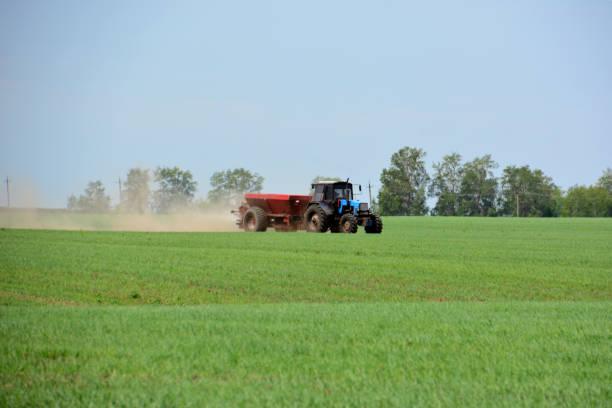
Russia’s specialty fertilizers landscape is evolving as growers focus on improving nutrient efficiency, crop quality, and productivity across cereals, oilseeds, horticulture, greenhouse production, and high-value crops. Unlike conventional fertilizers, specialty products are designed for controlled release, fertigation, foliar application, water solubility, or micronutrient correction. These formulations help farmers apply nutrients more precisely, reduce waste, and respond to soil and crop-specific requirements.
According to MarkNtel Advisors, the Russia Specialty Fertilizers Market size was valued at around USD 1.21 billion in 2025 and is projected to reach USD 2.20 billion by 2032, registering a CAGR of around 8.92% during 2026–2032. The USD 2.20 billion by 2032 projection reflects rising demand for controlled-release fertilizers, water-soluble products, micronutrient blends, and crop-specific nutrient solutions.
Specialty fertilizers are gaining relevance because they support more efficient nutrient delivery. Controlled-release and slow-release products can reduce nutrient losses by releasing plant nutrients over a longer period. Water-soluble fertilizers support fertigation systems, while foliar fertilizers help address nutrient deficiencies during specific growth stages.
The FAO emphasizes that crop productivity depends on soil, water, climate, and nutrient management. For Russia, where agricultural conditions vary widely across regions, targeted fertilizer use can help growers adjust nutrient programs to crop type, soil condition, and seasonal needs.
Russia has a strong agricultural base, especially in grains, oilseeds, sugar beet, potatoes, and vegetables. Large farm operations often evaluate fertilizers based on yield improvement, application efficiency, cost per hectare, and compatibility with mechanized farming. Specialty fertilizers can support higher-value production where nutrient timing and crop quality are important.
The World Bank tracks fertilizer consumption in kilograms per hectare of arable land, showing the importance of fertilizer use in agricultural productivity. As growers aim to improve output while controlling input costs, specialty fertilizers may become more attractive in intensive farming systems.
Specialty fertilizers are especially relevant in greenhouse vegetables, fruits, flowers, and protected cultivation. These systems often use fertigation and precise nutrient programs to maintain consistent crop quality. Water-soluble fertilizers, chelated micronutrients, and liquid formulations are commonly used where nutrient balance must be carefully managed.
Russia’s greenhouse sector has been expanding to improve domestic production of vegetables and reduce reliance on imported food. In these systems, fertilizer performance is closely tied to yield, uniformity, shelf life, and resource efficiency. This creates opportunities for premium products that provide predictable solubility and balanced nutrition.
Russia is one of the world’s major fertilizer producers, with strong capacity in nitrogen, phosphate, and potash fertilizers. The World Bank WITS database shows that Russia exported fertilizers worth more than USD 12.49 billion in 2021. This production base gives the country an important role in global fertilizer supply and supports availability of raw materials for more specialized formulations.
However, global fertilizer trade remains exposed to sanctions, export restrictions, logistics costs, and price volatility. The World Bank reported that fertilizer prices rose in 2025 due to strong demand, trade restrictions, and production shortfalls. These pressures make efficient use of fertilizers more important for farmers and input suppliers.
Micronutrient deficiencies can reduce crop quality and yield even when major nutrients such as nitrogen, phosphorus, and potassium are available. Specialty fertilizers help address deficiencies in zinc, boron, iron, manganese, copper, and other nutrients through targeted blends. These products are relevant for intensive crop systems where quality standards, export requirements, and processing performance matter.
Crop-specific formulations can also support better nutrient balance for cereals, oilseeds, vegetables, and fruits. As agronomic advisory services expand, growers are more likely to use soil testing, tissue analysis, and digital tools to select fertilizers based on measurable crop needs.
Russia’s specialty fertilizers ecosystem is expected to remain closely linked to precision agriculture, greenhouse expansion, crop-quality improvement, nutrient-use efficiency, and changing farm economics. Future demand will likely focus on controlled-release products, water-soluble fertilizers, micronutrient blends, liquid nutrition, and fertigation-compatible formulations.
As input costs and yield expectations rise, specialty fertilizers will become more important for farmers seeking targeted nutrition rather than broad nutrient application. The next phase will depend on agronomic education, product affordability, local manufacturing, and the ability of fertilizer suppliers to deliver crop-specific solutions across Russia’s diverse farming regions.